Tell us about the job
Takes about a minute. No obligation.

A contractor quoting a central AC installation in Putnam County has to size for what the air and weather here actually demand, not for a theoretical average. 136 severe weather events were recorded in Putnam County, Tennessee between 2015 and 2024. At that rate, severe weather is a recurring part of the load every system in this county is built into from day one, and a unit sized too lightly for that condition will run hard, cycle often, and wear its components faster than the spec sheet suggests. Getting the load calculation right at installation is the decision that shapes everything the equipment does after it goes in.
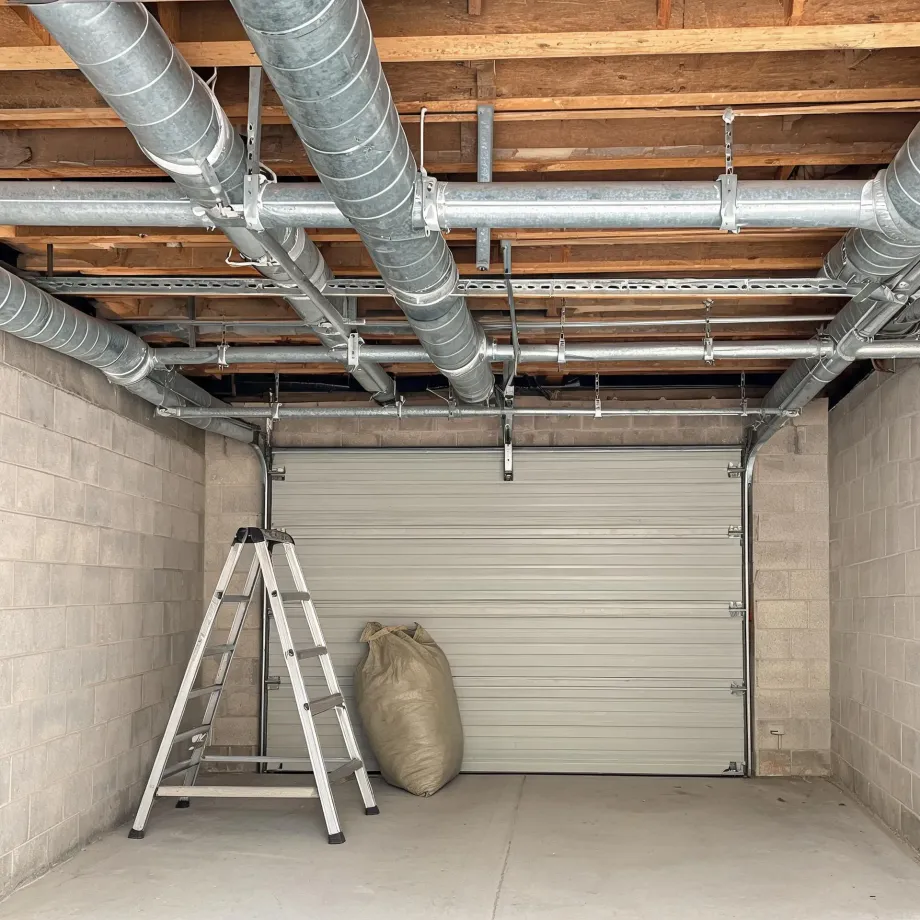
Ductwork sized for an older generation of equipment is the first thing a contractor has to evaluate on a central AC installation here. Half the homes in Putnam County, Tennessee were built in 1991 or earlier (2020-2024 ACS 5-year). Houses built around that period were engineered to carry what was available then, and the gap between those original specs and what a new system demands is where jobs stall or cost more than the initial quote suggested. Electrical service is the second variable. A panel that fed the original cooling load may not carry a modern unit without an upgrade, and that is a separate line on the estimate.
What a Central AC System Includes
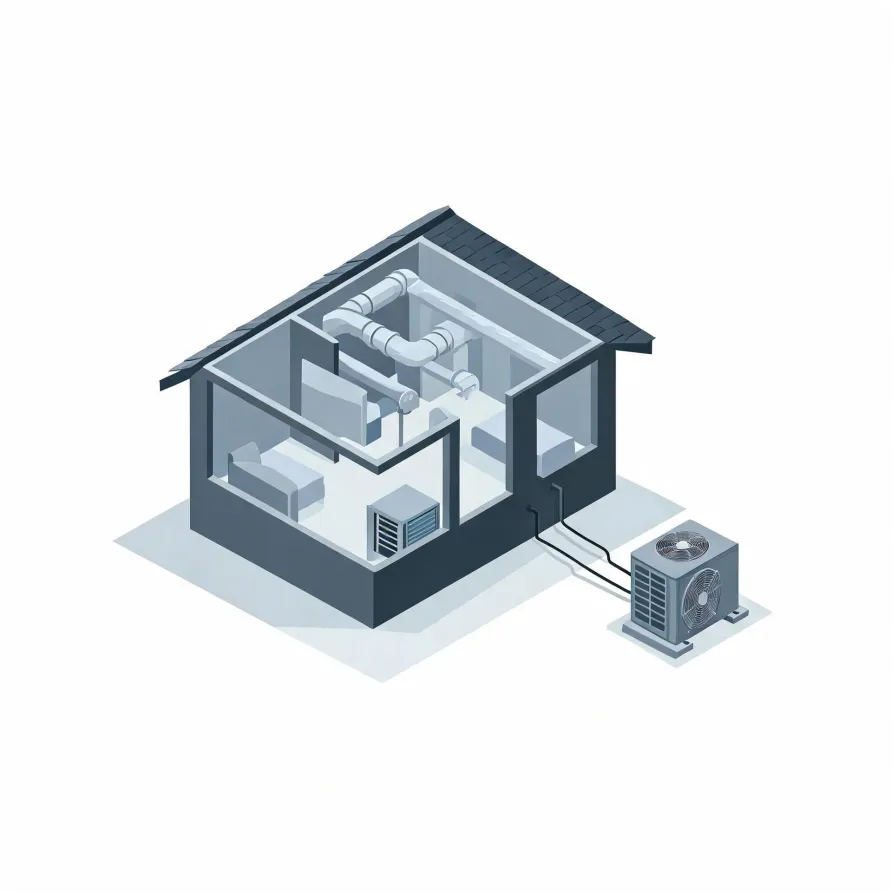
The outdoor condenser unit sits on a concrete pad beside the house and holds the compressor and condenser coil, which together shed heat pulled from inside. The indoor air handler or furnace coil sits in a closet, attic, or utility space and carries the evaporator coil that cools the air passing through it.
The refrigerant line set runs between those two units, connecting the indoor coil to the outdoor unit through a pair of insulated copper lines. The thermostat mounts on an interior wall and gives the homeowner control over when the system runs.
The drawing shows a typical layout, and a licensed contractor determines exactly how those pieces fit the setup in your home.
Find a contractor in Putnam CountyPutnam County, by the numbers
136 severe weather events were recorded in Putnam County, Tennessee between 2015 and 2024.
NOAA National Centers for Environmental Information, Storm Events Database, bulk CSV export, events 2015-01-01 through 2024-12-31.Half the homes in Putnam County, Tennessee were built in 1991 or earlier (2020-2024 ACS 5-year).
U.S. Census Bureau, 2020-2024 American Community Survey 5-Year EstimatesPutnam County, Tennessee holds 36,506 housing units (2020-2024 ACS 5-year).
U.S. Census Bureau, 2020-2024 American Community Survey 5-Year EstimatesOwners occupy 61.2% of the occupied homes in Putnam County, Tennessee (2020-2024 ACS 5-year).
U.S. Census Bureau, 2020-2024 American Community Survey 5-Year EstimatesRules & Standards Behind Central AC Installation in Putnam County, Tennessee9 sourced rules and standards
What the Installation Actually Looks Like
Split-system central air conditioners rated below 45,000 Btu/h manufactured on or after January 1, 2023 must meet a federal minimum of 13.4 SEER2.
Split-system central air conditioners rated at or above 45,000 Btu/h manufactured on or after January 1, 2023 must meet a federal minimum of 13.4 SEER2.
Split-system central air conditioners manufactured between January 1, 2015 and December 31, 2022 had to meet 13 SEER, the metric that preceded SEER2.
Single-package central air conditioners manufactured on or after January 1, 2023 must meet a federal minimum of 13.4 SEER2.
Space-constrained central air conditioners manufactured on or after January 1, 2023 must meet a federal minimum of 11.7 SEER2.
Federal efficiency standards for split-system central air conditioners and heat pumps are set on each certified combination of outdoor unit and indoor coil rather than on the outdoor unit alone.
Residential and light commercial air conditioning and heat pump systems assembled in the field, including mini-splits and unitary systems, may not be installed on or after January 1, 2025 using a refrigerant with a global warming potential above 700.
A field-assembled system whose specified components were all manufactured or imported before January 1, 2025 carries no installation compliance date under the refrigerant restrictions and may still be installed.
Licensing Rules for Putnam County, Tennessee
Tennessee licenses contractors by classification, and HVAC, refrigeration and gas piping is one of them — a sub-classification of mechanical contracting on the licence the Board for Licensing Contractors issues.
Severe Weather Events in Putnam County
Weather puts a load on cooling equipment, and that load varies by where you live. A contractor sizing and installing central AC in Putnam County works from local conditions, not a national average.
136 severe weather events, 2015–2024. Source: NOAA National Centers for Environmental Information, Storm Events Database.