
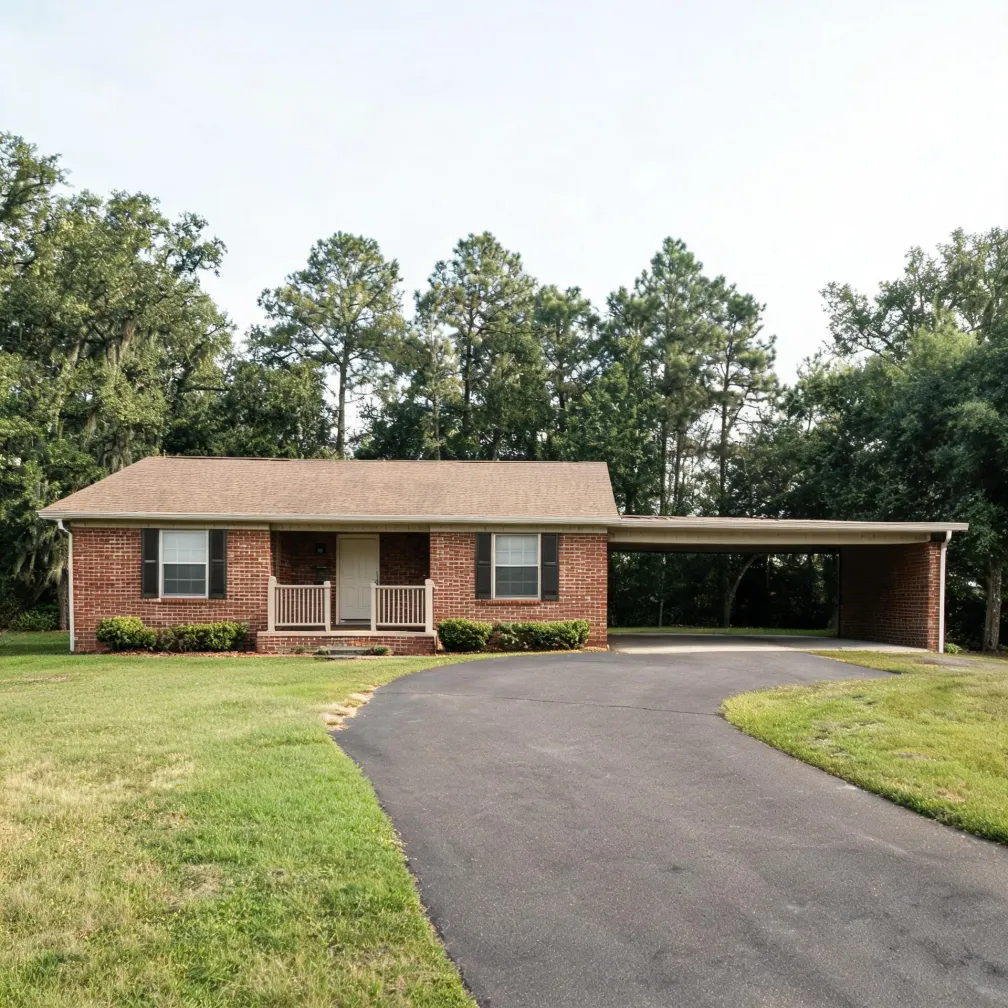
What Tennessee homes are up against.
NOAA National Centers for Environmental Information, Storm Events Database, bulk CSV export, events 2015-01-01 through 2024-12-31. · U.S. Census Bureau, 2020-2024 American Community Survey 5-Year Estimates

What a contractor has to settle before quoting a job is not what the state saw but what this address has asked of the equipment already in it. 9,369 severe weather events were recorded in Tennessee between 2015 and 2024. That rate of strain is real, and it is the backdrop every system in Tennessee is working against. But a statewide total cannot tell a contractor how hard a specific unit has been running, whether it has been keeping up, or where in its service life it now sits. Those are the things a site visit resolves, and they are what determines the scope of the work.
What a contractor finds behind an access panel varies sharply from house to house, and in Tennessee that variance runs wide. Half the homes in Tennessee were built in 1987 or earlier (2020-2024 ACS 5-year). A house built before current load calculations and equipment sizing standards were written may have ductwork that restricts airflow, electrical service that falls short of what a modern system draws, or an air handler positioned for a layout that has since changed. None of that is visible from the street. The contractor has to measure static pressure, check the service panel, and look at what is actually there before any equipment decision holds.
Does your county put extra stress on the HVAC equipment at your home?
2015–2024 · Source: NOAA National Centers for Environmental Information, Storm Events Database.
A condenser sitting outside in Tennessee faces hail impact, wind-driven debris, ice loading, and stretches of heat that push the unit hard for months at a time. Where a county ranks in recorded severe weather is one measure of how much that equipment has to absorb across a season. A contractor matched to your area knows how to size, position, and spec the unit for what the outdoor conditions actually demand.
Tennessee HVAC Contractor License Requirements
Tennessee sets its own rules for who can perform HVAC installation and repair work, and the provisions below are drawn directly from state sources rather than paraphrased.
Tennessee licenses contractors by classification, and HVAC, refrigeration and gas piping is one of them — a sub-classification of mechanical contracting on the licence the Board for Licensing Contractors issues.
A state license for this trade determines who is legally permitted to do the work on your home. Unlicensed contractors are not operating within the framework Tennessee has established for this trade. Every contractor this site routes a request to holds the license these provisions describe, and a request does not move forward until that condition is met.
See the source provisions1 provisions
Tennessee licenses contractors by classification, and HVAC, refrigeration and gas piping is one of them — a sub-classification of mechanical contracting on the licence the Board for Licensing Contractors issues.