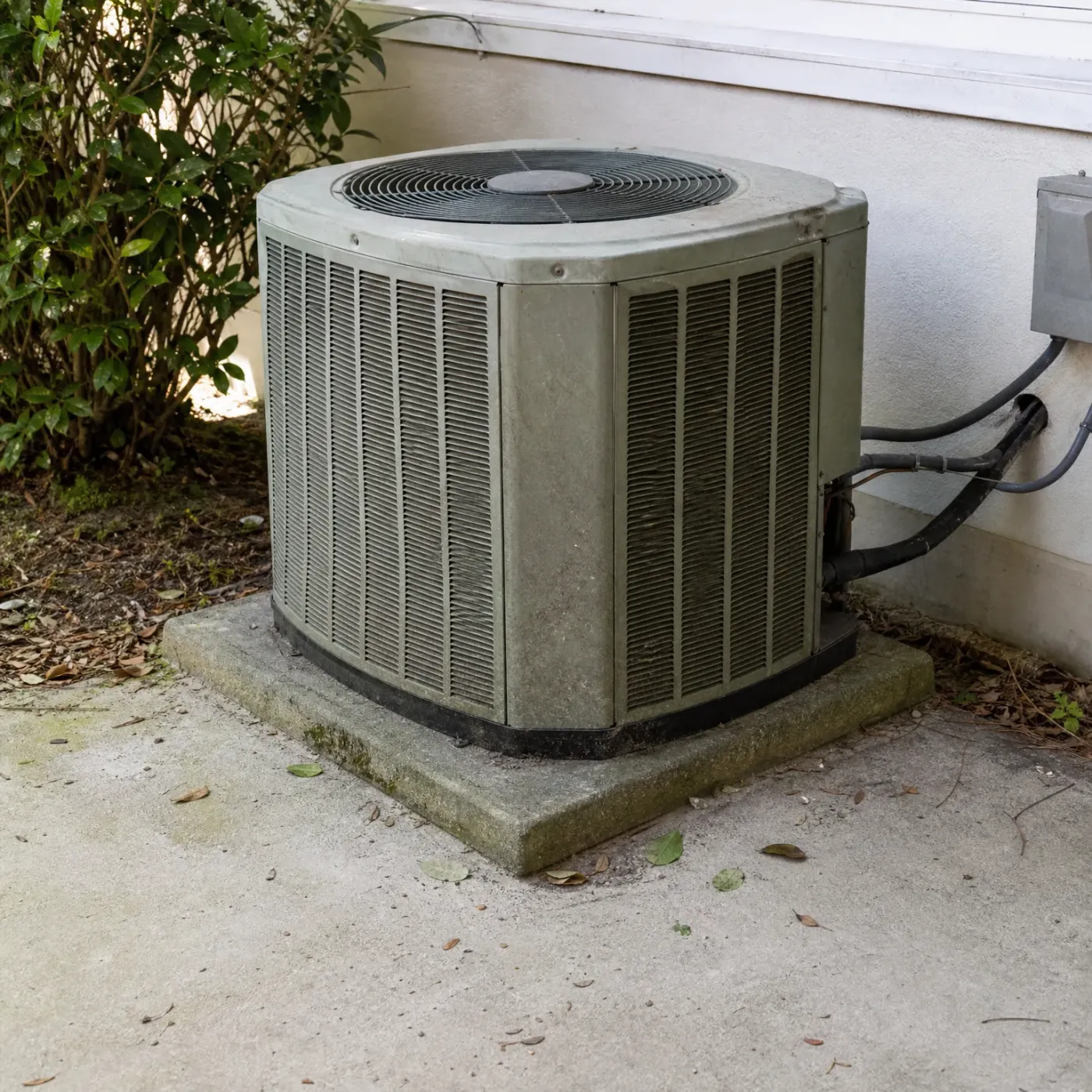
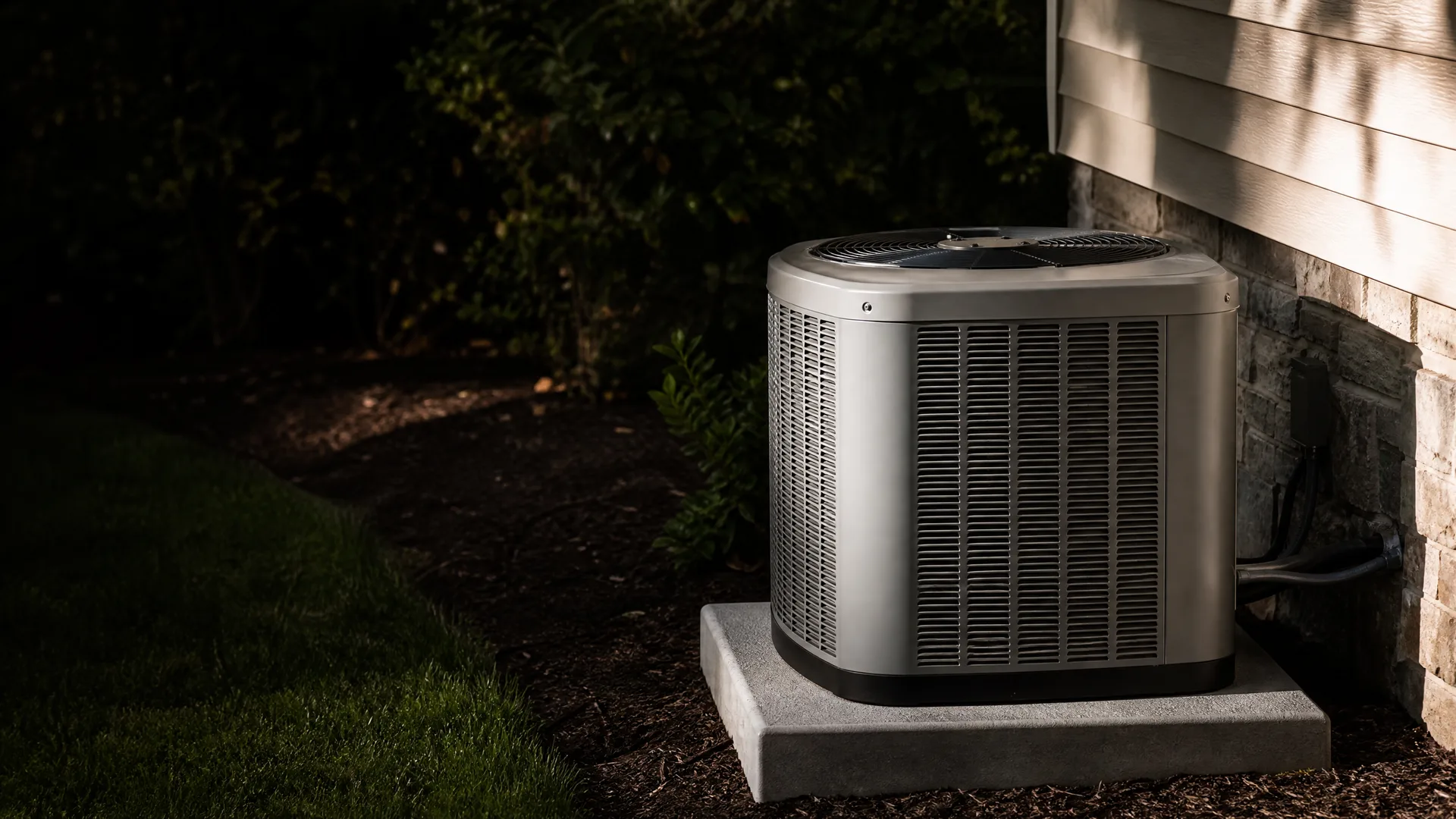
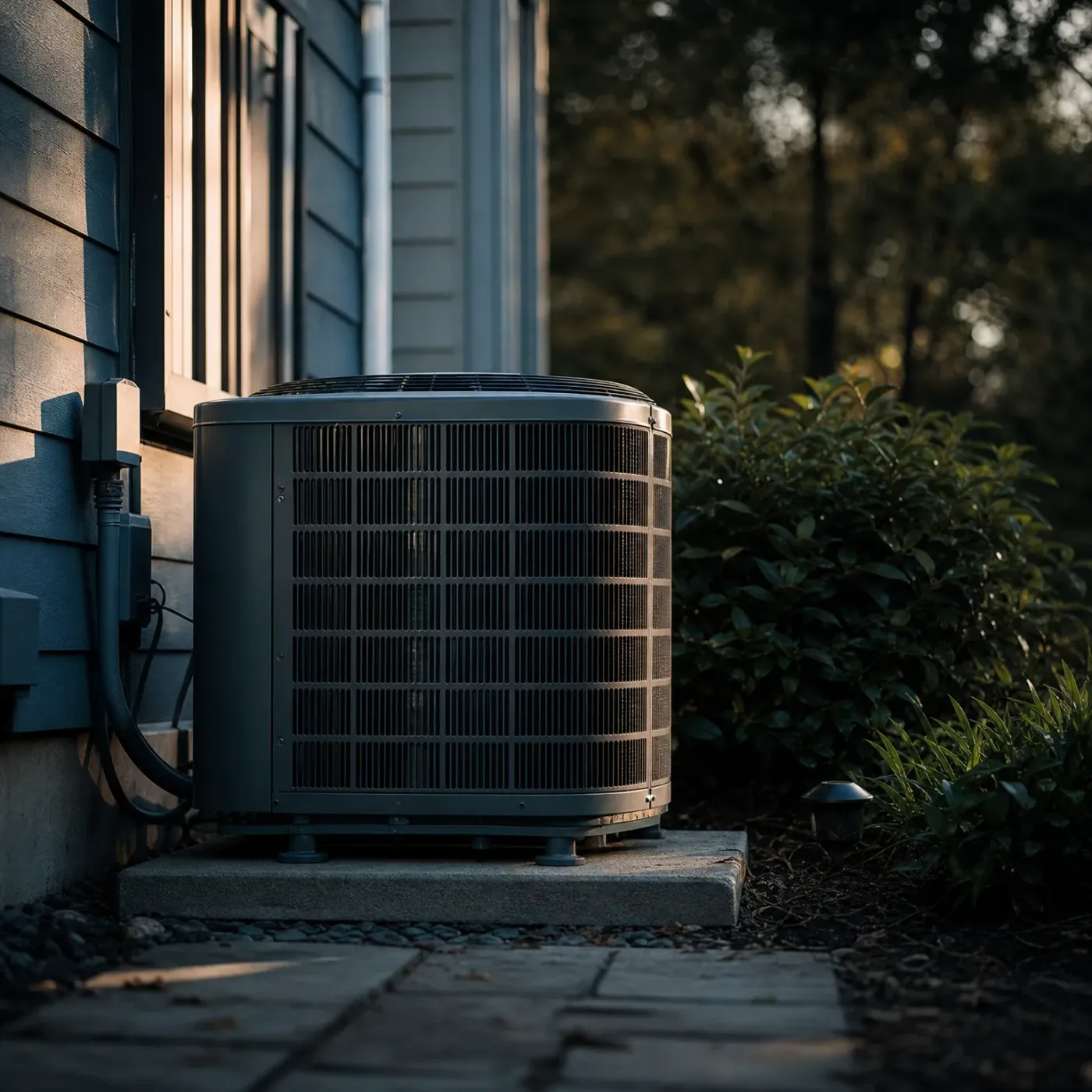
An outdoor air conditioning condenser unit on a concrete pad beside a house with horizontal siding, with an electrical disconnect box on the wall and shrubs to the right in low evening light.

Let someone else find the pro

How long an AC should run on a hot Tennessee day

On a hot Tennessee day, your AC should run long stretches, sometimes close to nonstop, and that's not always a problem. This page gets into how long is normal, what a short-cycling or always-on unit tells you, and when it's worth getting a second opinion. Skip calling around for someone to look at it. Send the form and let a contractor come to you.

I'm done searching

On a hot Tennessee day, your AC can reasonably run most of the afternoon, and on the worst days, close to nonstop. That's by design. When it's 95 outside and you've got the house at 72, the unit is fighting a big gap, and it has to move a lot of heat out to hold that line. A well-matched system sized right for your house will still run long stretches on days like that, cycling off only for short breaks rather than shutting down for a while between runs. What tells you something is wrong isn't a long runtime. It's a unit that never shuts off even in the evening once it's cooler, or one that clicks on and off every few minutes without settling into a steady run. Either pattern points to something worth checking, whether that's a weak capacitor, low refrigerant, or a system that's been undersized for the house from the start.

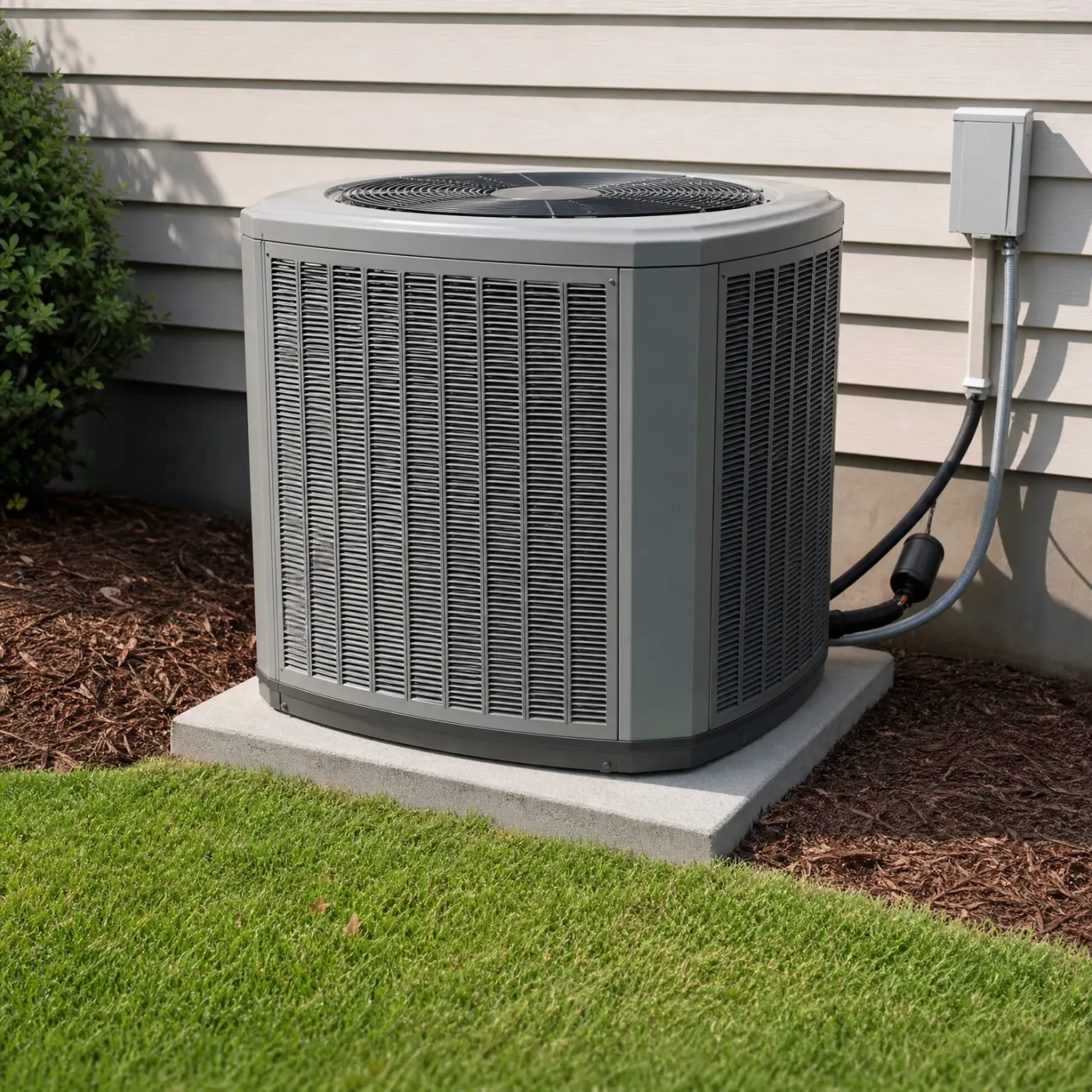
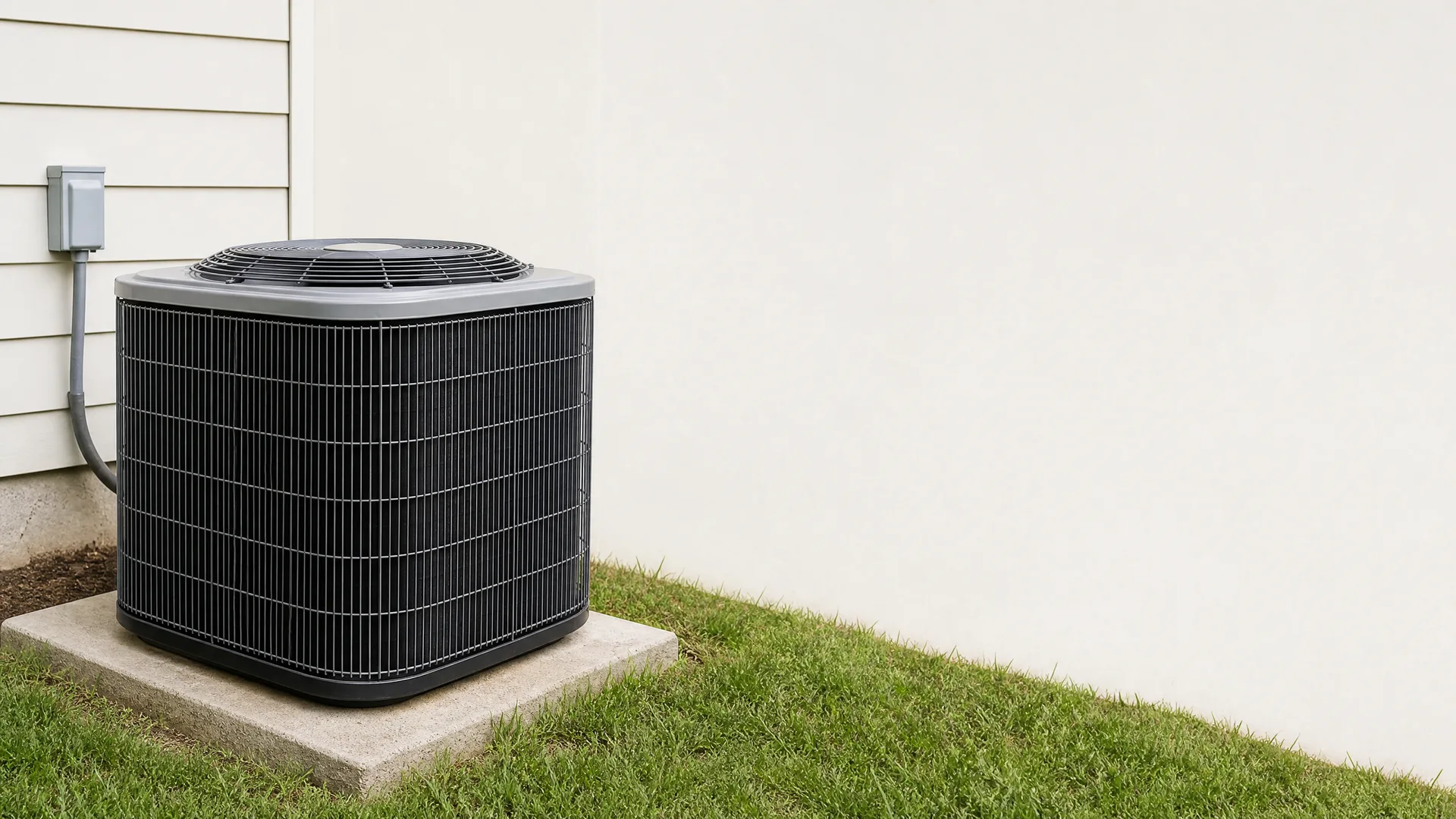
An outdoor air conditioner condenser unit on a concrete pad beside a house wall, with a gray electrical disconnect box and conduit above it and grass in the foreground.

Why long runtimes make sense

An air conditioner cools by moving heat out of the house, not by switching on and blasting cold air. When the gap between outside and inside is wide, the unit has to keep moving that heat for a long stretch to hold 72 inside. A well-sized system running 40 or 50 minutes an hour on a 95 degree day isn't struggling. It's doing the job it was built for, at the pace that job takes.

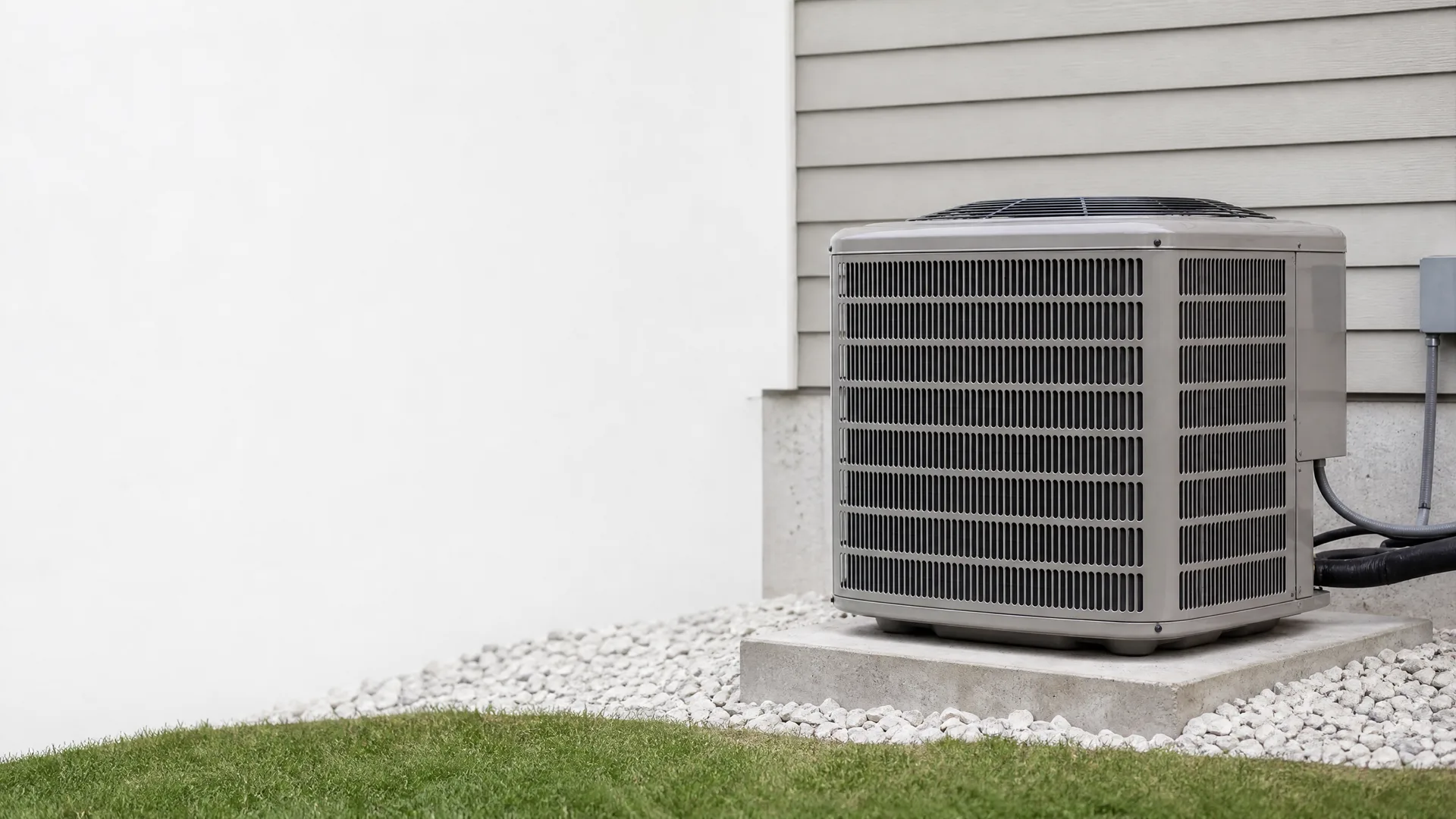
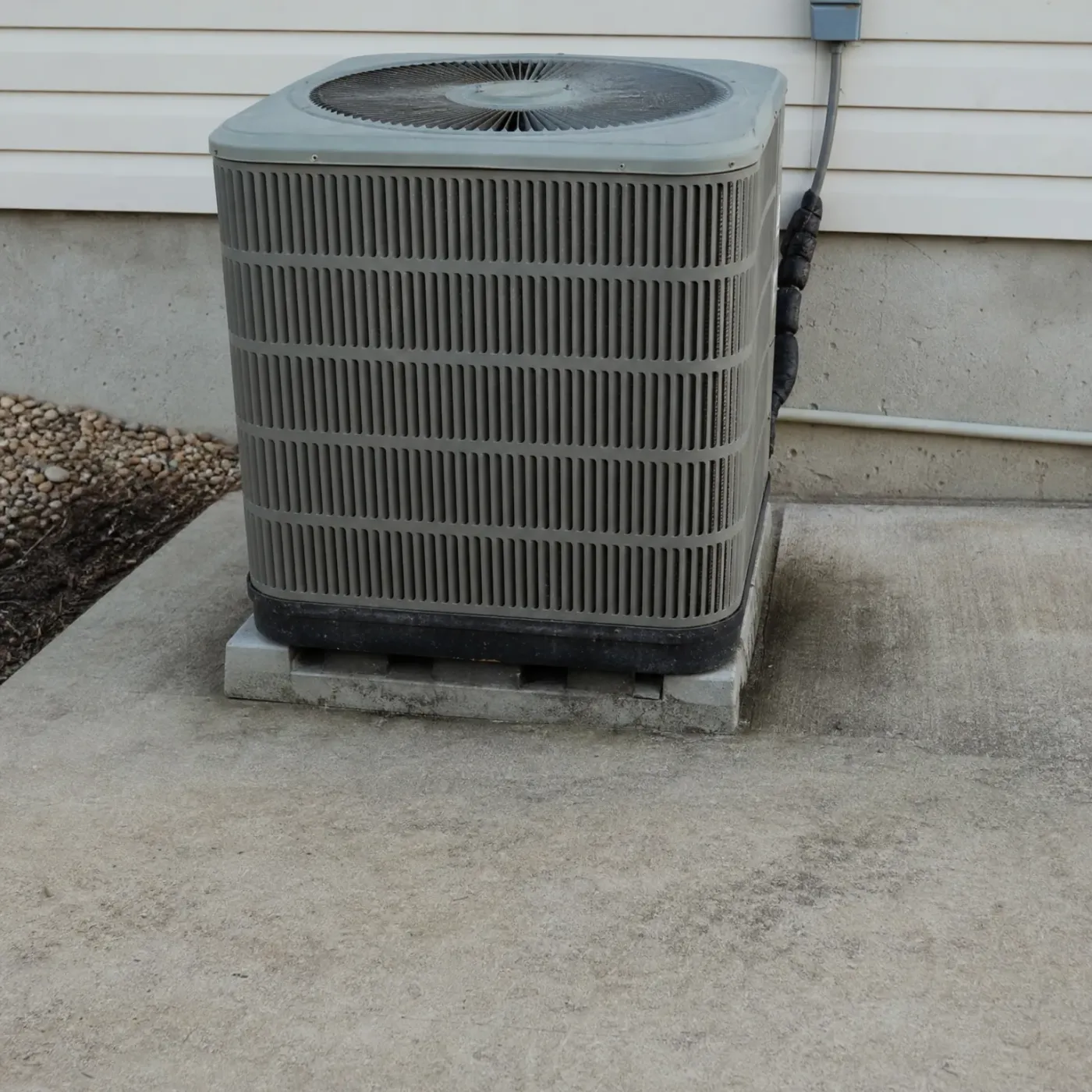
A gray outdoor air conditioner condenser unit on a concrete pad beside a house with horizontal lap siding, surrounded by white gravel and a lawn, with a white wall at left.

What short cycling costs you

A unit that shuts off after five or ten minutes, then kicks back on soon after, isn't getting ahead of the heat. Each restart pulls a jolt of power to get the compressor moving again, more than the run itself uses. Over a season those restarts add up on the bill, and the stop-start strain is harder on the compressor than one long, steady run would be.

Is your AC running longer than it used to?

You might notice the outdoor unit humming well into the evening, long after the sun's down and it should be catching a break. Or the air coming out of the vents feels less cold than it did last summer, even though the unit sounds like it's working just as hard. Maybe one room stays warm no matter how long the system runs, or the thermostat shows it cycling on and off every few minutes instead of settling into a steady stretch. On their own, these can be small things. Left alone, they tend to mean the unit is working harder to do the same job, and that shows up on the power bill before it shows up as a breakdown.

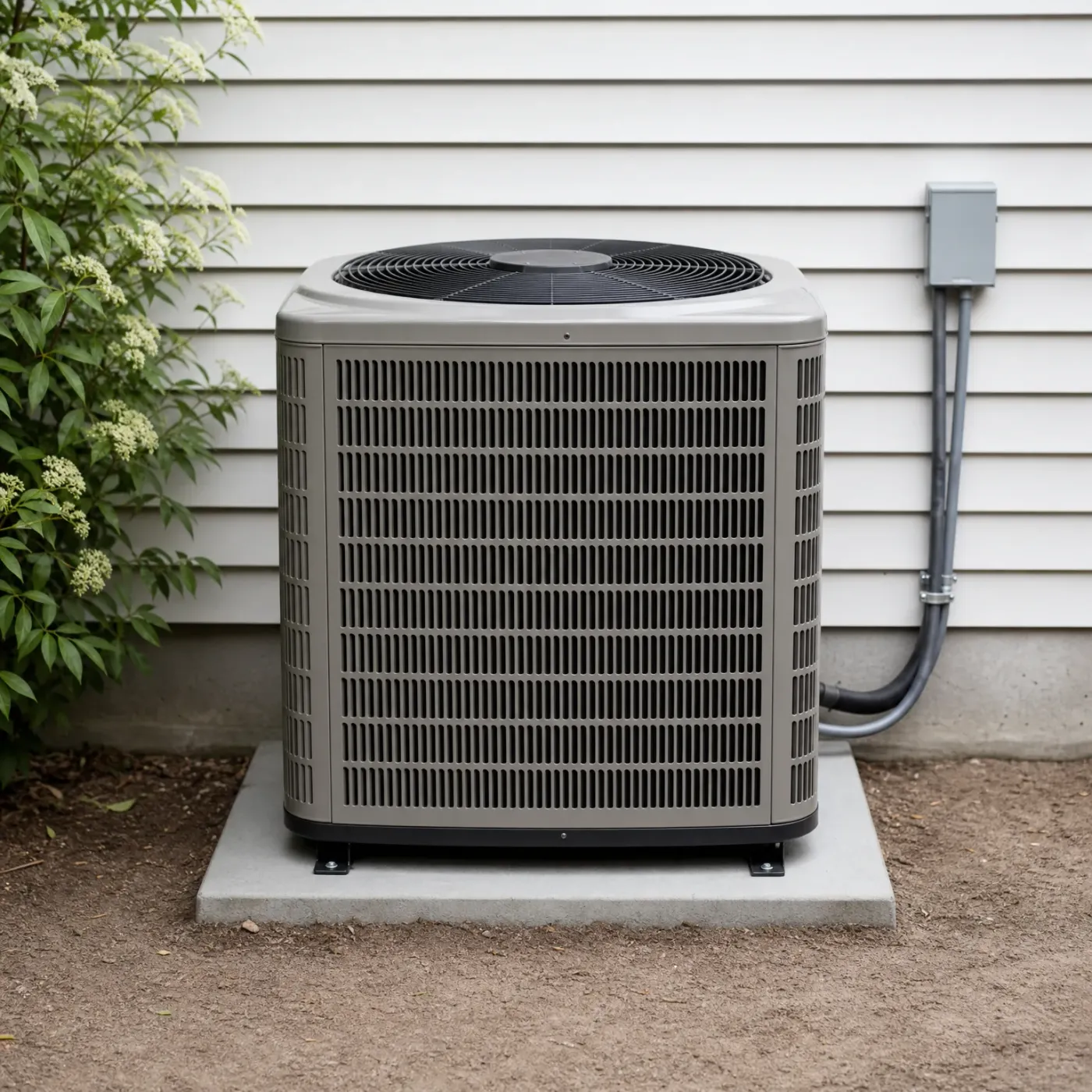
A gray outdoor air conditioner condenser unit on a concrete pad beside a house with horizontal lap siding, with a flowering shrub at left and a disconnect box with conduit on the wall at right.

Running long, cooling fine

This is a unit doing its job. It cycles on in the heat of the afternoon, runs for a long stretch, and brings the house down to temperature before it shuts off. The pad is clear, the lines are clean, and nothing around the cabinet is blocking airflow.

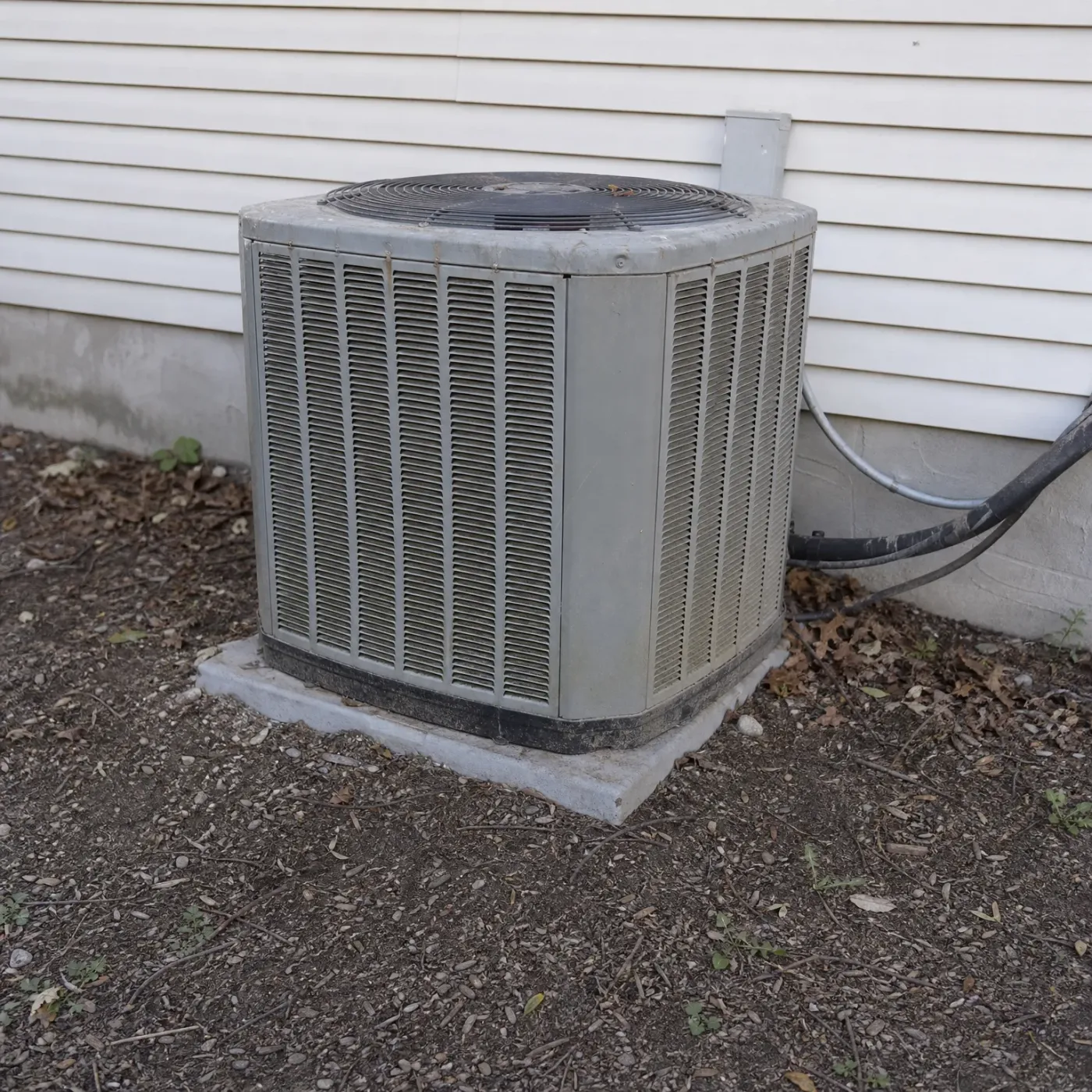
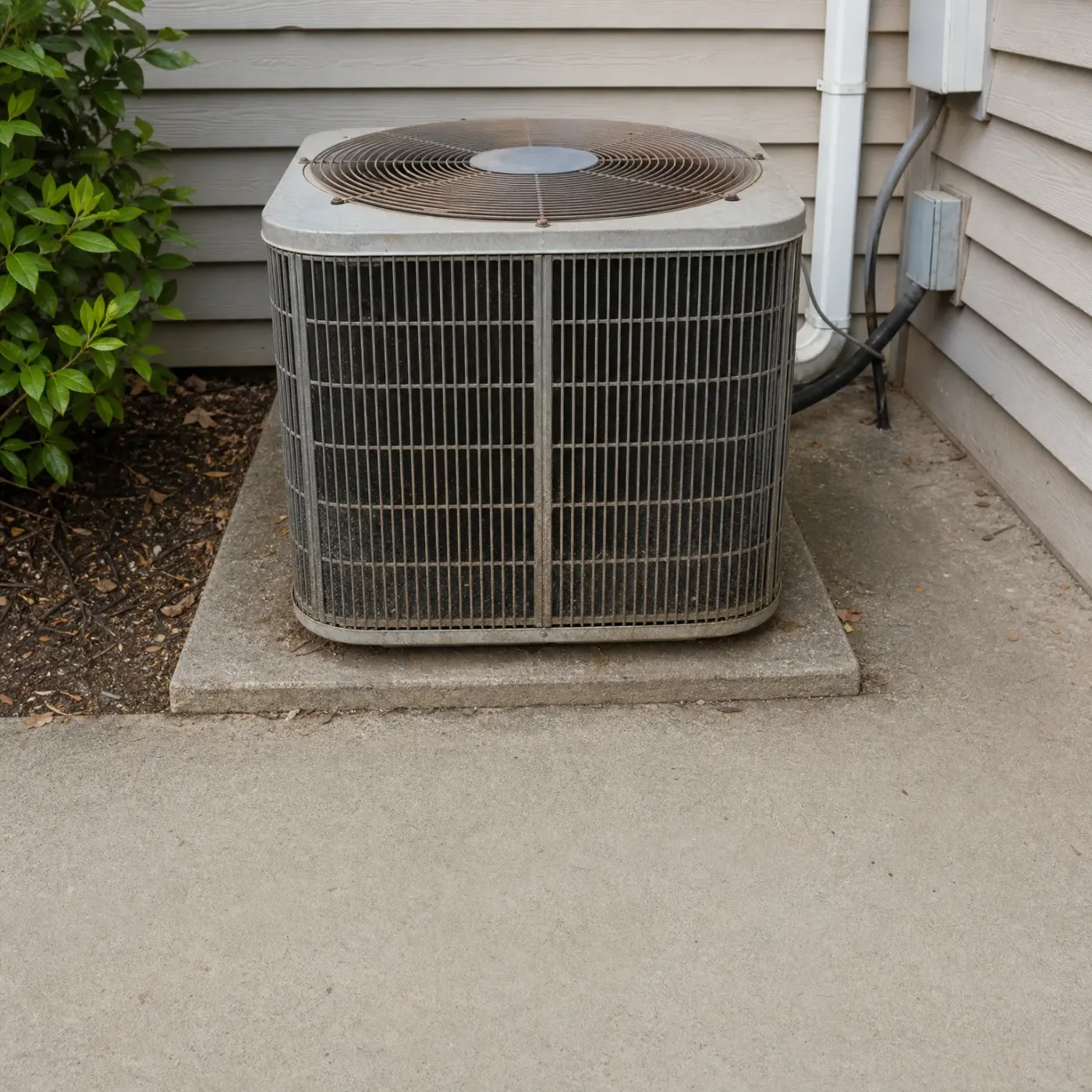
An outdoor air conditioner condenser unit on a concrete pad beside a house with light horizontal vinyl siding, surrounded by bare dirt, gravel and dry leaves, with refrigerant lines and conduit running along the wall.

Running long, falling behind

Leaves and dirt have built up around the base, and the coil underneath is likely coated with them too. A condenser that can't breathe has to work harder to move the same heat, and on a 95 degree day that's the difference between a long run and one that never ends.

A smiling man with dark curly hair in a navy t-shirt sits on a gray couch indoors, with a large-leafed plant and a window in the background.
A bearded man in a plaid flannel shirt stands in a kitchen looking out a window toward snow-covered shrubs, with a steaming mug on the windowsill and potted plants on a shelf behind him.

The cycle starts at the thermostat. Once the air crossing it reads above your set point, the outdoor unit and the indoor coil kick on together, and they stay on until the return air drops back down. That's not the system struggling. A compressor sized correctly for your house is built to run long, because a quick burst of cooling doesn't give the coil time to drain off the moisture it pulls from the air. Stopping and starting costs the system too. Each restart draws a hard pull of current just to get the compressor moving again, more than it uses once it settles into a steady run. The whole time it's running, the blower is pulling air across the coil, and that steady airflow is what's actually wringing the humidity out of your house, not just the temperature. If the coil is dirty or the refrigerant charge is low, the system moves less heat with each pass, so it has to stretch the runtime to get there. When the house finally hits temperature, the compressor cuts off, and the fan may keep turning a few minutes more to push the last of that cooled air through the ducts.

What's happening during that long cycle

  • The thermostat calls for cooling when the room air crosses the set point, and the outdoor unit and indoor coil run together until the air at the return drops back below that mark.
  • A compressor that's sized right for the house runs in long cycles on purpose, because short bursts leave moisture on the coil instead of draining it out.
  • Every time the system shuts off and restarts, the compressor draws a heavy jolt of current just to get moving again, more than it uses while running steady.
  • The blower keeps pulling air across the evaporator coil for the whole cycle, and that steady airflow is what pulls humidity out of the house along with the heat.
  • A unit that's low on refrigerant or has a dirty coil moves less heat per minute, so it has to stretch the cycle longer to reach the same set point.
  • Once the house finally reaches the set temperature, the compressor shuts off and the fan may run a little longer to push the last of the cool air through the ducts.
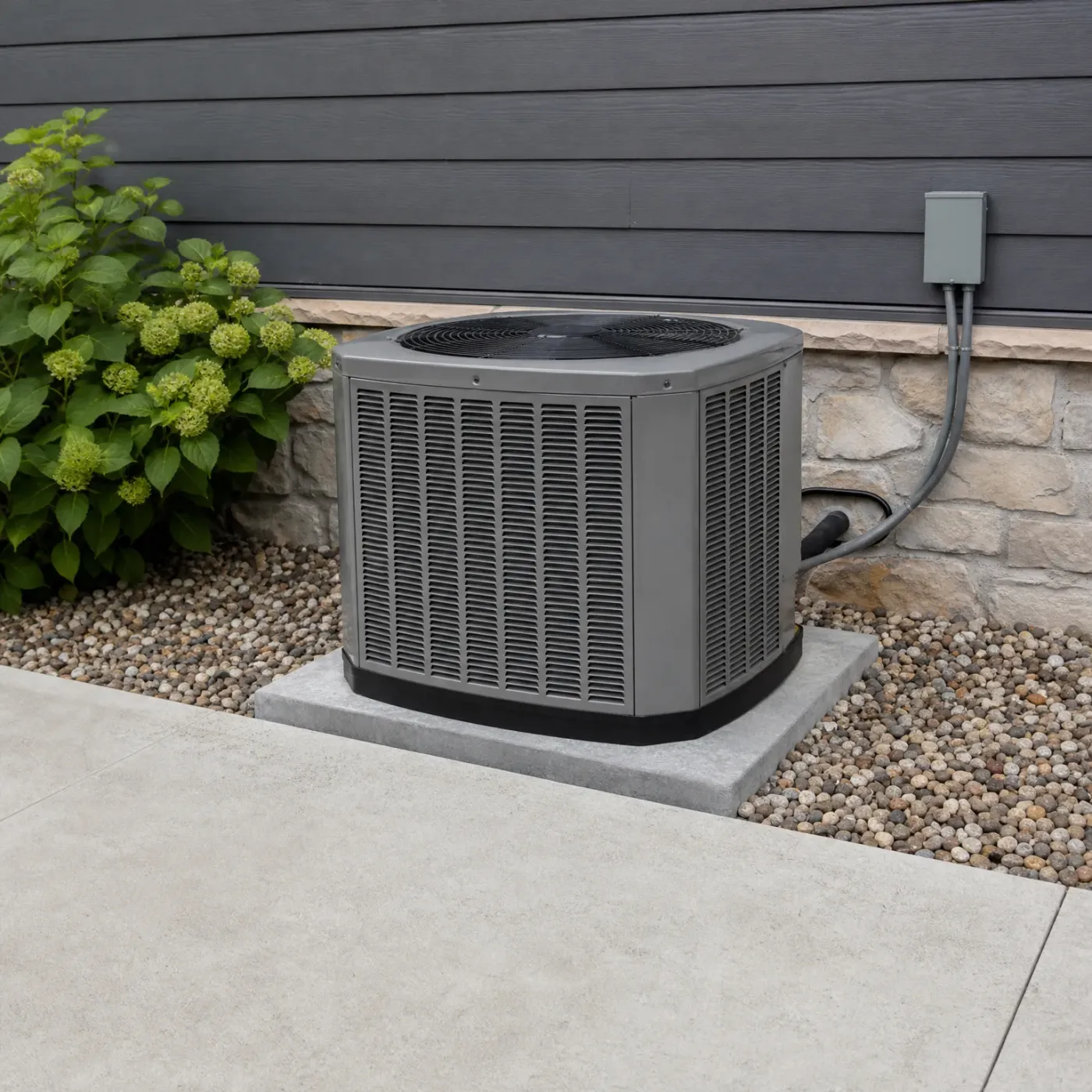
A gray outdoor air conditioner condenser unit on a concrete pad beside a house with dark horizontal siding and a stone base, surrounded by gravel, with a flowering shrub at left and a concrete walkway in front.
A clean unit on a clear pad can run long on a 95 degree day and still bring the house to 72.
An outdoor air conditioner condenser unit sits on a concrete pad beside a stucco wall, with refrigerant lines and conduit running to the wall and a shrub to the left.
Grime packed into the fins and a casing that's taken a beating make that same long runtime a sign something's falling behind.
A smiling man in a gray long-sleeved shirt stands in a kitchen looking to the side, with open shelves of dishes, a white mug on the counter, a potted plant, and a view through a doorway into a living room.
A smiling bearded man in a green sweater sits at a white marble kitchen island with a mug, potted plant and bowl of fruit, in a bright white interior with open shelving and an arched doorway.
A smiling man with dark curly hair and a beard, wearing a dark green knit sweater, stands at a white marble kitchen counter with a dark blue mug, with open shelving, pendant lights and a houseplant behind him.
A smiling man in a green ribbed sweater stands behind a wooden table holding a ceramic mug of coffee in a kitchen with white subway tile, shelves of potted plants, and a bowl of fruit.

One request and it's handed off

A long runtime on a 95 degree day doesn't tell you by itself whether the unit is working hard because it has to, or working hard because something inside it is losing ground. The clues are there, the coil temperature, the airflow at the vents, how the compressor sounds after an hour, but most homeowners aren't going to climb up and check a capacitor or measure static pressure in the ductwork. A maintenance visit does that part. A tech who services AC units in Tennessee all summer knows what a unit laboring on a clean coil sounds like next to one laboring because the coil's packed with grime, and what that difference costs you in July and August. Instead of guessing at what your long runtime means, or spending an evening calling around to find someone who'll actually show up and look at it, send the request once and let a contractor take it from there. The house stays at 72 either way. Whether it gets there cheaply is the part worth knowing.

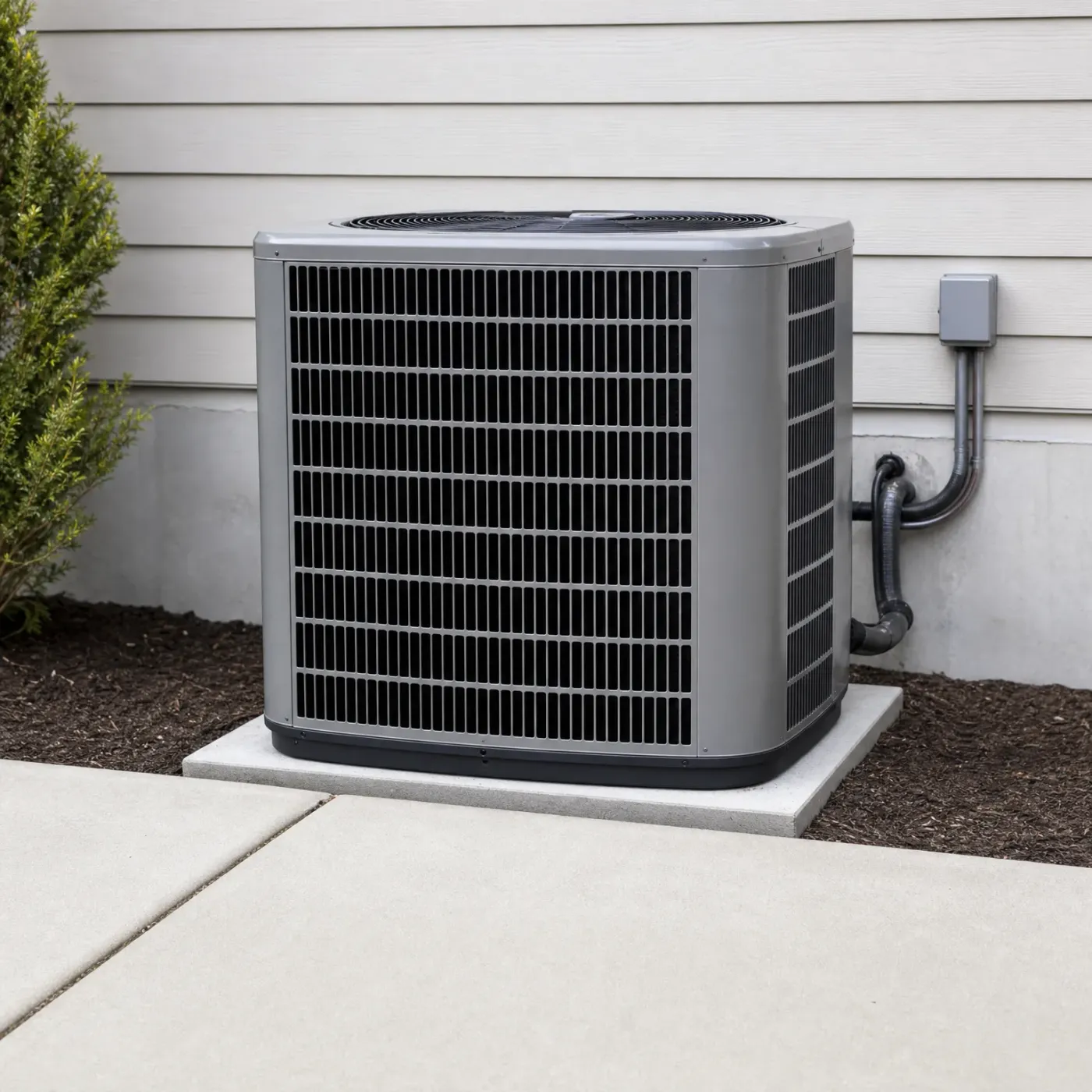
A gray outdoor air conditioner condenser unit on a concrete pad beside a house with horizontal lap siding, with a wall-mounted disconnect box and conduit, mulch bed, shrub, and lawn nearby.

Normal setup, clean lines

This is what a unit built to run long stretches looks like outside. Lines run clean up the wall, the pad sits clear in the mulch, and the cabinet shows no damage. Nothing here is fighting the heat, it's just moving it.

An outdoor air conditioner condenser unit sits on a gray pad beside a light vinyl-sided wall, on a concrete slab next to a gravel bed.

Same setup, strain showing

Same kind of unit, same spot beside the house, but look closer at the conduit and lines running up the siding. A unit that looks worn or crowded here can still run long on a 95 degree day, except now that runtime is the unit struggling, not just working.

Why does my AC run so much longer on really hot days?

Why does my AC run so much longer on really hot days?

Because the gap it's working against gets bigger

At 85 degrees outside, the unit is closing a 13 degree gap to hold the house at 72. At 98, that gap is 26 degrees, almost double the heat it has to move. The compressor doesn't work twice as hard in that moment. It just has to keep working for longer, because the heat keeps pushing back into the house as fast as the system pulls it out. That's why a cycle that took twenty minutes in June can run an hour in August. The outdoor temperature sets how much work there is to do. The runtime is just that work getting done, one degree at a time, until the thermostat reads 72.

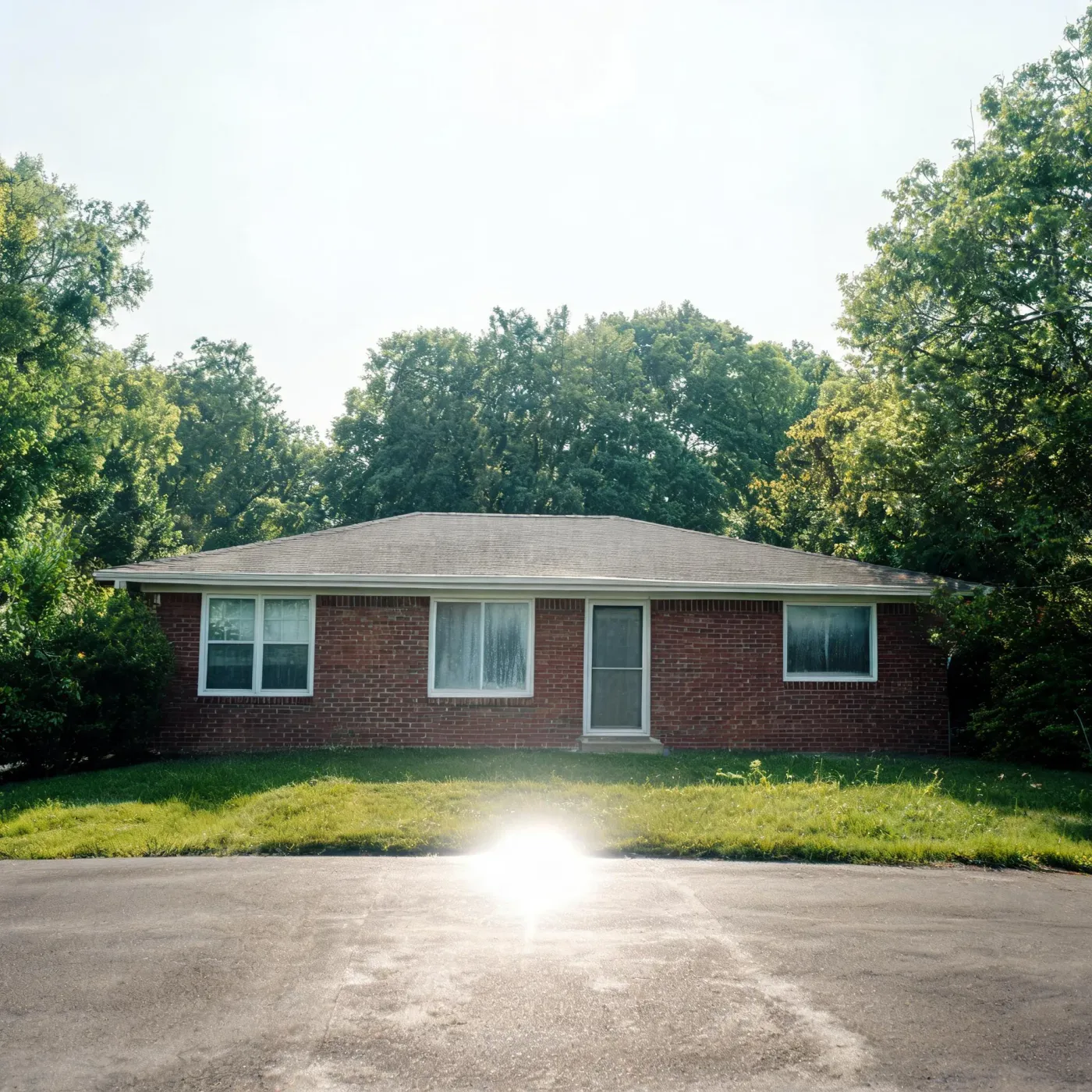
A single-story red brick house with a shingled hip roof, three windows and a central storm door, fronted by a mowed lawn and an asphalt driveway, with dense green trees behind it and sun flare in the foreground.

Tennessee summers don't just run hot, they run heavy. Average dew point across June, July and August sits at 66°F, per NOAA climate data, and that's the number that decides how thick the air feels on your skin. A dew point in the 60s means your AC isn't only pulling heat out of the house, it's wringing water out of the air too, and that takes extra runtime on top of whatever the temperature alone would ask for. That's part of why the unit can still be running at 7pm even after the thermostat's held steady for a while. The coil is doing two jobs at once, and the second one doesn't show up on the thermostat display.

NASA POWER T2MDEW county cells weighted by homes

An outdoor air conditioning condenser unit on a concrete pad beside a house with horizontal lap siding, with a shrub and mulch bed to the left and conduit and a small electrical box on the wall to the right.
Before you get your air conditioner maintenance
A gray outdoor air conditioner condenser unit sits on a concrete pad beside a house with horizontal lap siding, with conduit and an electrical disconnect box on the wall, dark mulch and a shrub to the left, and a concrete walkway in the foreground.
After you get your air conditioner maintenance

A unit that's never been serviced runs long on a hot day because it's fighting dirty coils and a dusty filter on top of the heat. More of that runtime is wasted.

A unit that gets serviced every year runs long on a hot day because that's just what the heat demands. None of that runtime is wasted.

Power costs 13.22 cents per kilowatt-hour statewide

At 13.22 cents per kilowatt-hour, those long runtimes on a 95 degree day cost less here than in most states. That's worth knowing before you assume a long afternoon of cooling means something's wrong. A unit that's kept up with maintenance makes the most of that cheap power instead of wasting it on dirty coils.

EIA-861 2025 statewide residential average

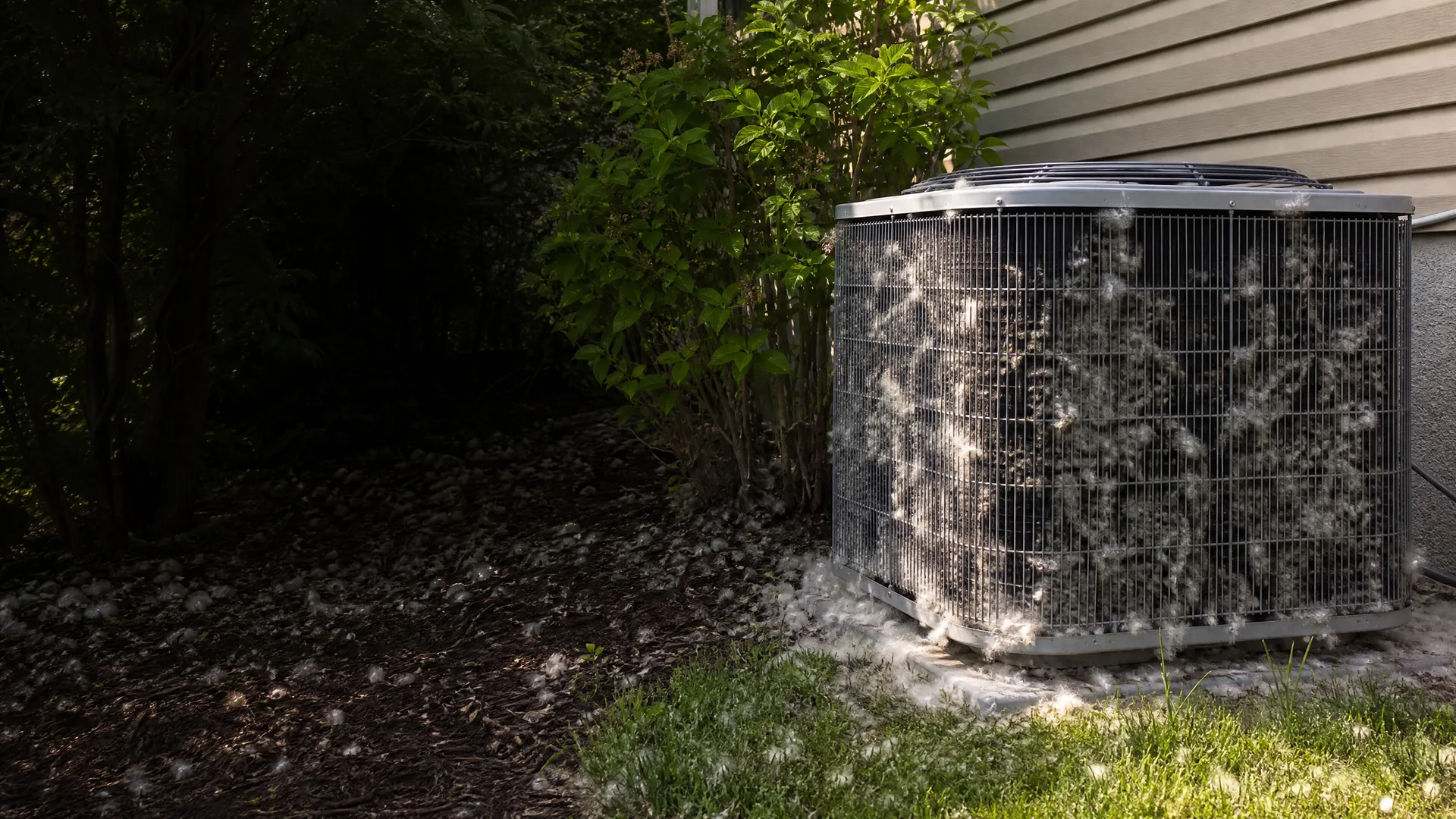
An outdoor air conditioner condenser unit beside a house with horizontal siding and stucco, its coil fins covered in white cottonwood fluff that also collects on the surrounding grass and mulch.

Late May, and the cottonwoods along the side yard have already let go of their seed. It drifts down all afternoon and catches on anything with a screen. You walk around back to check on the unit and find the fins on the condenser gone white and fuzzy with it, packed in tight across the whole face of the coil. The thing is still running, you can hear it, but the airflow through that fluff is a different story than it was a week ago. You crouch down and press a finger to the mesh of it. It doesn't budge easy. Behind you the house is holding at 72, for now, and the unit just keeps running into the evening trying to make that happen through a coil that's half-covered.
A closed silver laptop and a ceramic mug of dark coffee sit on a wooden table in front of two chair backs, with a kitchen counter, tiled backsplash, wooden cutting boards, a vase of greenery and a potted plant by a window behind.

So the long runtime itself isn't the problem

On a 95 degree day in Tennessee, your AC running most of the afternoon is normal. What matters is whether the house gets to temperature while it's running, and whether the unit gets a break once the sun goes down. A long runtime that ends in a cool house is a unit doing its job. A long runtime that doesn't is telling you something's falling behind, whether that's a clogged filter, a dirty coil, or a part starting to wear out.

You don't have to figure out which one it is by yourself, and you don't have to find out the hard way, on the hottest day of the year, with the unit running flat out and no answer. Once you send the form, you're done hunting down a contractor, calling around to see who can come out, and explaining the same thing to three different people before you get a straight answer. Someone licensed to look at the unit takes it from there.

Interior corner of a room with a window and sheer curtain at left, a gray upholstered sofa with a cushion at right, and a round wooden table holding stacked books and a round vase with an olive branch.
An outdoor air conditioner condenser unit sits on a concrete pad beside a house with horizontal siding and stone veneer, next to mulch, shrubs, and grass.

Done looking for an air conditioner pro

Step 1 of 3: Equipment