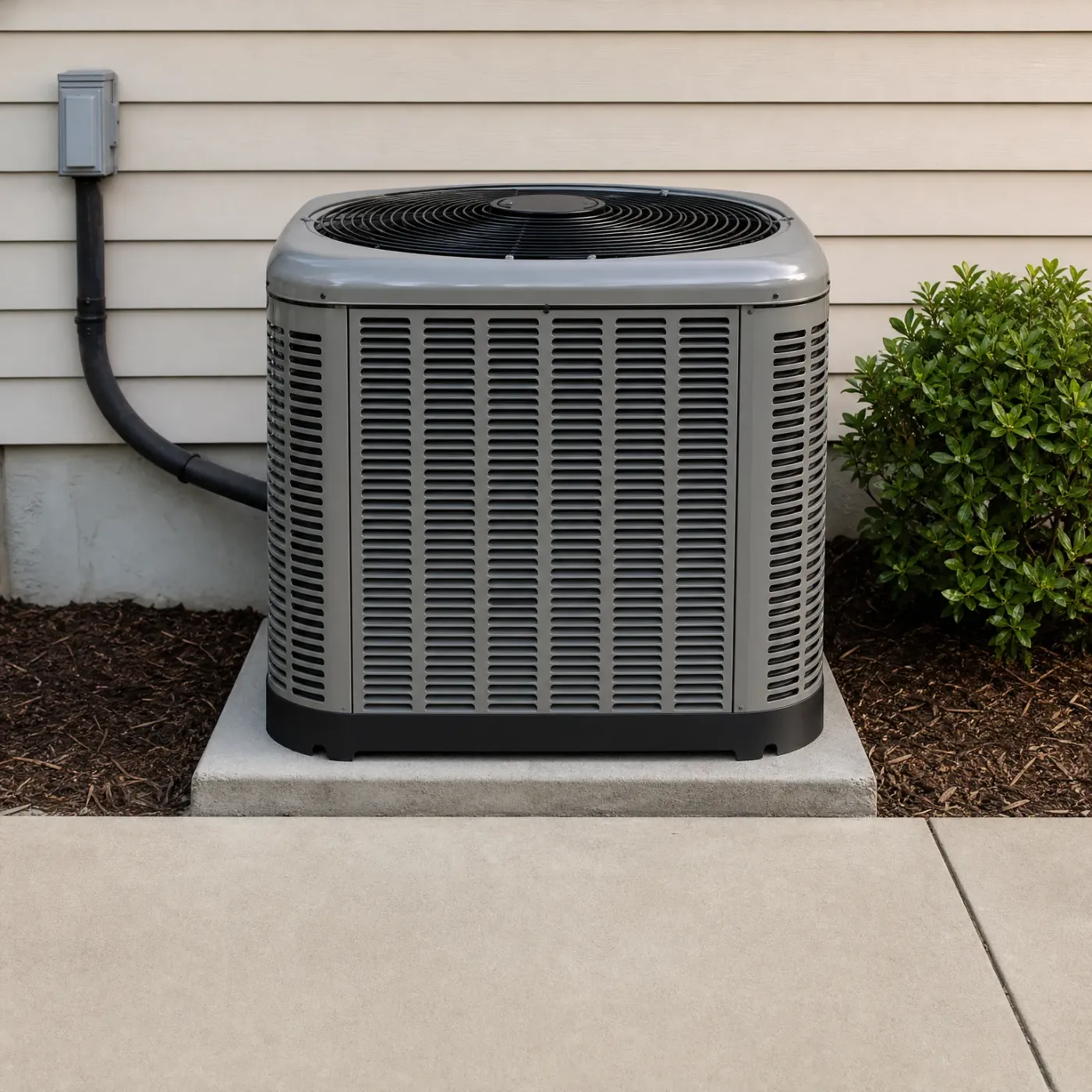
Clean and clear
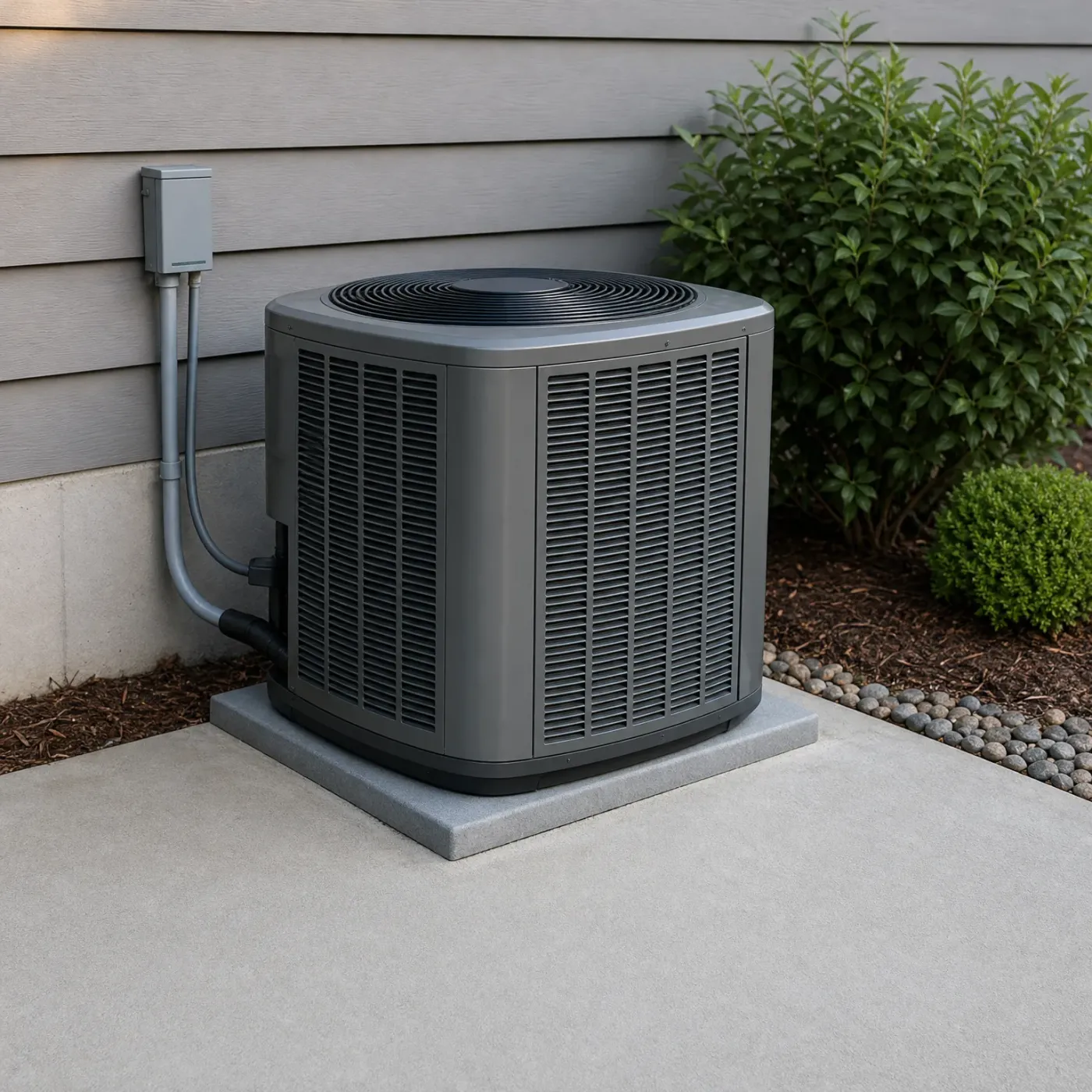
The coil behind that grille is open to the air, and the pad around it is clear. Air moves through the unit the way it was built to, so it can dump heat outside and shut off when the house reaches the temperature on the thermostat.
 Find my pro
A local pro who services air conditioners gets in touch about the tune-up.
Tennessee summers sit heavy, and your air conditioner runs long hours just to keep up. Power here is cheap compared to a lot of places, but an AC working harder than it needs to will still show up on the bill. Most of that extra work traces back to the same thing: a system that isn't running the way it did when it was new.
A dirty coil, a low refrigerant charge, a clogged filter, a blower pulling more than it should. None of these stop your AC from running. They just make it run longer and pull more power to cool the same house. You won't see any of that by looking at the unit from across the room.
Maintenance is how a contractor finds which of those is happening in your system, not every system. Checking the charge, cleaning the coil, testing the capacitor, confirming the airflow is what it should be. It's the difference between a unit that cools your house and shuts off, and one that runs most of the afternoon to do the same job.
You don't need to know which of those applies to your AC. That's what a visit is for. What you need is someone who can look at your specific unit, in your house, and tell you what it's actually doing.
Send in your information and a contractor who handles AC maintenance in your area will follow up with you directly. No need to spend your afternoon calling around and comparing schedules. Once you submit the form, that part is off your plate. You'll hear from someone who can look at your unit and tell you, specifically, what's driving your bill up this summer.
Summer bills in Tennessee can jump a lot once the heat and humidity settle in, and it's natural to wonder if something's wrong with the unit or if this is just what a Tennessee summer costs. The honest answer is usually a mix of both: the climate asks more of your system than most parts of the year do, and a system that isn't running clean asks for even more than it should.
Humidity makes your air conditioner do two jobs at once: pulling moisture out of the air and cooling it. That takes more run time than cooling dry air does, so the bill climbs even when the unit is in good shape. Where the extra cost comes from on top of that is a system losing efficiency. Dirty coils, a clogged filter, or low refrigerant all make the unit run longer to reach the same temperature, and longer run time is what shows up on the bill. A system that's been serviced regularly runs closer to what it's supposed to. One that hasn't will cost more every month it goes without, not just in July.




The outdoor unit has a condenser coil that dumps heat from inside your house into the outside air. When that coil is coated with dust, pollen or grass clippings, it can't shed heat as easily, so the system runs longer to do the same job. The indoor coil works the same way in reverse, pulling heat out of the air moving through your ducts. A thin layer of grime on either coil makes the compressor work harder and the fan run longer to reach the same temperature on the thermostat. That longer runtime is what shows up as extra dollars on the bill, not a mystery charge.
An air conditioner is built to move a set amount of air across its coil. A dirty filter or a blocked vent cuts that airflow down, and the system has to run longer to push the same amount of cool air through the house. Low refrigerant does something similar from the inside: the coil can't absorb heat the way it should, so the compressor cycles longer trying to catch up. Either way, the thermostat on the wall reads the same number, but the equipment behind it is working past what it was designed to do, and that difference is what a maintenance visit is built to catch before it costs you a full summer.


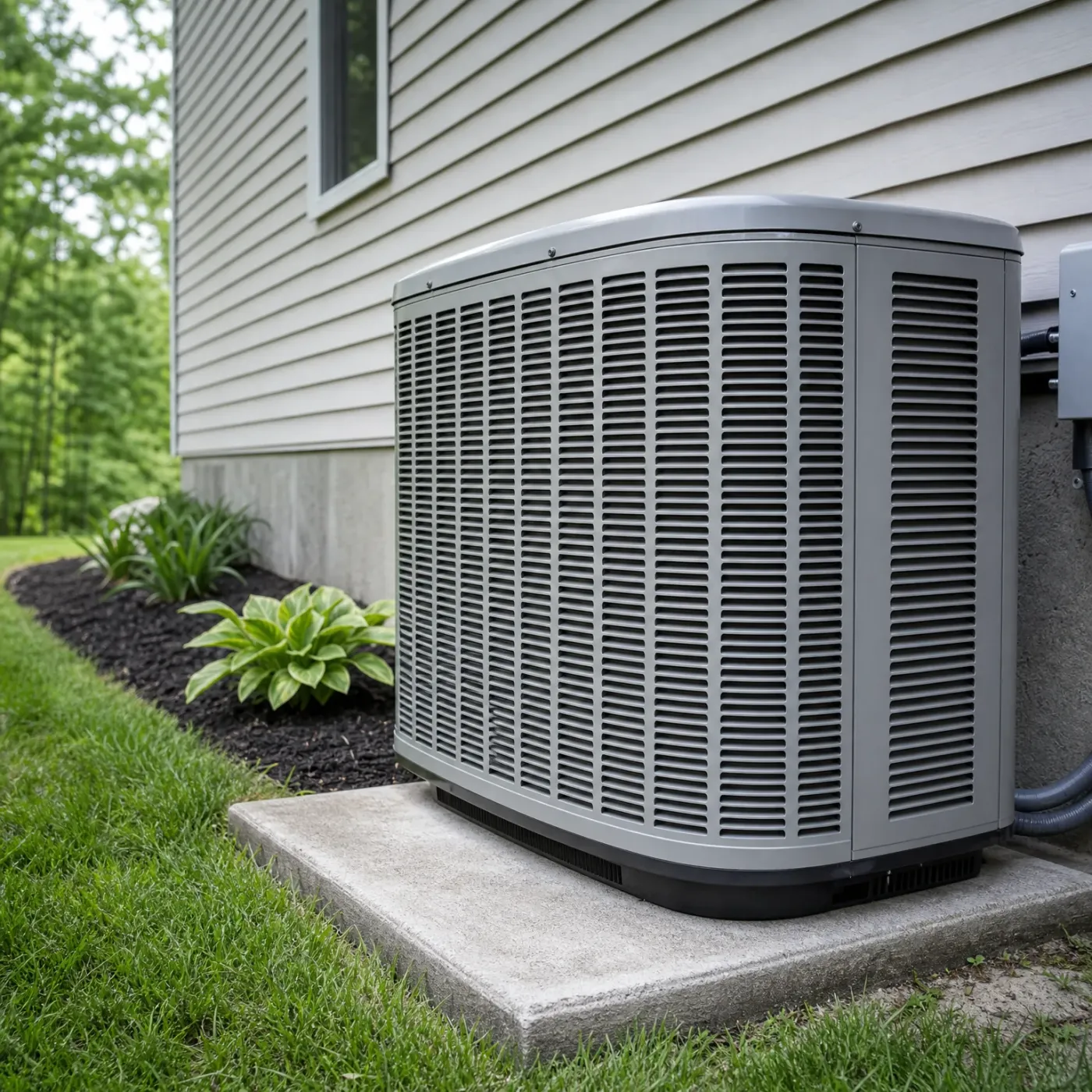
One request and finding someone for the tune-up is handled.
Describe your air conditioner job, and a local pro who handles it gets in touch.
No charge to send it. You decide if you hire them.
Listen for how often the outdoor unit kicks on. If it seems to barely shut off during the hottest part of the afternoon, or it runs through the evening when it used to cycle off by dinner, that's extra electricity you're paying for every single day. You might notice the air coming from the vents feels less cold than it used to, or that some rooms stay warm while others cool down fine. A thin layer of frost or ice on the copper line running to the outdoor unit is another sign something's making the system work harder than it should. Left alone long enough, a system that's straining can wear out parts faster than one that's running the way it was built to.
The coil behind that grille is open to the air, and the pad around it is clear. Air moves through the unit the way it was built to, so it can dump heat outside and shut off when the house reaches the temperature on the thermostat.
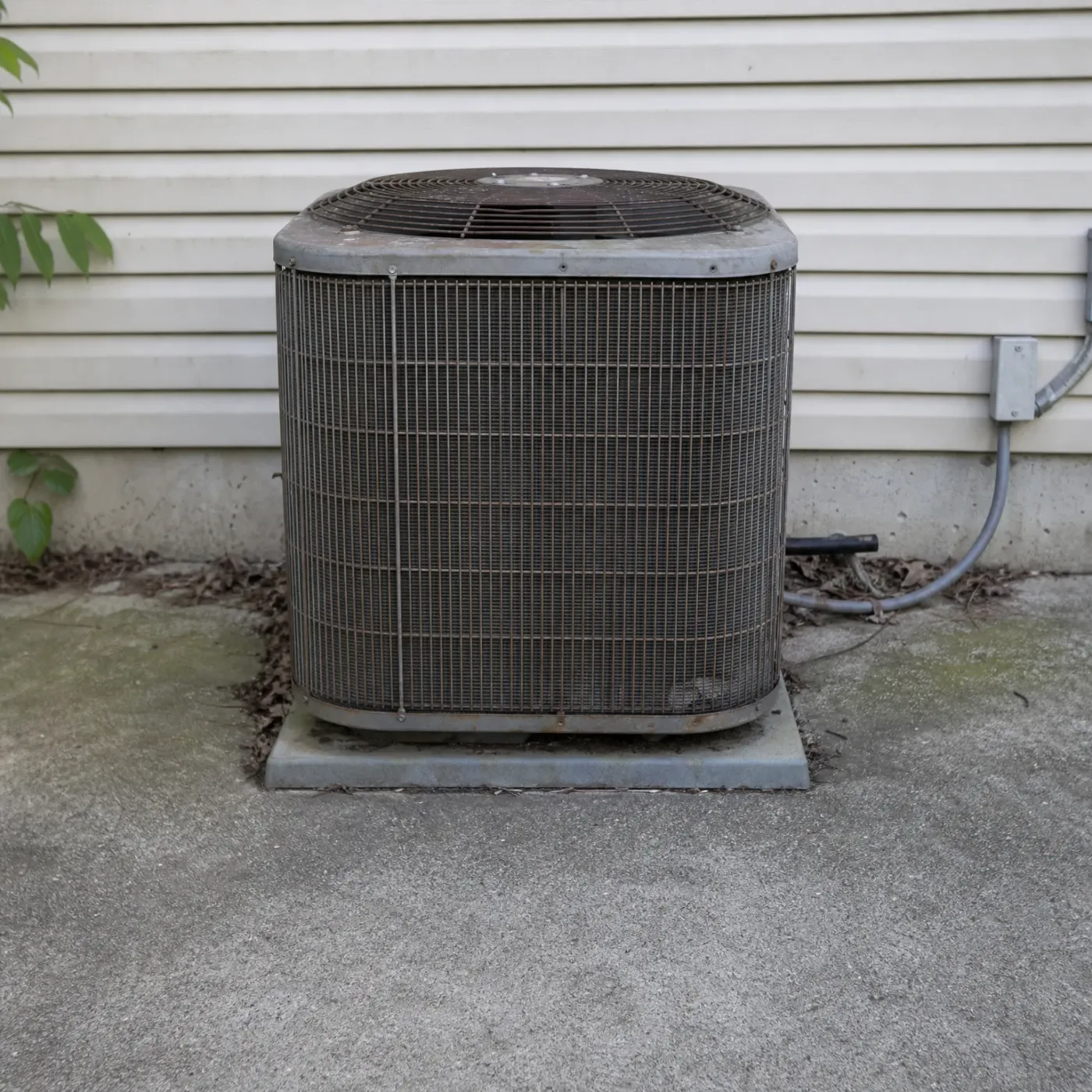
Leaves and debris have piled up against the base, and grime coats the grille. The coil underneath is likely coated too. The unit fights to push air through all that buildup, so it runs longer and still struggles to keep the house cool.
At 13.22 cents per kilowatt-hour, every extra hour your AC runs costs you something real, even if the rate itself is lower than what a lot of the country pays. A unit that's lost efficiency doesn't change your rate, it just makes you buy more hours of it.
EIA-861 2025 statewide residential average
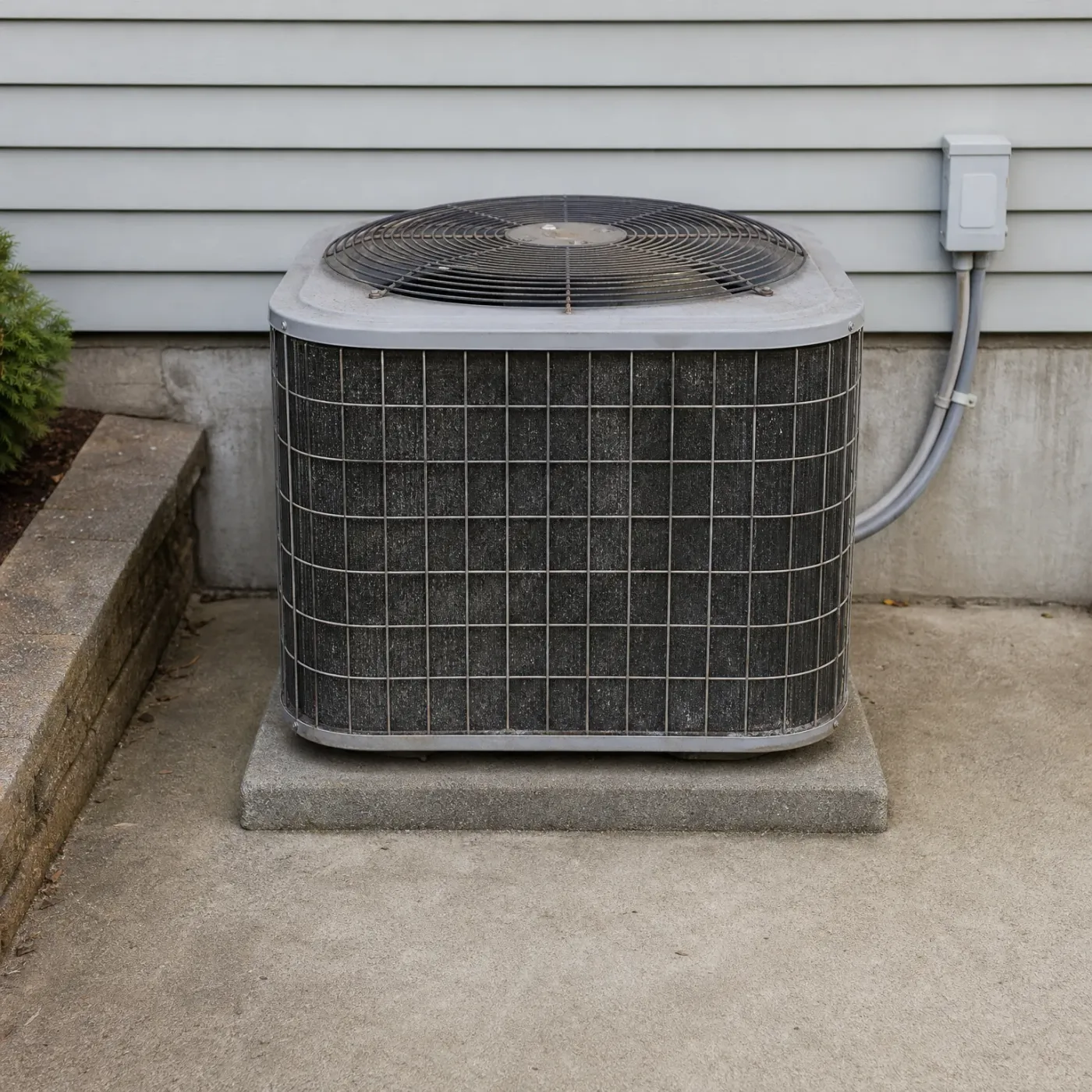
A dew point of 66°F across June, July and August, averaged over where homes sit in Tennessee, means the air itself is heavy with moisture, not just hot. Your air conditioner has to pull that moisture out before the house feels dry, and that's on top of lowering the temperature. A unit with a dirty coil or a low charge struggles more with that part of the job than with the heat alone, so it runs longer and still leaves the house feeling damp. If rooms feel clammy even when the thermostat says it's cool enough, that's the moisture, not the number on the wall.
NASA POWER T2MDEW county cells weighted by homes
A Tennessee summer is going to ask a lot of your air conditioner no matter what you do. What you can control is whether it's working clean or working dirty. A unit with a clear coil, a fresh filter and the right charge does the job in fewer hours than one that's lost ground to dust and grass clippings, and those hours are what show up on the bill. Maintenance doesn't change the heat or the humidity outside. It changes how hard the system has to work against it. If your AC has been running longer than it used to, or you can't remember the last time someone looked at it, that's worth answering before August gets here. You don't have to track down who does this kind of work or figure out who's any good at it. Send the form and that part is handled. Someone who works on these systems in Tennessee homes will reach out, and from there it's a conversation, not a chore you have to carry.
Send the form, and lining up the air conditioner tune-up stops being yours to chase.