

Tennessee AC Cooling

Is a variable-speed AC worth it in Tennessee

Step 1 of 3: Equipment

Is a variable-speed AC worth it in Tennessee

You're looking at a variable-speed AC for your Tennessee home and trying to figure out if the higher price tag actually pays off, or if it's just a feature that sounds good on paper. With summers here running long and muggy, you want to know if this is the kind of upgrade that earns its keep or just adds cost without changing much.

Yes, especially for humidity control and summer-long comfort

A variable-speed AC runs at low output most of the time instead of switching fully on and off. That longer, slower runtime pulls more moisture out of the air, which matters in Tennessee where summer humidity is the main source of discomfort, not just heat. A single-speed unit cools the air fast and shuts off, leaving the house cold but clammy. Since most homes here heat with electricity, a variable-speed system paired with a heat pump can also help on the milder days in spring and fall. With power priced low here, the running cost savings matter less than the comfort and humidity control, so weigh it as a comfort upgrade first, not a bill-cutting one.

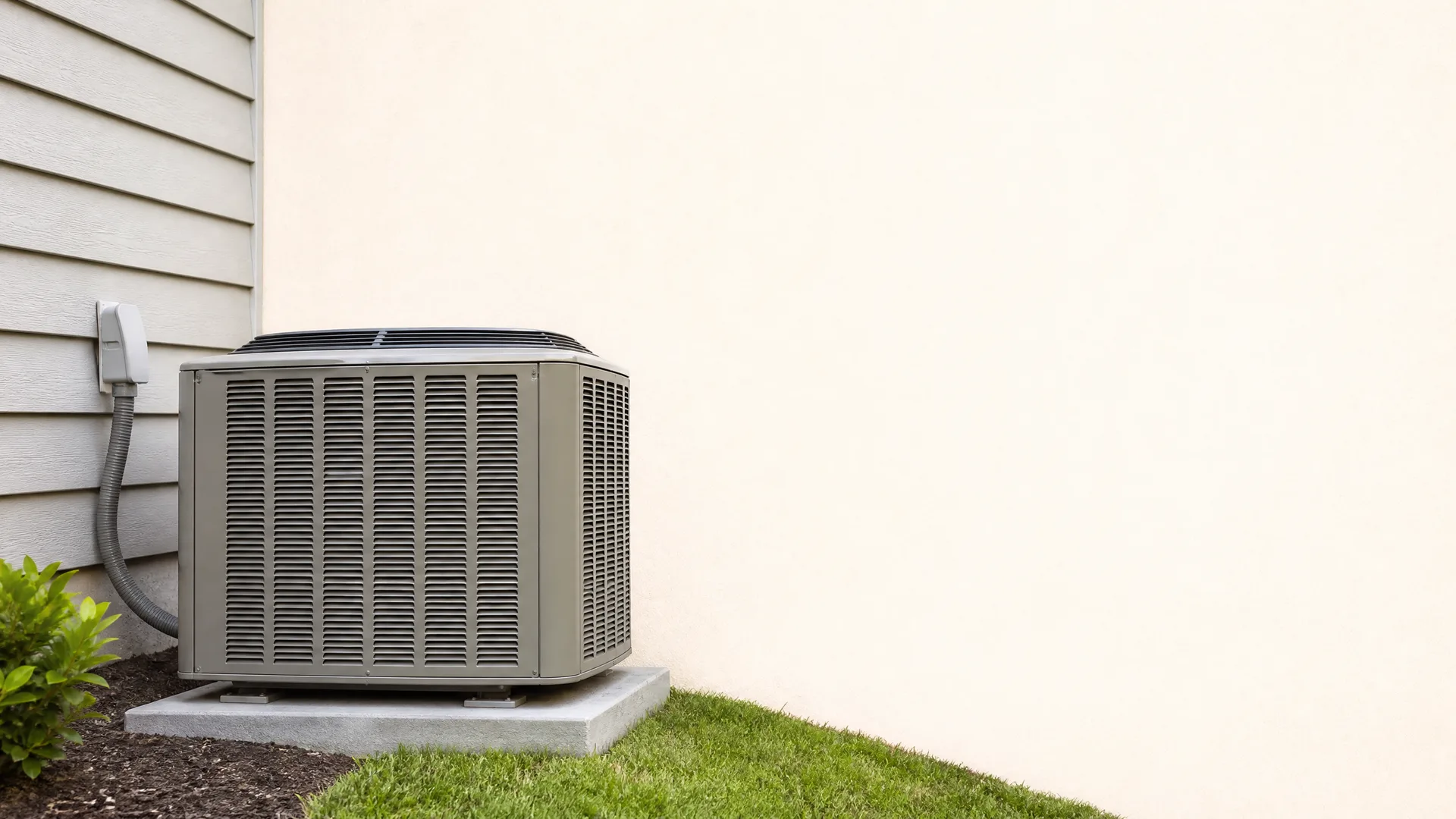
An outdoor air conditioning condenser unit on a concrete pad at the corner of a house, next to vinyl siding and a plain light-colored wall, with grass and a mulch bed in the foreground.

What variable-speed actually changes

A single-speed AC runs flat out, then shuts off. A variable-speed unit adjusts its output to match the load, often running at lower speeds for long stretches instead of cycling on and off. That matters in Tennessee because it stays in motion during the long stretches of humid weather, pulling moisture out of the air the whole time instead of only when it happens to be running full blast.

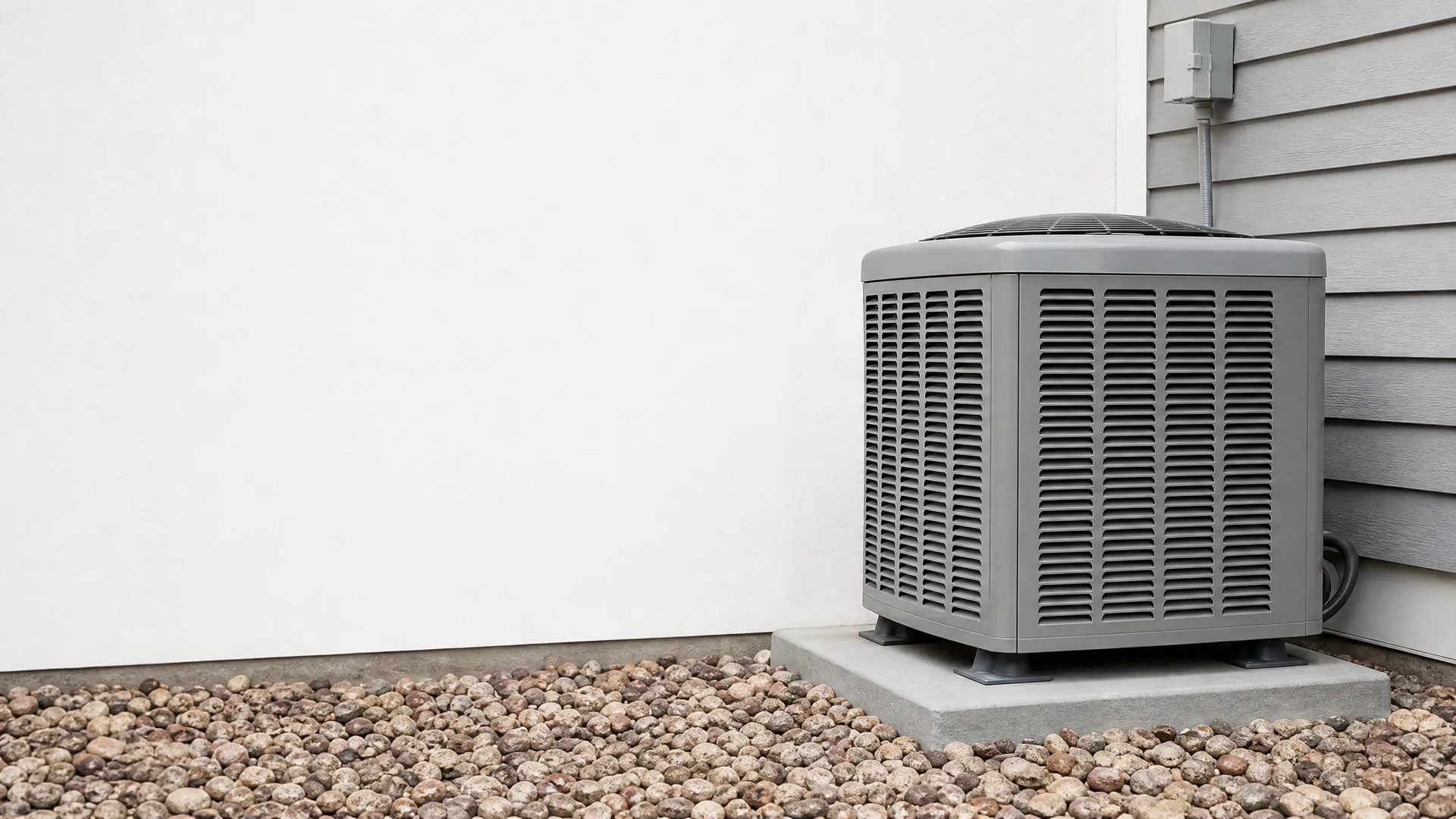
A gray outdoor air conditioning condenser unit sits on a concrete pad beside a white stucco wall and gray horizontal siding, surrounded by rounded landscaping gravel, with an electrical disconnect box mounted on the siding above.

Why humidity control shows up on the bill

Electricity here is cheap, so the dollar savings from efficiency alone can be modest. The bigger payoff is comfort. A single-speed unit cools the air fast and shuts off before it has stripped much moisture out, leaving the house feeling clammy even at the right temperature. A variable-speed system runs longer at lower output, so it wrings more humidity out of the air on its way to the thermostat setting.

A woman in a cream sweater and jeans stands in the open doorway of a white stucco house, holding the dark door, while a man in a dark quilted jacket seen from behind walks toward the entry past potted plants.

What it looks like in your house

You'd notice it most on the muggy nights when a single-speed system used to cycle on and off and the air always felt a little damp. A variable-speed unit holds a lower, steady output instead, so the air coming out of your vents stays more even and the house doesn't swing between cold-and-wet and warm-and-sticky. Rooms that used to run hotter than the rest, a bedroom upstairs or a sunroom off the back, tend to even out too, since the system isn't just blasting air for a few minutes then stopping.

Since electricity is what heats most homes in Tennessee as well as cools them, and power here doesn't cost much to begin with, the lower running cost of a variable-speed unit matters less on your bill than it might elsewhere. The case for one has more to do with comfort and humidity than savings. If you want a straight read on whether it fits your house and your current system, a contractor who installs these locally can look at what you have and tell you what changes for you specifically.

A living room corner with a beige sofa and cushion, a round wooden coffee table holding a pale ceramic vase of eucalyptus stems and a wooden bowl, and a curtained window with a potted plant above a latticed radiator cover in the background.
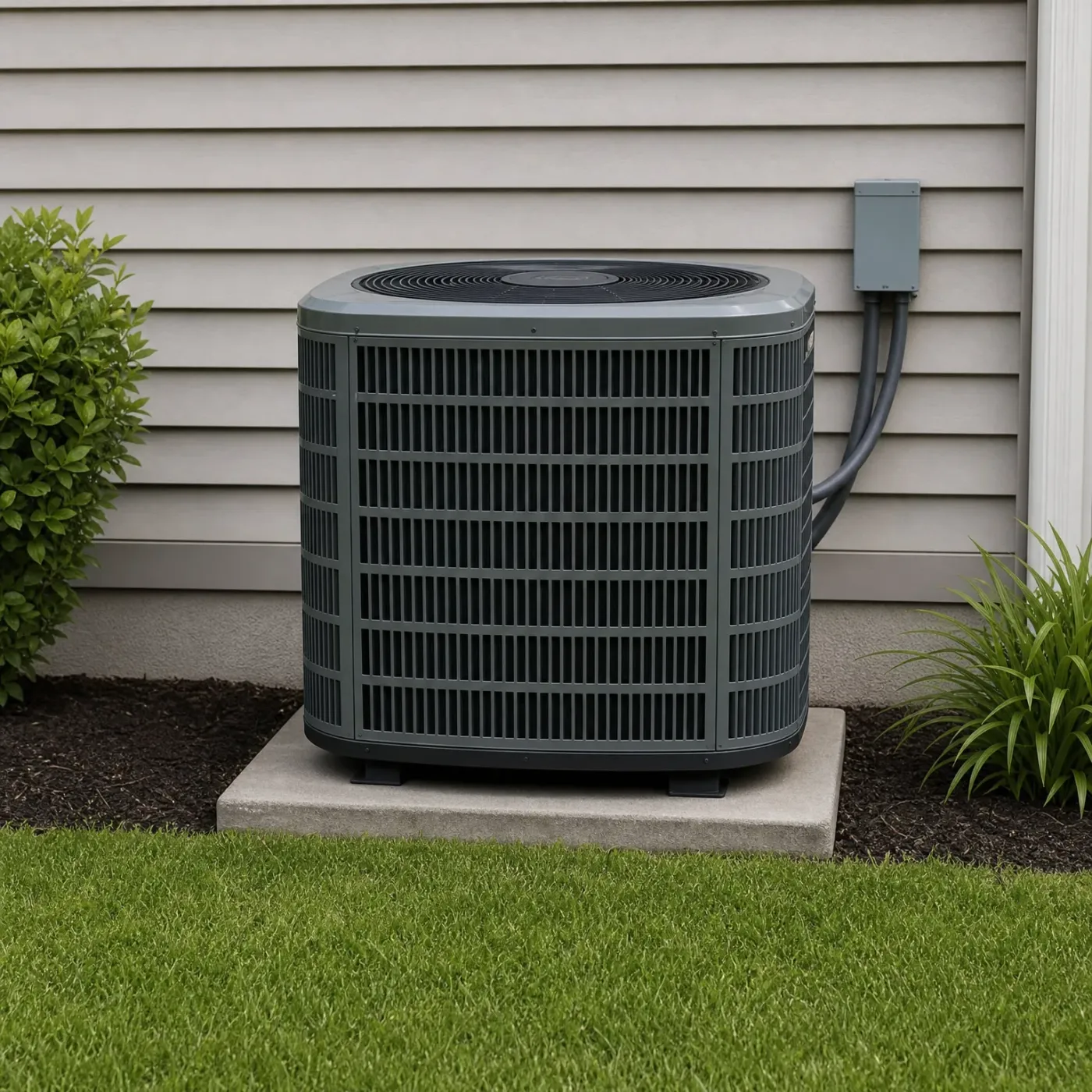
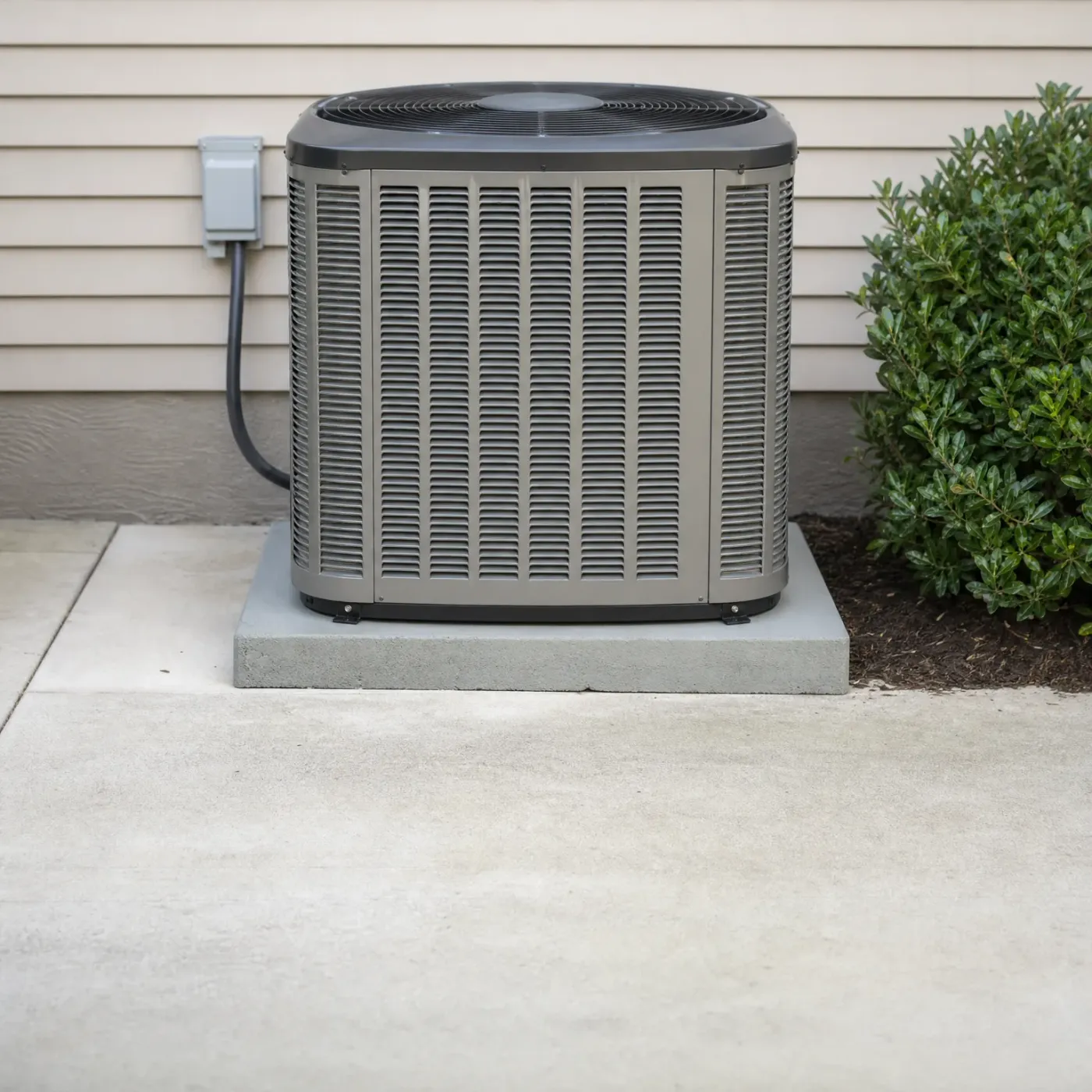
An outdoor air conditioning condenser unit on a concrete pad beside a house with horizontal lap siding, with an electrical disconnect box and conduit on the wall and a green shrub to the right.

Single-speed, working fine

A single-speed unit like this one runs at full output until the thermostat is satisfied, then shuts off completely. On a mild day that's fine. On a humid afternoon it means the house cools fast, the unit stops, and the air starts feeling damp again before it kicks back on.
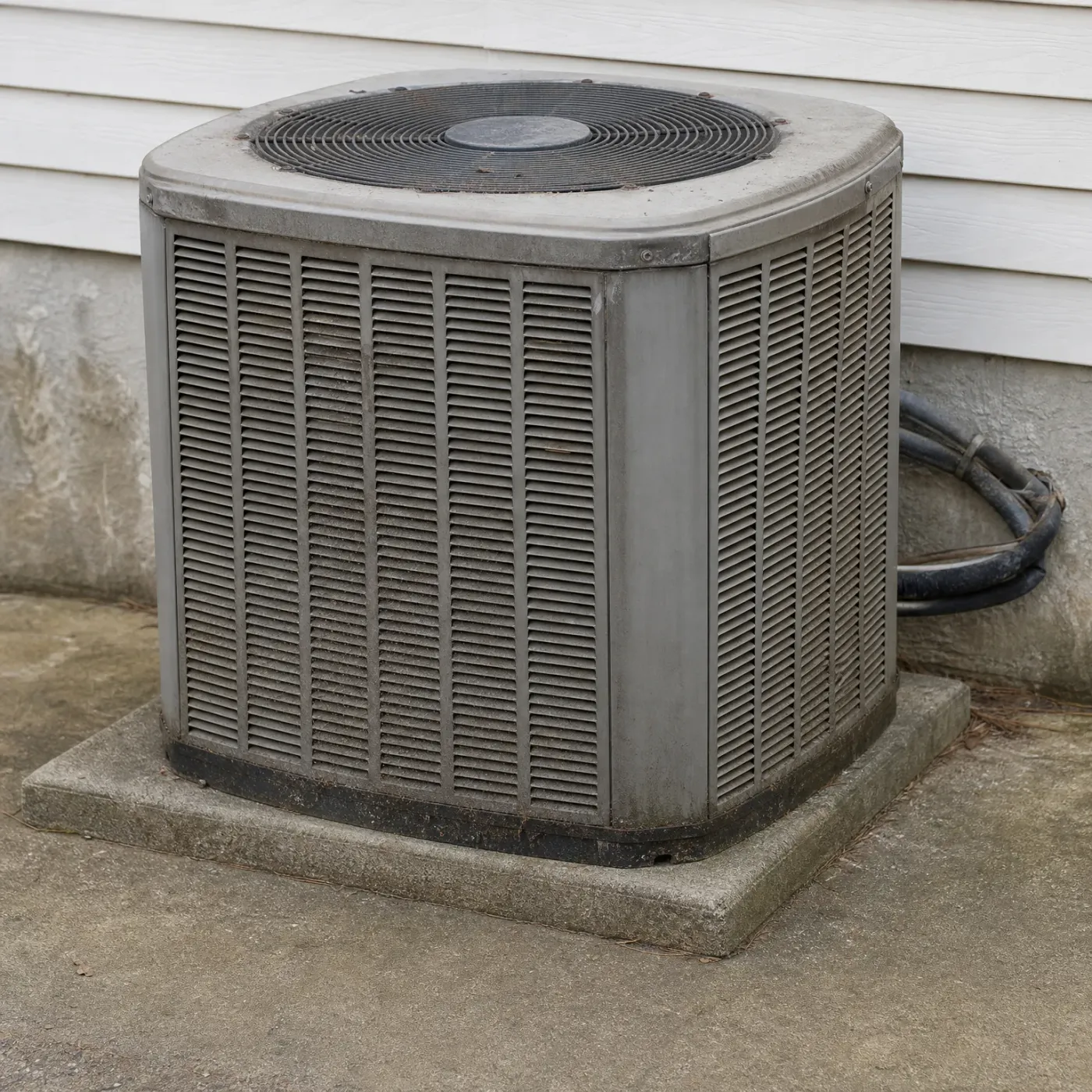

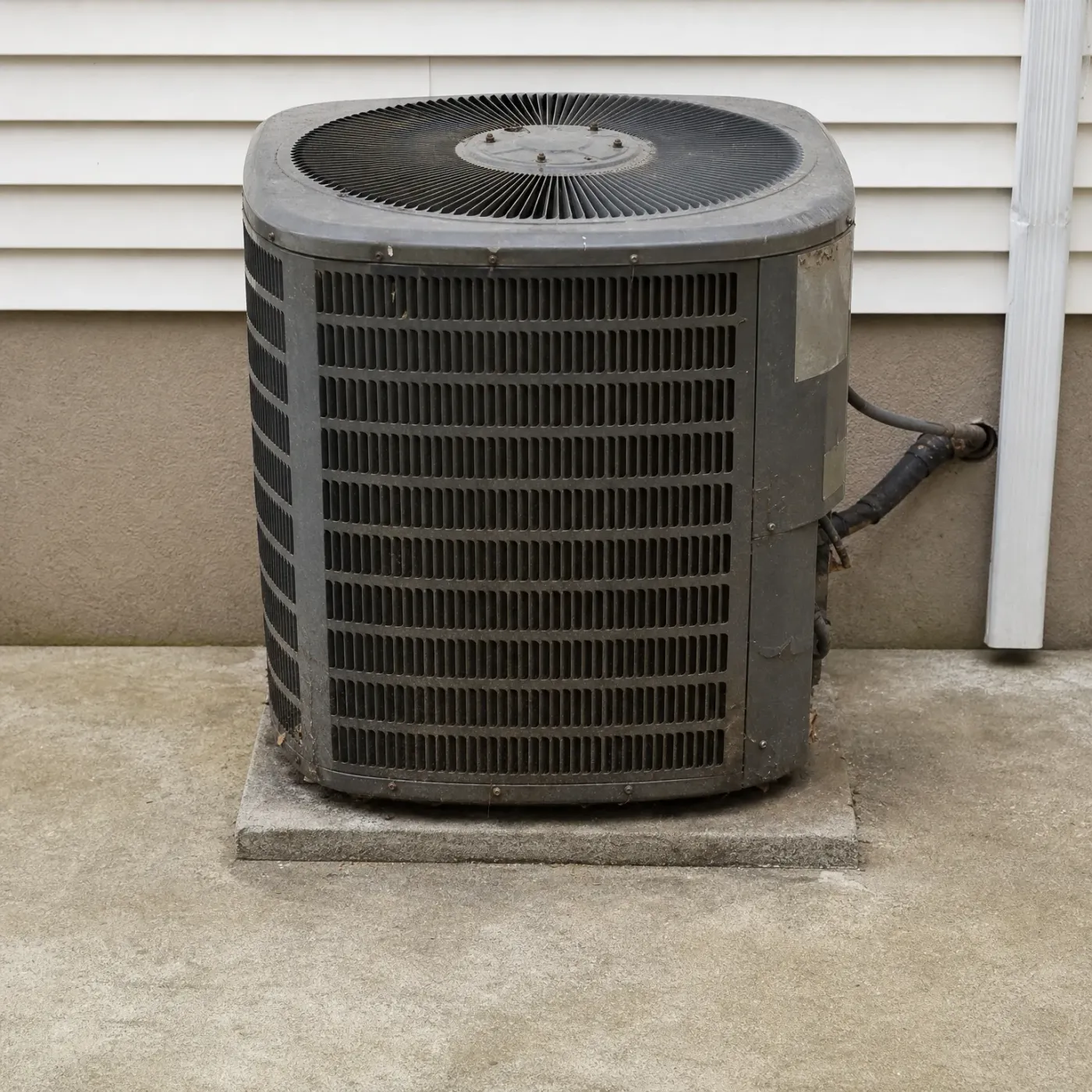
An outdoor air conditioner condenser unit on a concrete pad beside a house with horizontal siding and a lower concrete foundation wall, with coiled refrigerant lines at right.

Worn down from the cycling

Years of starting and stopping at full blast wear on a system faster than running steady at a lower output. The dirt and weathering on a unit like this often track with age, and an older single-speed compressor has had far more hard starts behind it than a variable-speed one would.

An older woman with gray hair in a cream knit sweater sits under a blanket on a sofa by a window, looking outside toward yellow-leaved trees, with a lamp, shelves and an armchair in the room behind her.
A gray-haired woman in a chunky knit sweater sits in an armchair with a blanket, looking out a window at yellow autumn foliage, with bookshelves and a potted plant behind her.
A gray-haired woman in a navy sweater sits in an armchair with a knit blanket beside a window, looking out at yellow autumn foliage, with a dining table and houseplant in the room behind her.
A gray-haired woman in a gray cowl-neck sweater sits in an armchair with a blanket, looking out a dark-framed window toward yellow autumn trees.

Get your air conditioner to the right pro

Send the form and stop researching installers for the new air conditioner.

It costs nothing to send, and you don't have to hire anyone.

How a variable-speed system runs

  • The compressor has a motor driver that ramps speed up or down instead of just switching on or off.
  • A thermostat with communicating controls tells the system how much capacity to run, not just on or off.
  • Most of the time the compressor runs somewhere between 25 and 100 percent of full output.
  • Low-speed operation lets air move across the indoor coil slower, so the coil pulls more moisture out of it.
  • The outdoor fan and indoor blower motor also vary their speed to match the compressor instead of running at one fixed rate.
  • A sensor network tracks indoor temperature and humidity continuously, adjusting output instead of waiting for the thermostat to trip.

The compressor sits at the center of it. Instead of one motor that's either on or off, a variable-speed compressor has a driver that controls its speed directly, the same idea as a dimmer switch instead of a light switch. A communicating thermostat talks to that driver constantly, telling it how much capacity the house needs right now rather than just closing a circuit at a set temperature. Most of the time that means the compressor is running at a fraction of what it's capable of, often somewhere in the 25 to 100 percent range, rather than sitting at full output or shut off entirely.

That low-speed operation changes what happens at the indoor coil. When refrigerant and air move through slower, air stays in contact with the coil longer, and the coil pulls more moisture out of it before it reaches your rooms. The outdoor fan and the indoor blower aren't fixed either. They step up and down with the compressor so the whole system moves together instead of one part running at full tilt while another lags behind.

Behind all of it is a sensor network reading indoor temperature and humidity on an ongoing basis, not just waiting for the thermostat to trip at a set point. That's the difference between a system that reacts and one that adjusts ahead of the load, which matters most on the sticky days Tennessee summers are known for.

A gray outdoor air conditioning condenser unit on a concrete pad beside a house with horizontal lap siding, with a wall-mounted electrical disconnect box and refrigerant lines, shrubs, mulch and lawn around it.
A condenser running right size for the load, cycling less and holding steady through the muggy stretch.
An outdoor air conditioner condenser unit on a concrete pad beside a house wall with stucco lower section, horizontal siding above, and a white downspout to the right.
Dirt packed into the fins, lines running warm, a compressor working harder than it should to keep up.
A dim bedroom with a box fan sitting in an open double-hung window, sunlight streaming through the hazy air onto an unmade bed in the foreground.

The box fan in the window is just pushing the heat around. It's past eight and still bright out, that long June evening light, and the upstairs bedroom hasn't let go of the day. You can feel it when you walk in, thicker air than downstairs, a damp heaviness on your arms. The vent is blowing but you have to stand right under it to tell. Somewhere below, the unit outside kicks off, satisfied, and the room goes quiet except for the fan ticking back and forth. You lie there waiting for it to cycle back on, knowing it will, knowing the air will feel the same when it does.

Power costs 13.22 cents per kilowatt-hour statewide

At 13.22 cents per kilowatt-hour, every hour your AC runs at full blast costs more than an hour spent holding steady at low speed. A variable-speed unit spends most of its time in that lower range, so on your bill the difference between it and a unit that cycles on and off full power shows up most during the stretch of summer when the compressor barely gets to rest.

EIA-861 2025 statewide residential average

A variable-speed AC is worth it in a Tennessee summer, where the air stays thick for months and a system that holds steady instead of slamming on and off keeps the house drier and the compressor working less. A single-speed unit cools the air but leaves the moisture behind between cycles. A variable-speed one doesn't give the humidity that window. That's the whole case for it, and it holds whether you're replacing a unit that's struggling now or planning ahead for one that's getting old. If you've read this far, you already know which one your house needs. The next part is finding someone licensed to size and install it right, which matters as much as the equipment itself. Send the form and that search is off your plate. You won't be the one calling around or waiting on hold. A contractor who works on homes like yours in Tennessee gets your information and reaches out to you.

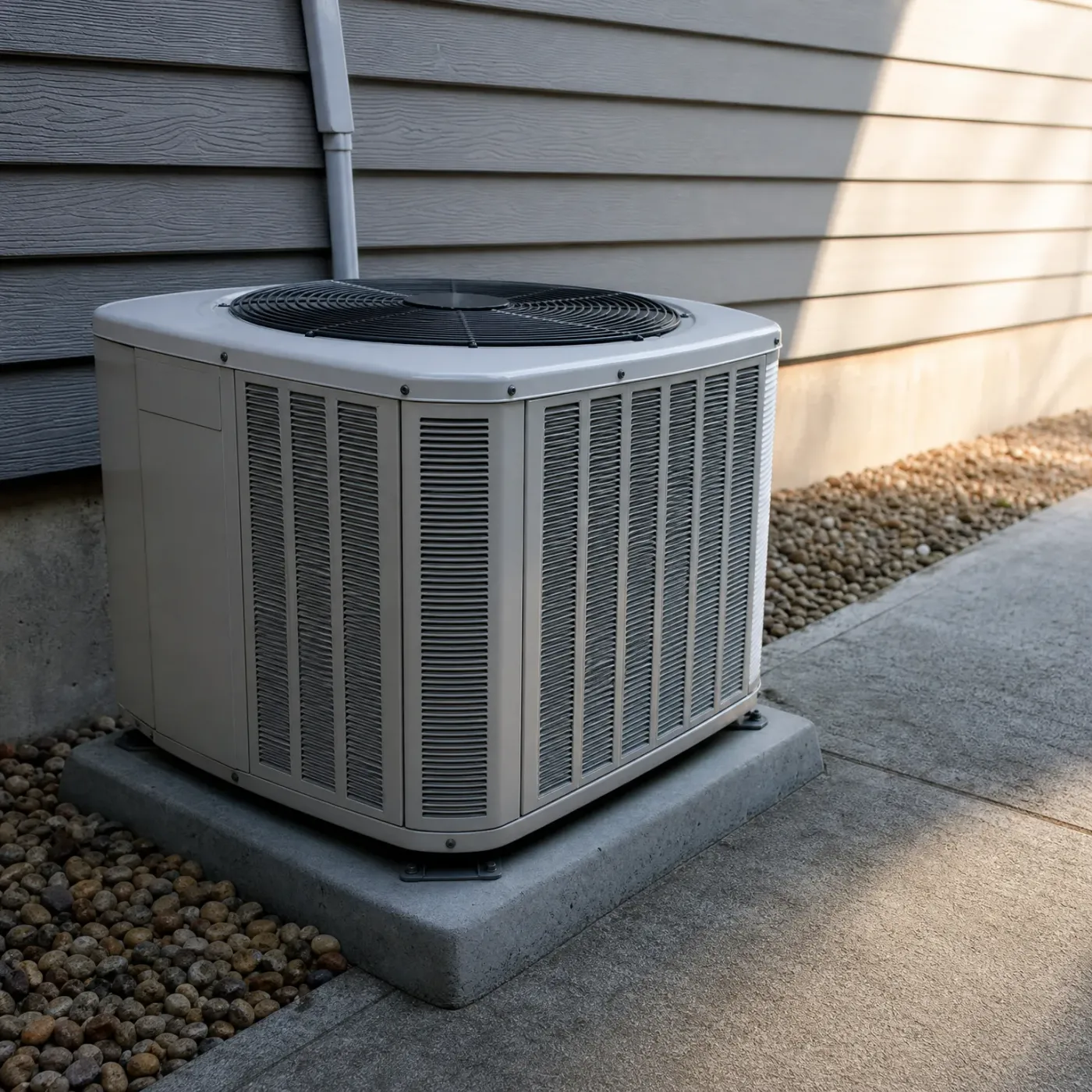
A beige outdoor air conditioner condenser unit with a top fan grille sits on a concrete pad beside a house with horizontal lap siding, bordered by gravel and a concrete walkway.

The right pro for this job

Find an air conditioner pro

One request ends the search for an air conditioner installer.

No charge to send it. You decide if you hire them.