An outdoor air conditioning condenser unit on a concrete pad beside a house with stone veneer and vertical board siding, with a small shrub and mulch bed lit by a ground light at dusk.

Matched to your air conditioner job

Why your AC compressor won't kick on in Tennessee

Your outdoor unit sits there silent while the house gets warmer, and that's never a good sign in a Tennessee summer. It might be the capacitor, a tripped breaker, or the thermostat telling it the wrong thing. This page walks through what actually stops a compressor from starting, and connects you with a local contractor who works on these systems all season and can track down which one it is.

Get a local pro

A compressor that won't start is almost always a power or signal problem, not the compressor itself giving out. The thermostat has to call for cooling, a capacitor has to give the compressor the jolt it needs to start, and a contactor has to close to send power to it. If any one of those fails, the outdoor unit stays quiet while the indoor fan might still run, which is why the house keeps getting warmer even though something seems to be working. A tripped breaker or a blown fuse will do the same thing, cutting power before it reaches the unit at all. In the heat Tennessee summers bring, a capacitor that's gone weak often shows it first on the hottest, hardest-running days, since that's when the compressor needs the strongest push to start. None of this means the compressor is ruined. It means something upstream of it needs to be found and fixed before the heat does more damage to the system trying to keep up.

A woman in a gray turtleneck sweater stands by a window looking outside at snowy ground, with a dimly lit living room containing a sofa, shelves, lamp and a lit candle behind her.
A woman in a cream cable-knit turtleneck sweater stands in a warmly lit living room with a fireplace and shelves behind her, looking out a window toward snow-covered trees and a railed deck.
A woman in a cream knit turtleneck sweater stands by a window looking out at snow, with a lit fireplace, sofa and lamp in the room behind her.
A woman in a gray knit sweater sits by a window looking out at falling snow, with a dimly lit living room containing a sectional sofa, pillows, a lamp and houseplants behind her.

The capacitor is the part that fails most. It's a small cylinder bolted near the compressor, and it stores the charge that gets a hard-starting motor moving.

A bad capacitor can leave the fan running while the compressor stays dead, or it can stop the whole unit cold. Either way, the compressor itself is usually fine underneath it.

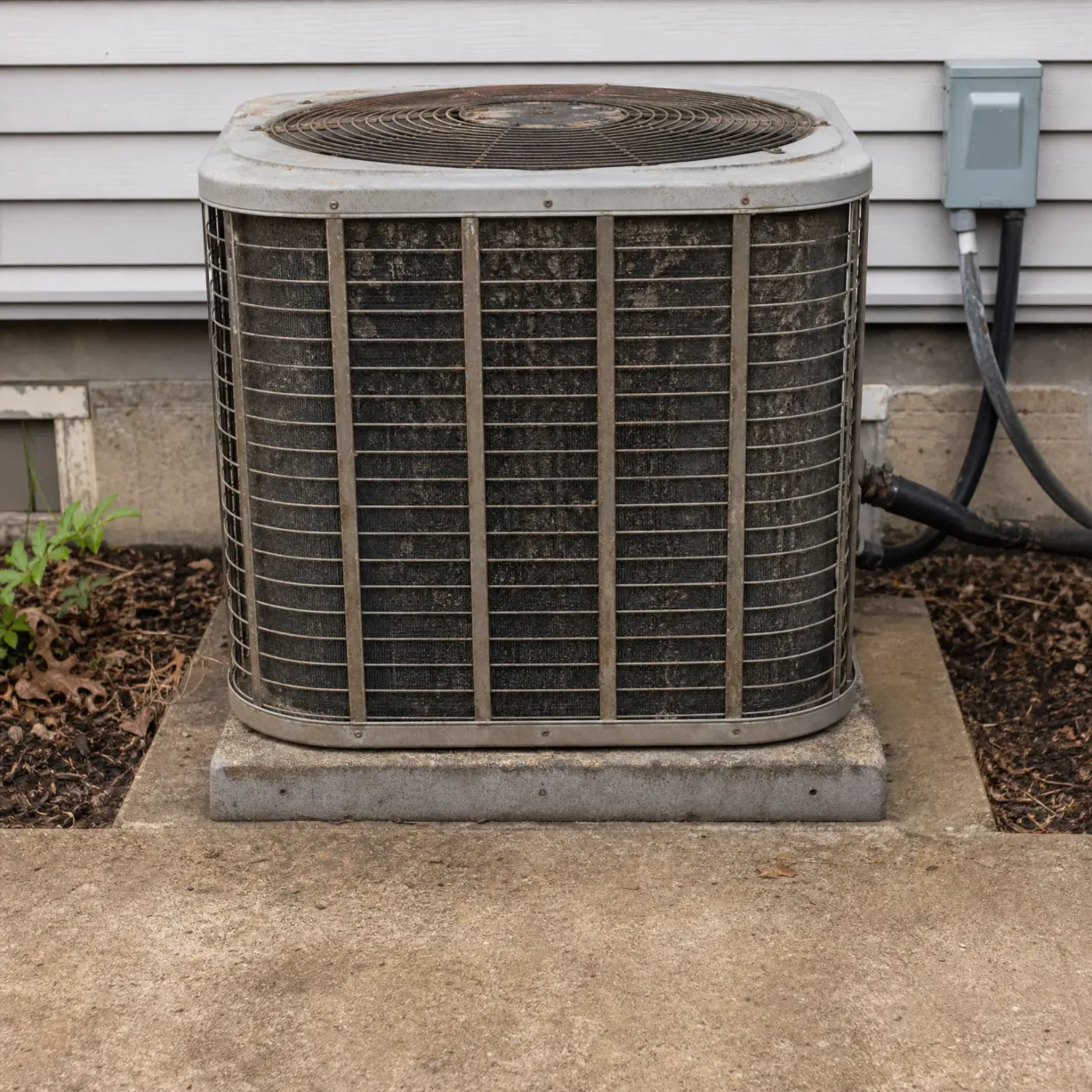
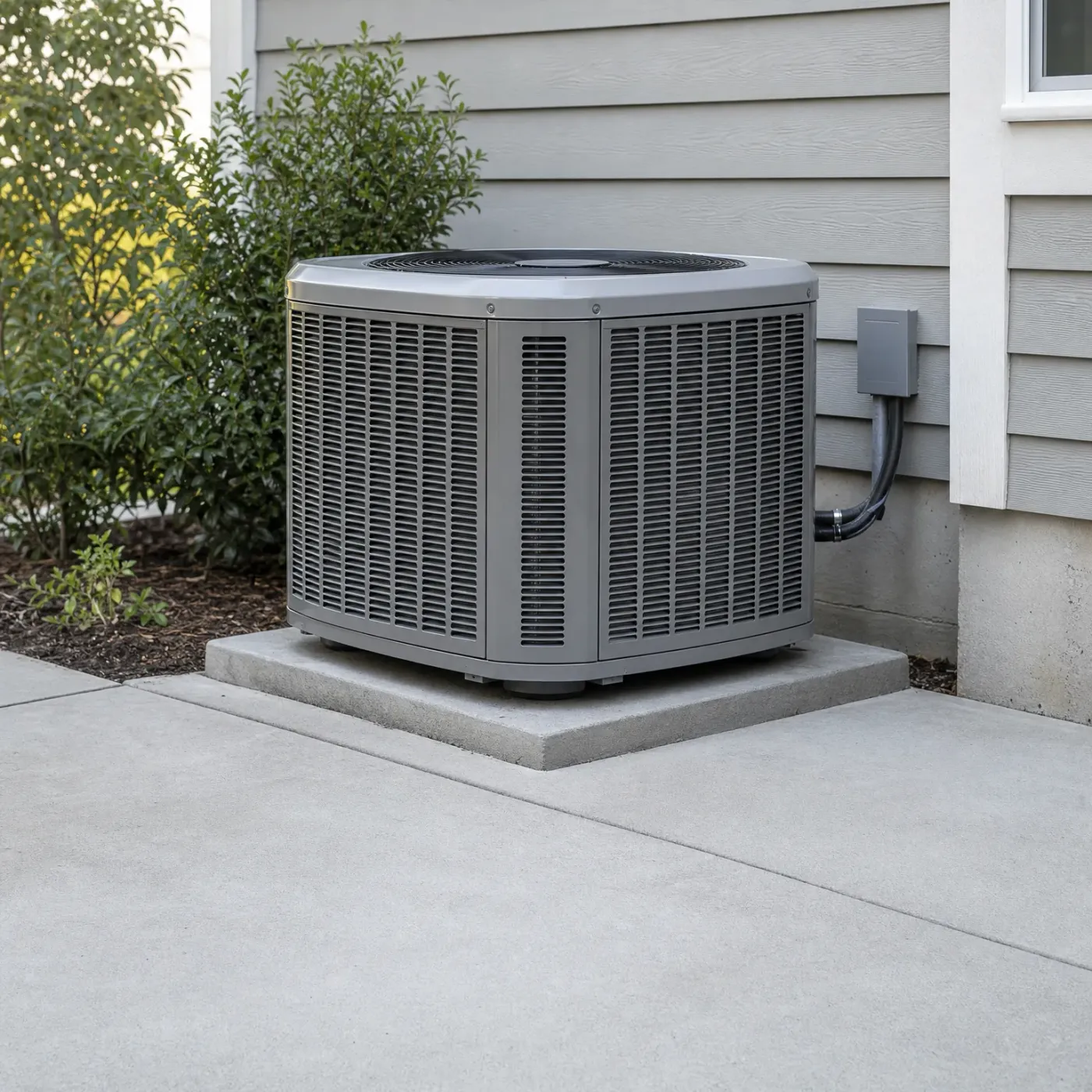
A weathered outdoor air conditioning condenser unit on a concrete pad beside a house with light horizontal siding, an electrical disconnect box and conduit on the wall, and mulched soil on either side.
Before you get your air conditioner repair
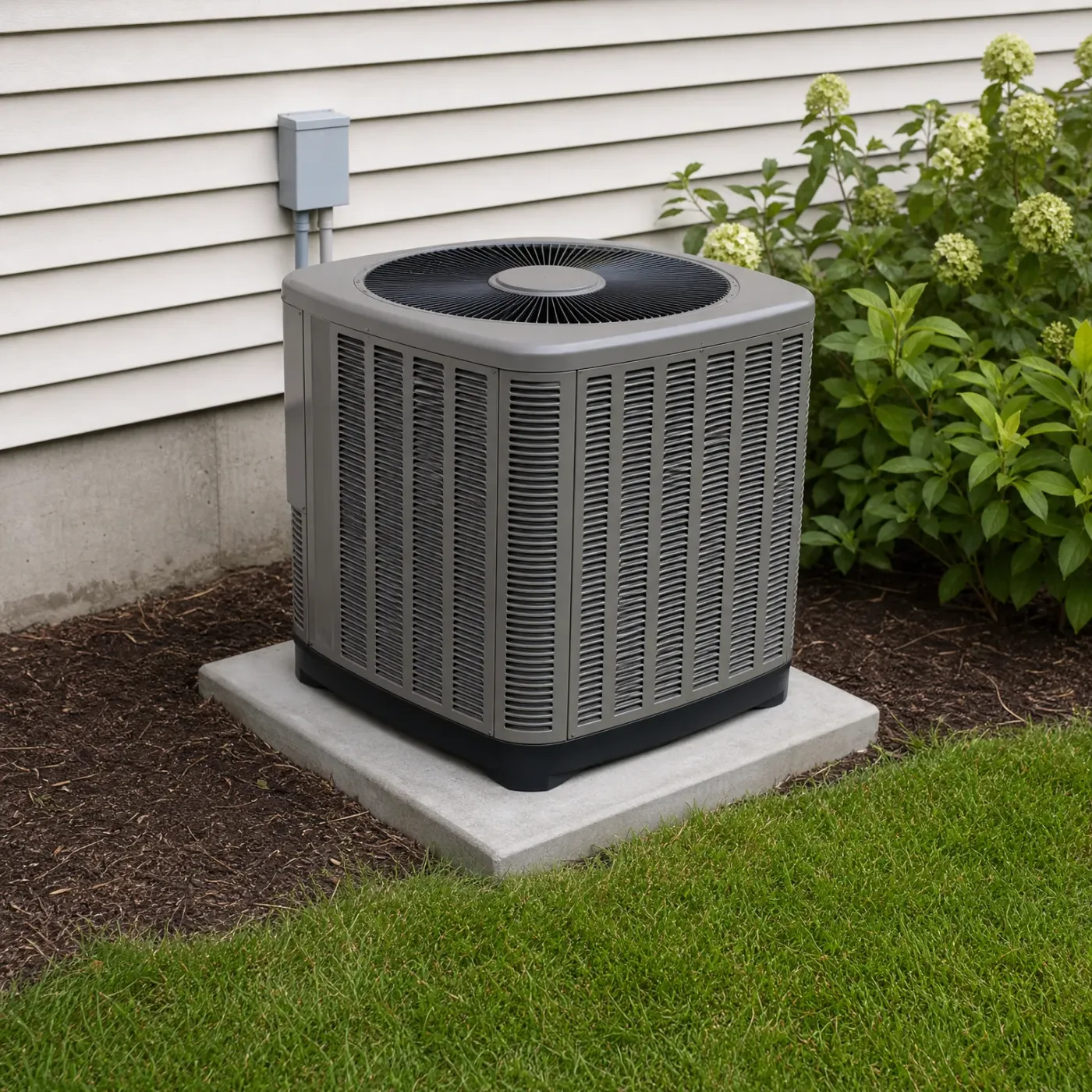
A gray outdoor air conditioner condenser unit on a concrete pad beside a house with horizontal vinyl siding, surrounded by mulch, flowering shrubs, and lawn.
After you get your air conditioner repair

If it's just the capacitor

A capacitor swap gets the compressor running again the same day in most cases. Catch it now and the compressor itself is never put under the strain of trying to start without one.
Get one local pro

If you let it ride

A compressor that keeps trying to start without enough power can burn out its windings. That turns a small repair into a full system replacement, in the middle of a Tennessee summer.
Get one local pro

Fix It Now or Risk the Compressor

Catch it early

  • A technician who works on these units all summer can usually spot a failing capacitor just by how the compressor is acting, or not acting.
  • A swapped capacitor or cleaned contactor is a short visit, and the compressor goes back to running the way it was built to run.
  • The compressor never gets forced through repeated hard starts, so the windings and the oil inside it stay in the shape they started in.
  • Your house gets cool again the same day in most cases, instead of you watching the temperature climb through a Tennessee afternoon.
  • A local contractor who already knows which parts fail first on your type of system can often narrow it down before touching anything.

Let it ride

  • A compressor that keeps trying to start on a bad capacitor is pulling hard every time, and that heat has nowhere to go but into the motor.
  • What started as a fifteen minute fix can turn into a seized compressor, and a compressor is the most expensive part of the whole system.
  • Every day it sits broken is a day without cooling in a Tennessee summer, which is its own kind of cost even before repair money.
  • A breaker that keeps tripping because of a struggling compressor is the system telling you something is wrong, not something to reset and ignore.
  • Once a compressor fails for good, the fix isn't a part swap anymore, it's replacing the outdoor unit.
A gray outdoor air conditioner condenser unit on a concrete pad beside a house with horizontal lap siding, with a wall-mounted disconnect box and conduit to its right and shrubs to the left.

Running the way it should

The unit cycles on, the fan spins, and the compressor hums along without tripping anything. Conduit running to the disconnect box is intact and the pad underneath sits level. Nothing here is drawing extra strain, so the parts inside stay in the shape they were built for.
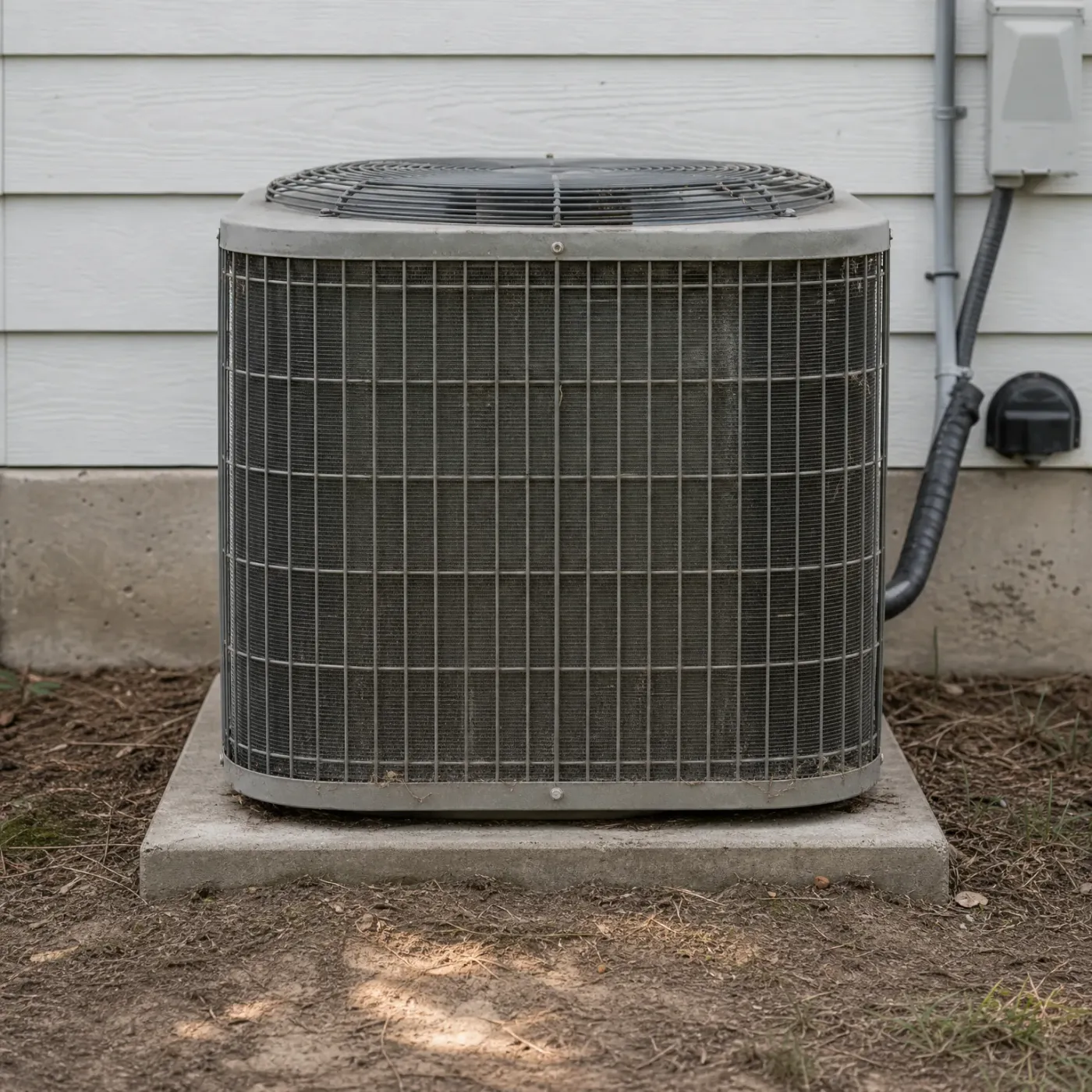
An outdoor air conditioning condenser unit on a concrete pad beside a house with horizontal lap siding, with a conduit and electrical disconnect box on the wall at right.

Signs of a unit under strain

Dirt packed into the coil guard blocks the airflow the compressor depends on to shed heat while it runs. A unit that's been out there a while with grime like this is working harder than it should, and that's often where a capacitor or contactor starts to give out.

Power costs 13.22 cents per kilowatt-hour statewide

At 13.22 cents a kilowatt-hour, running your AC in a Tennessee summer already costs real money even when it's working right. A compressor that won't start and gets replaced instead of repaired adds a lot more draw to that rate. Fixing the actual problem keeps your bill tied to normal cooling, not a bigger unit working harder than it has to.

EIA-861 2025 statewide residential average
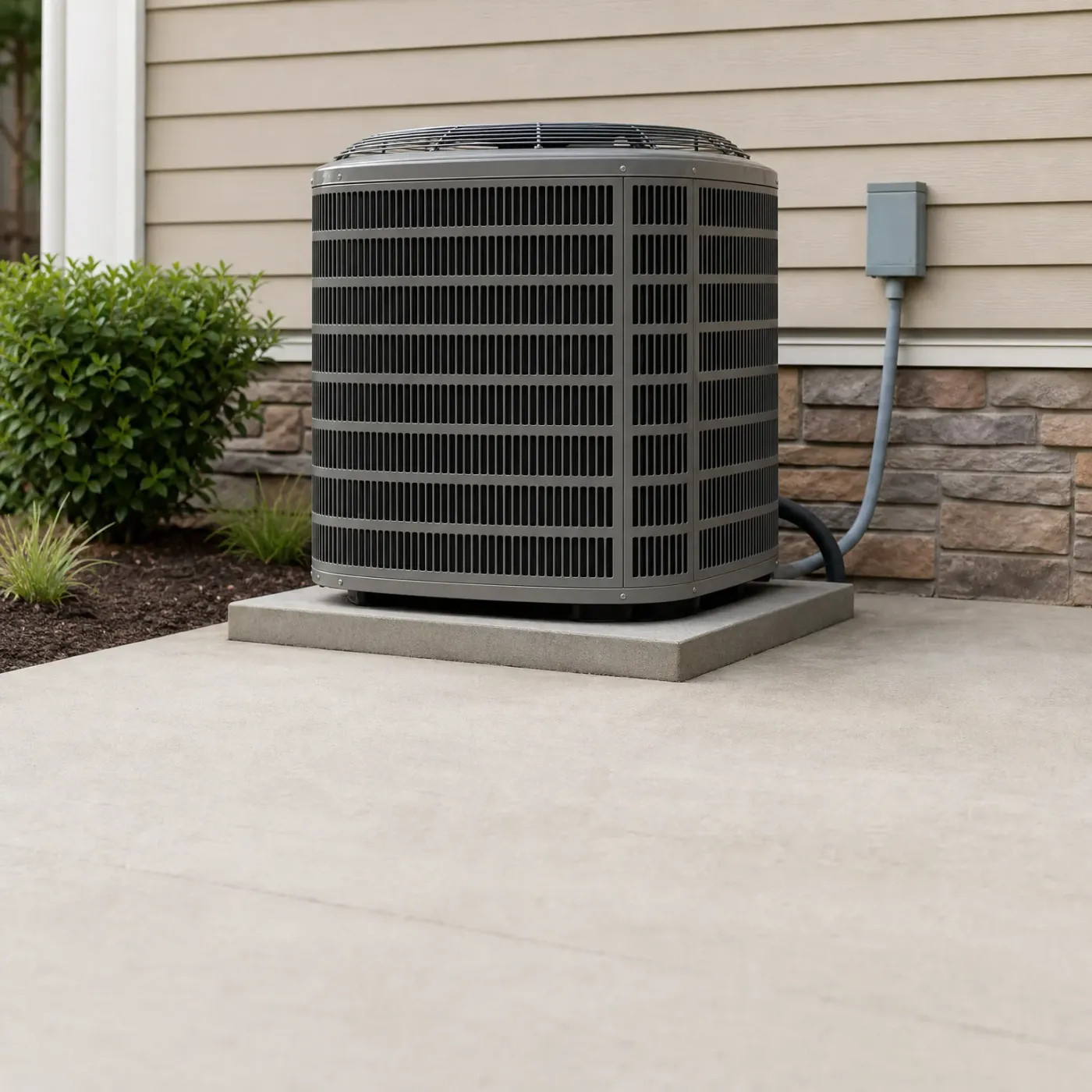
A gray outdoor air conditioning condenser unit on a concrete pad beside a house with horizontal siding and a stone veneer base, with a wall-mounted disconnect box and conduit, next to a shrub bed and a concrete patio.
A unit like this starts on the first call, cycles on, and keeps the compressor under a normal, steady load all summer.
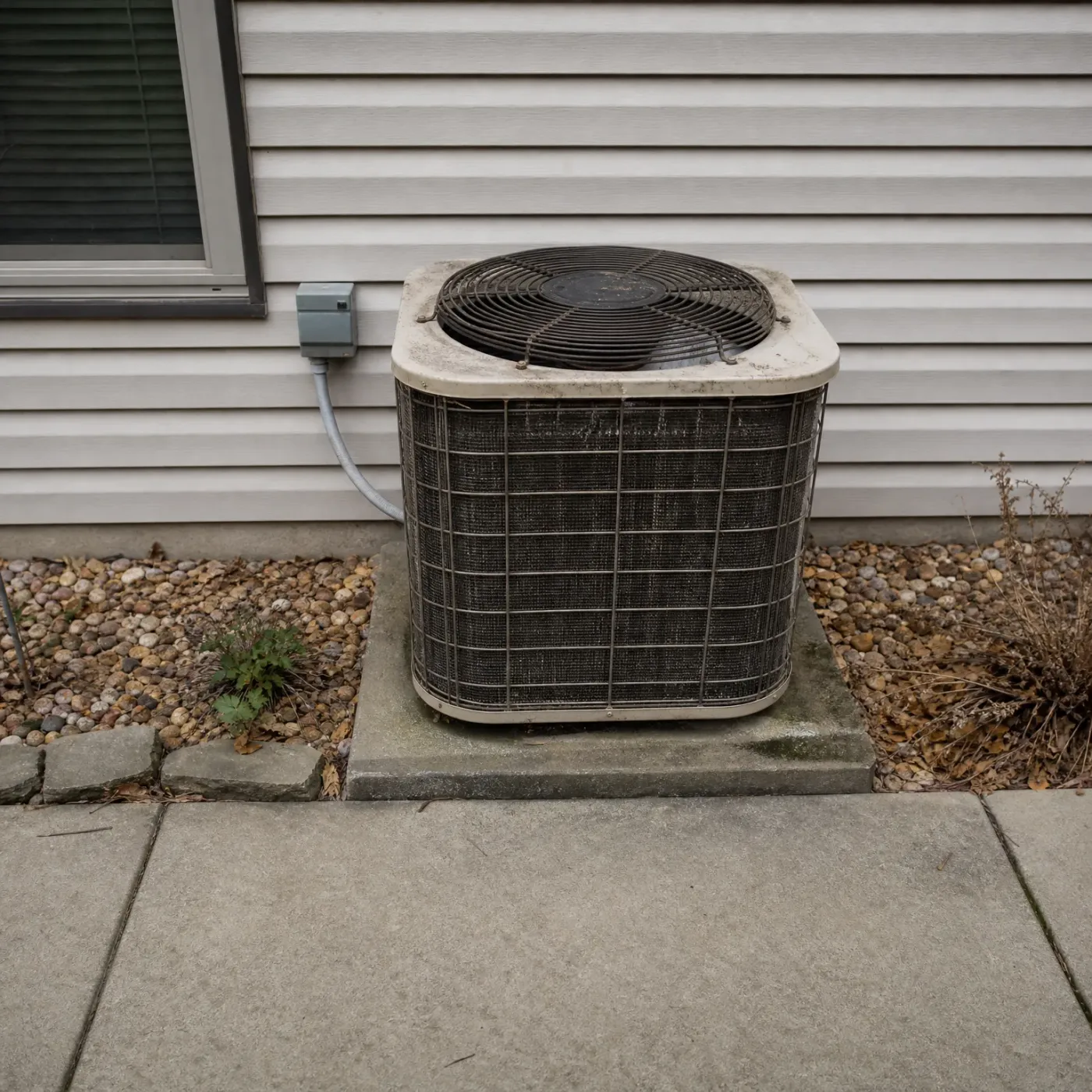
An outdoor air conditioner condenser unit on a concrete pad beside a house with light gray vinyl siding, with a gray electrical disconnect box and conduit on the wall, gravel beds and dried plants nearby, and a concrete sidewalk in the foreground.
Weeds and age around a unit like this make a tripped breaker or a stuck contactor more likely to show up with no warning.
A bearded man in a plaid flannel shirt stands indoors looking out a frost-covered window, with a steaming dark blue mug on the wooden sill and snow-covered trees outside.
A smiling man in a dark blue T-shirt sits on a light gray sofa in a living room with a wooden shelf and window behind him, with a laptop edge visible in the foreground.

A local pro for your air conditioner repair

A dead compressor in July doesn't wait for a convenient week. Tennessee humidity turns a silent unit into a hot house fast, and most of what stops a compressor from starting, a weak capacitor, a tripped breaker, a bad contactor, is something a local technician has seen a hundred times before. Someone who works on these units all summer in this state knows which part usually goes first and checks that before anything else. That's different from a national call center reading off a script. Getting matched means one licensed contractor near you takes the request, not five companies competing for your number. They'll look at your unit, your wiring, your specific setup, not a generic version of a Tennessee air conditioner. With power this cheap and summers this long, a compressor that won't kick on is worth getting in front of someone who can tell you, plainly, what's actually wrong with it.

What a Silent Compressor Means

  • A silent compressor almost always traces back to a capacitor, a breaker, or a contactor, not a dead compressor.
  • A licensed local technician who works on these units all summer can usually tell which one just by how the unit is acting.
  • Catching the problem now means one visit from one contractor, not a parade of trucks and quotes.
  • The same part, a capacitor or a contactor, that gets missed in May is what leaves a compressor dead in July.
  • A technician who already knows what fails on these units in Tennessee summers has a real head start on the diagnosis.
  • Either way, the fix starts with knowing which part actually quit, and that's a quick call to confirm.

A compressor that won't start almost never means a new outdoor unit. It means something small stopped doing its job, a capacitor that lost its charge, a breaker that tripped, a contactor that stuck or burned. Each of those has a different fix, and each one leaves clues in how the unit behaves, whether the fan runs alone, whether the breaker trips again right after you reset it, whether you hear a hum and nothing else. A technician who services these units through a Tennessee summer has seen all three enough times to narrow it down fast, often before any panel comes off.

That matters more than it might seem, because the alternative is worse than a bad guess. It's three different trucks over three different days, three different quotes, and a house that stays hot the whole time. One licensed local technician, matched to your specific unit and what it's doing, means one visit and one answer. No parade of calls, no competing estimates to sort through while the house sits at 85 degrees.

The part that fails is usually the same part that was starting to go in May, just unnoticed until the load of a real Tennessee summer pushed it past the point of working at all. Whether it turns out to be the capacitor, the breaker, or the contactor, the next step is the same: get someone out who knows these units to confirm which one it is and fix that, not guess and replace what didn't need it.

A modern two-story house with dark siding and stone base at dusk, with lit soffit lights, a path of large rectangular pavers set in dark gravel, planting beds, a lawn, and an orange and blue sunset sky above distant trees and water.

Air Conditioner Repair

Get the right pro for your air conditioner

Step 1 of 3: Equipment
  • A ceramic vase holding leafy green branches and a shallow wooden bowl sit on a wooden window ledge beside a sunlit window, with a cream upholstered chair and knit throw in the foreground.
    • A local pro who knows air conditioners gets your details and gets in touch.
  • Sunlit living room corner with a beige upholstered sofa, a round wooden side table holding a ceramic vase of olive branches, linen curtains at a window, a floor vent in the baseboard, and a woven jute rug on hardwood flooring.
    • Send it once and finding someone is no longer on you.
    • Send the request today and let an air conditioner pro reach out to you.
  • A wooden side table with a single drawer holds a shallow carved wood bowl and a white ceramic vase of green eucalyptus stems, beside a window and an upholstered chair draped with a cream knit throw.
    • Describe what your air conditioner is doing once, in one form.
    • Answer a few questions instead of calling shop after shop.
  • Corner of a house with horizontal siding, a white-framed window and stone veneer base, beside a covered entry with wooden steps, a potted plant, mulched beds of green shrubs and a flagstone path.
    • Your request stays with one local pro.