







Why your AC outdoor fan isn't spinning in Tennessee

Step 1 of 3: Equipment

Why isn't my AC outdoor fan spinning?

You go out to the outdoor unit on a hot day and the fan on top isn't turning. The compressor might be humming away, or the whole thing might be silent, but either way the air inside isn't getting any colder. In Tennessee, where summer humidity makes a working AC matter, a dead fan is the kind of thing you notice within the hour.

Usually a bad capacitor or a failed fan motor

The fan motor needs a jolt of power to start spinning, and that jolt comes from a part called a capacitor. When the capacitor weakens, the motor hums but never turns, or doesn't start at all. That's the most common reason. The motor itself can also just wear out and fail after years of running all summer. Either way, the compressor may keep running even with the fan stopped, and that's a problem. Without the fan pulling air across the outdoor coil, heat has nowhere to go, and the system can overheat and shut itself down, or the compressor can take damage that turns a cheap repair into a much bigger one. A unit stuck like this needs a licensed technician to check the capacitor and motor before running it again.

An outdoor air conditioner condenser unit sits on a concrete pad beside a shingled house wall, surrounded by mulch, broad-leaved shrubs and a lawn in low evening light.

You walk out back around seven, still eighty-something out, the kind of evening Tennessee holds onto well past supper. The condenser is sitting against the fence where it always sits, and you notice the quiet first, that fan on top dead still when it should be pulling air through the coil. You crouch down and listen. Something is humming low inside the unit but nothing is moving. Inside the house the air coming through the vents feels barely cooler than the room, and the thermostat is still climbing. The sun is low enough to throw long light across the yard, and you stand there a minute watching a fan blade that isn't going to start on its own.

Motor Failure or Capacitor Failure

Fan motor is bad

  • The motor hums or smells hot but the blades don't turn, which usually means the windings or bearings have failed inside it.
  • A motor that's seized won't start back up even after the thermostat cycles the system again.
  • Tennessee summers push these motors hard for months straight, and a dying one often fails outright once it gets hot enough outside.
  • This is a straight swap, and once it's in, the fan should run every time the compressor does.
  • If the motor spins freely by hand but still won't start on its own, the capacitor may be the real issue instead.

Capacitor is weak

  • A capacitor gives the fan motor the jolt it needs to start turning, and a weak one leaves the motor sitting there trying.
  • You might hear a faint hum from the unit while the fan blades stay still or just twitch.
  • Heat shortens a capacitor's life, and the outdoor unit sitting in direct Tennessee sun all summer adds up over the years.
  • A capacitor can test fine in the morning and fail by afternoon once the unit's been running in the heat for hours.
  • Replacing it is quick, and if the motor itself is still good, the fan goes right back to spinning like normal.
A gray-haired man in a dark long-sleeve shirt sits on a gray sofa in a living room, looking toward a sunlit window with sheer curtains.
A gray-haired man in a dark green sweatshirt sits on a sofa in a living room, looking toward a bright window, with a houseplant, lamp, fireplace and framed art behind him.
A gray-haired bearded man in a dark green collared sweater sits on a sofa in a living room with a window, houseplant, floor lamp and bookshelves, looking off to the side.
A gray-haired man in a dark green sweater sits on a sofa in a sunlit living room, looking off to the side, with a framed landscape painting, dining table and shelving behind him.

Is this why my house feels warmer than it should

The thermostat says it's running, but the air out of the vents feels barely cool, maybe just a little less warm than the room. Give it twenty minutes and the house hasn't moved a degree. Out at the unit, the compressor may still be making noise even with the fan stopped, and that matters because it's not built to run that way for long. In a Tennessee summer, a system stuck in that state doesn't just fail to cool. It can trip its own safety switch and shut down completely, or run hot enough to damage the compressor itself, the most expensive part of the whole unit.

  1. Thermostat calls for cooling and sends power to the contactor outside.

  2. The contactor pulls in and feeds power to the compressor and fan motor.

  3. The capacitor gives the fan motor its starting jolt and keeps it spinning.

  4. A bad capacitor or motor leaves the compressor running with the fan still.

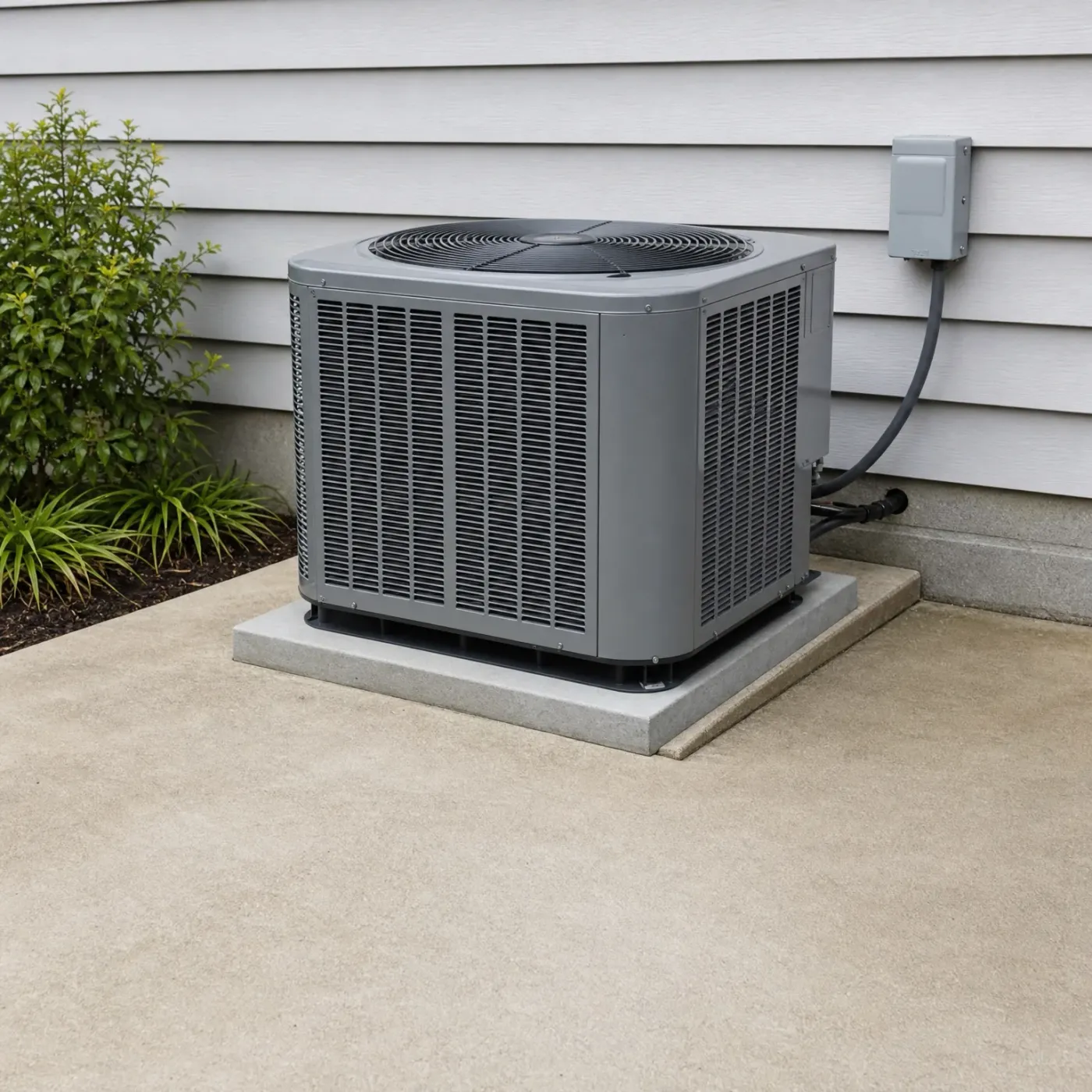
A gray outdoor air conditioning condenser unit on a concrete pad beside a house with horizontal lap siding, with a wall-mounted disconnect box and conduit, and shrubs to the left.
This fan is spinning fast as soon as the compressor kicks on, moving air straight up and out through the top of the unit.
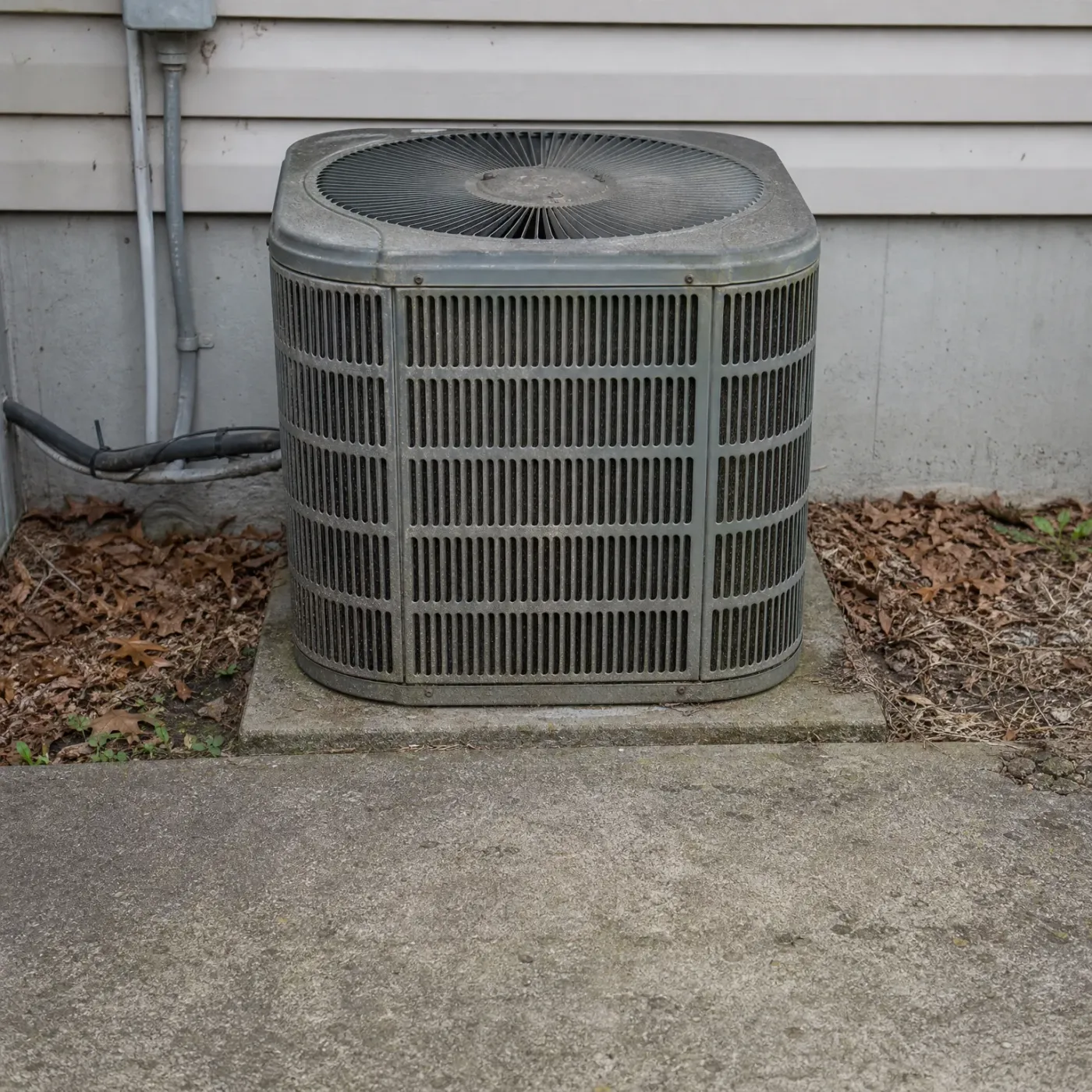
An outdoor air conditioning condenser unit on a concrete pad beside a house with horizontal siding and a concrete foundation, with dry brown leaves on the ground to either side.
This one sat idle through a cycle, blades caked with dirt and leaves banked up against the side, the kind of neglect a Tennessee summer punishes fast.
A single-story red brick building with a hipped shingle roof and several white-framed windows, fronted by a large empty asphalt lot with sun flare, surrounded by green trees under a bright hazy sky.

Tennessee summers don't just get hot, they get heavy. Average dew point across June, July and August runs 66°F, high enough that the air itself feels thick even in the shade. That kind of moisture load means your outdoor unit is working to pull more water out of the air on top of cooling it, and the fan on that unit is what keeps the condenser coil from overheating while it does that job. When the fan stops turning on a day like that, the coil loses its airflow fast, and a system already straining against the humidity has no way to dump its heat. That's the stretch where a stalled fan turns into a bigger repair if it sits too long. Once you send in what's going on, you're done chasing down who can get out there. That part's off your plate.

Source: NOAA climate normals.

NASA POWER T2MDEW county cells weighted by homes

Hand off the air conditioner problem

Your request goes to one pro, not a list of companies.

You only hire the pro if you want to.

Why it keeps running without the fan

The compressor and the fan motor are wired separately off the same contactor, so the compressor can keep pulling in refrigerant even after the fan motor has failed. That's why you'll hear it humming along with no air moving above it. Nothing shuts the compressor off automatically just because the fan quit. Left that way, the compressor is rejecting heat into still air instead of air being pulled across the coil, and the pressures inside the system climb past what they're built to handle on a Tennessee afternoon.
What a stalled compressor costs you

Without the fan pulling outside air across the condenser coil, the refrigerant inside can't shed the heat it picked up from your house. That heat has nowhere to go, so the compressor runs hotter with every cycle it completes. Some units have a high pressure switch that shuts the whole system down before damage happens, which is the better outcome. Others don't, and the compressor keeps working against that heat until something inside it gives out, which is a far more expensive repair than the fan motor alone.

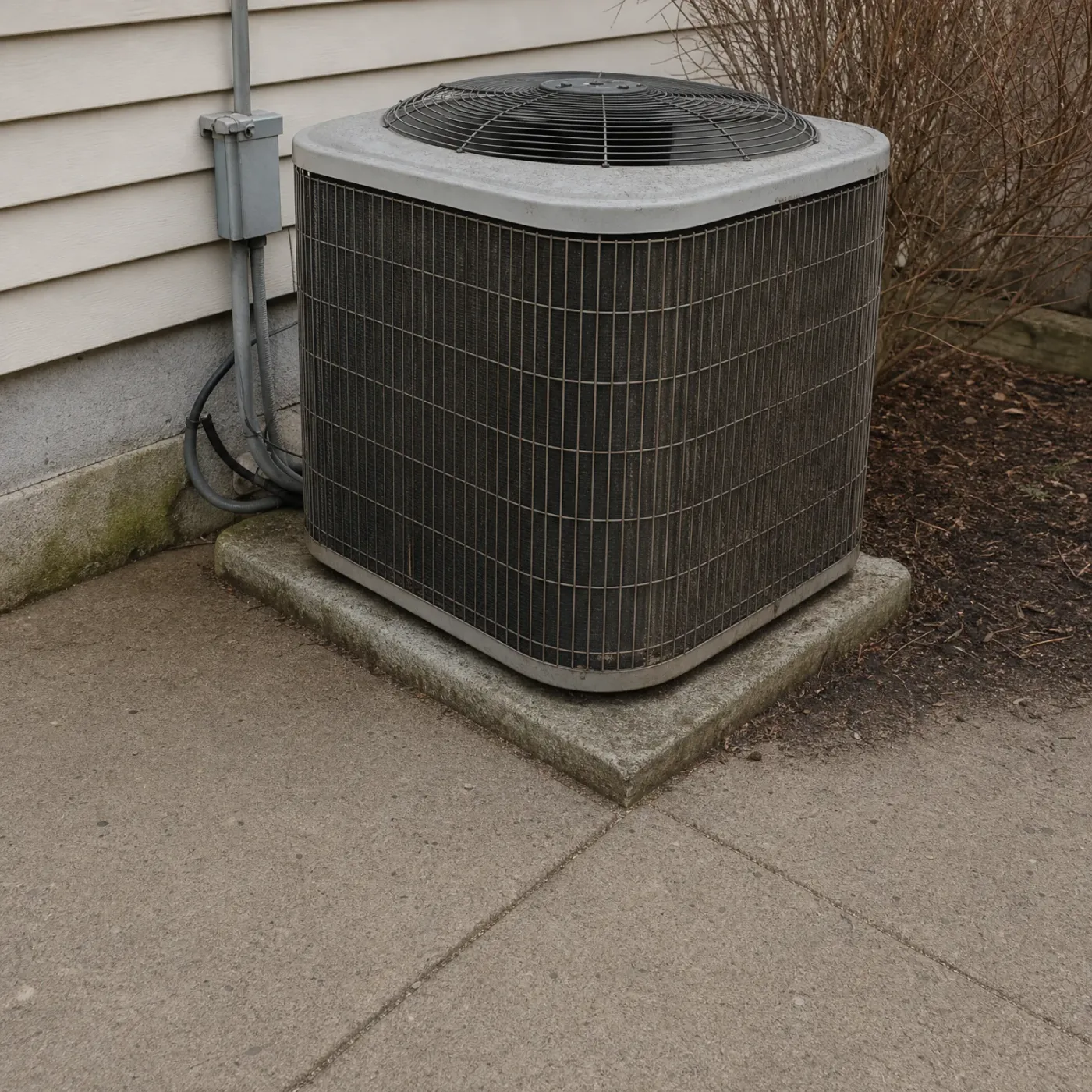
An outdoor air conditioning condenser unit on a concrete pad beside a house with light vinyl siding, an electrical disconnect box and conduit on the wall, bare shrubs and mulch to the right, and a concrete walkway in the foreground.
Before you get your air conditioner repair
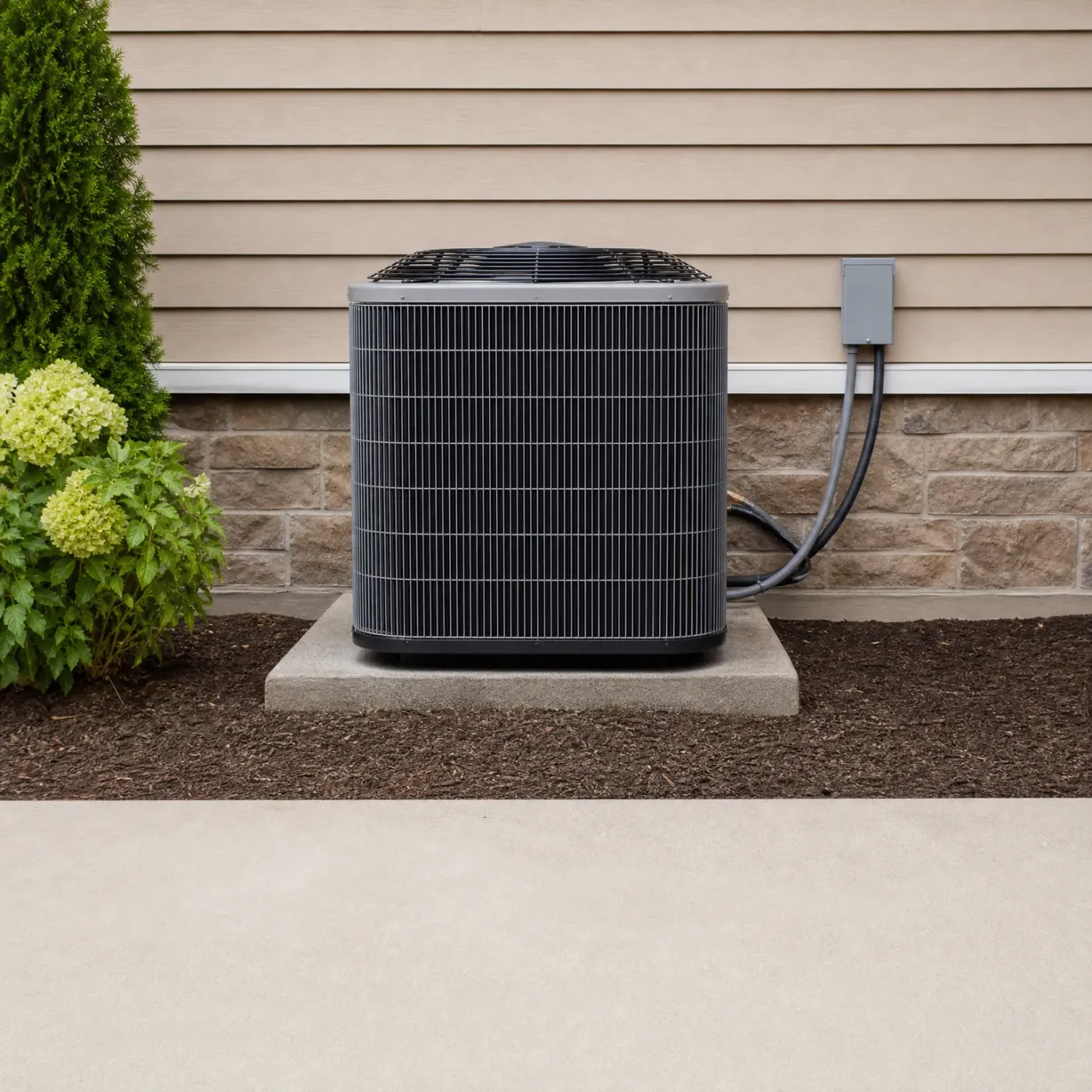
An outdoor air conditioner condenser unit on a concrete pad beside a house with beige horizontal siding and a stone-veneer base, with refrigerant lines running to a gray wall-mounted electrical box, surrounded by dark mulch, a flowering shrub and an evergreen on the left.
After you get your air conditioner repair

Power reaches the outdoor unit the same way whether the fan spins or not, which is why the compressor can keep running while the fan sits still. The capacitor is usually where it starts. It holds a charge and releases it into the motor the moment the contactor closes, and if that charge is weak the motor can't get moving, so all you hear is a hum. Heat adds to the problem. Some motors shut themselves off through a thermal switch once the windings get too hot, and they stay off until things cool down, which in a Tennessee summer can take a while. Airflow matters too. Fins packed with dirt make the motor push harder and run hotter than it's built for. Years of that heat and humidity can also wear out the bearings until the shaft just won't turn. And sometimes it's simpler than any of that. A wire works loose or corrodes at the terminal, and the fan loses power while the rest of the unit never notices.

What's actually stopping the fan

  • The run capacitor stores a charge and dumps it into the fan motor the instant the contactor closes.
  • A capacitor that's swollen or reads low on a meter can't deliver that jolt, so the motor just sits there humming.
  • Some fan motors have a thermal overload switch that trips when the windings get too hot and won't reset until things cool down.
  • Dirt packed between the fins restricts airflow, which makes the motor work harder and run hotter than it should.
  • The fan motor bearings can seize up after years of spinning in Tennessee heat and humidity, and a seized shaft won't turn no matter how much power reaches it.
  • Loose or corroded wiring at the motor terminals can cut power to the fan even while the compressor keeps running fine.
A woman with shoulder-length dark brown hair in a cream knit cardigan sits in an upholstered armchair beside a window, looking off to the side, with a white bookshelf and potted plant blurred behind her.
A woman and a child wrapped together in a thick knitted blanket on a sofa, both with eyes closed, with a lit table lamp and houseplant in the dim background.

Before your AC repair

The fan sits still while the compressor hums. Humidity keeps building against a house that isn't cooling, and leaving it alone usually means a bigger repair, not a smaller one.

Get a licensed local pro

After your AC repair

A licensed contractor near you finds the failed part, replaces it, and that fan spins the way it's supposed to the next time your thermostat calls for cooling.

Get a licensed local pro

Power costs 13.22 cents per kilowatt-hour statewide

At 13.22 cents a kilowatt-hour, running your AC here doesn't punish your bill the way it does in a lot of states. That's exactly why a fan that's stopped turning stands out. The compressor keeps drawing power whether or not the fan spins, so you're paying for a unit that isn't cooling your house.

EIA-861 2025 statewide residential average

What this comes down to

  • A fan that won't turn almost always traces back to a bad capacitor, a failed motor, or a stuck contactor.
  • Letting the compressor run without the fan risks a bigger repair bill, since heat has nowhere to go.
  • A licensed Tennessee contractor who works on condensers all summer knows which of these three usually fails first.
  • You get matched with one local contractor, not a handful of companies competing for your callback.
  • Checking for debris around the unit costs you nothing, but a seized motor or a bad capacitor needs a meter and a trained hand.
  • Once the fan is spinning again, the compressor stops working against itself and the house starts cooling the way it should.

A fan that won't spin is a capacitor, a motor, or a contactor, and in nearly every case it's one of those three. Debris is worth a look because it costs nothing to check, but once you've ruled that out, you're into parts that need a meter to test and hands that know what a bad reading looks like on one. The compressor doesn't know the fan has quit. It keeps pulling in refrigerant and building heat with nowhere for that heat to go, which is how a stuck fan motor turns into a cracked compressor if it sits too long. That's the part worth acting on, not just understanding.

Finding someone qualified for this isn't the hard part here. You get matched with one licensed contractor local to Tennessee, someone who's out at condensers all summer and has a good guess which of the three it is before the panel's even off. Not a list of five companies calling you back at once, just the one who's going to look at your unit. Once that fan is turning again, the compressor isn't fighting itself anymore, the heat has somewhere to go, and the house starts pulling back down to where the thermostat says it should be. That's the whole shape of it: something stopped the fan, it needs a trained hand to find out what, and then the system goes back to doing what it was built to do.

Dark metal roofs and a stone chimney of a house seen from above, framed by moss-draped trees, with forested hills and hazy mountains under a cloudy sky in the background.

Finding a pro stops being your job

I'm done searching

No fee to send it, and nothing to sign.

A compressor that keeps running without its fan builds heat with nowhere to go, and that's how a capacitor or motor problem turns into a compressor replacement. Sending the request now puts the fix in front of a local contractor who already knows what Tennessee summers do to these units, while the problem is still a small one.