






Why your AC unit is buzzing in Tennessee

Step 1 of 3: Equipment

A buzzing AC unit usually means something electrical is struggling. The sound often comes from a failing capacitor, the part that gives the compressor and fan motor the jolt they need to start. When a capacitor weakens, the motor hums and strains instead of starting clean, and that strain shows up as a buzz from the outdoor unit. Loose fan blades, a failing contactor, or debris caught in the cabinet can also cause it. In Tennessee, where the AC runs hard through long, muggy summers, these parts see more start cycles than they would somewhere milder, so they wear faster. A buzz that shows up now and gets louder over a few days usually means the part is close to failing outright, and a compressor that won't start can strain the whole system. Worth having someone look at it before the unit stops cooling on a hot afternoon.

A single-story red brick ranch house with a gray shingled roof, white-framed windows and a central dark front door, fronted by a wide asphalt driveway, green lawn and large deciduous trees on both sides under a bright hazy sky.

Tennessee summers run humid, and the numbers back it up. NOAA puts the average summer dew point across the state at 66°F, which is the sticky kind of air that sits heavy even in the shade. Your AC has to pull that moisture out before it can cool the house, so the compressor runs longer and harder than it would in dry heat. That extra strain is what pushes a weak capacitor past its limit. A capacitor that might hold on another year in a drier climate gives out here, and the buzz you hear is the motor trying to start without enough of a jolt to do it.

NASA POWER T2MDEW county cells weighted by homes

Call Now or Keep Listening

Call for Repair

  • A buzzing sound paired with the outdoor fan not spinning usually means the capacitor has already failed, not just weakened.
  • Left alone, a struggling motor can overheat and seize, turning a capacitor swap into a compressor or motor replacement.
  • A loose electrical connection behind that buzz can arc and trip the breaker repeatedly until someone tightens it.
  • A local contractor who works on these units every summer can usually tell a capacitor from a contactor issue by the pitch of the sound.
  • If the buzzing started right after a storm or power flicker, the unit needs to be checked before you run it again.
  • Waiting through a few more humid days with a buzzing unit raises the odds the next call is for a new compressor, not a part.

Let It Run

  • If the buzz is faint and the house is cooling normally, it may just be the contactor settling in, worth a listen over the next day or two.
  • A brand new unit that hums quietly for its first few starts is sometimes just the fan motor seating, not a sign of failure.
  • If the sound only happens once at startup and then goes quiet, the capacitor is likely still doing its job for now.
  • A unit that's cooling fine and cycling on its normal schedule isn't in the same danger as one that's short cycling or tripping breakers.
  • Mild vibration noise from a fan blade that's slightly out of balance won't strand you without cooling the way an electrical fault will.
  • If you were between other repairs and the sound hasn't changed in weeks, it's reasonable to keep an eye on it rather than act today.
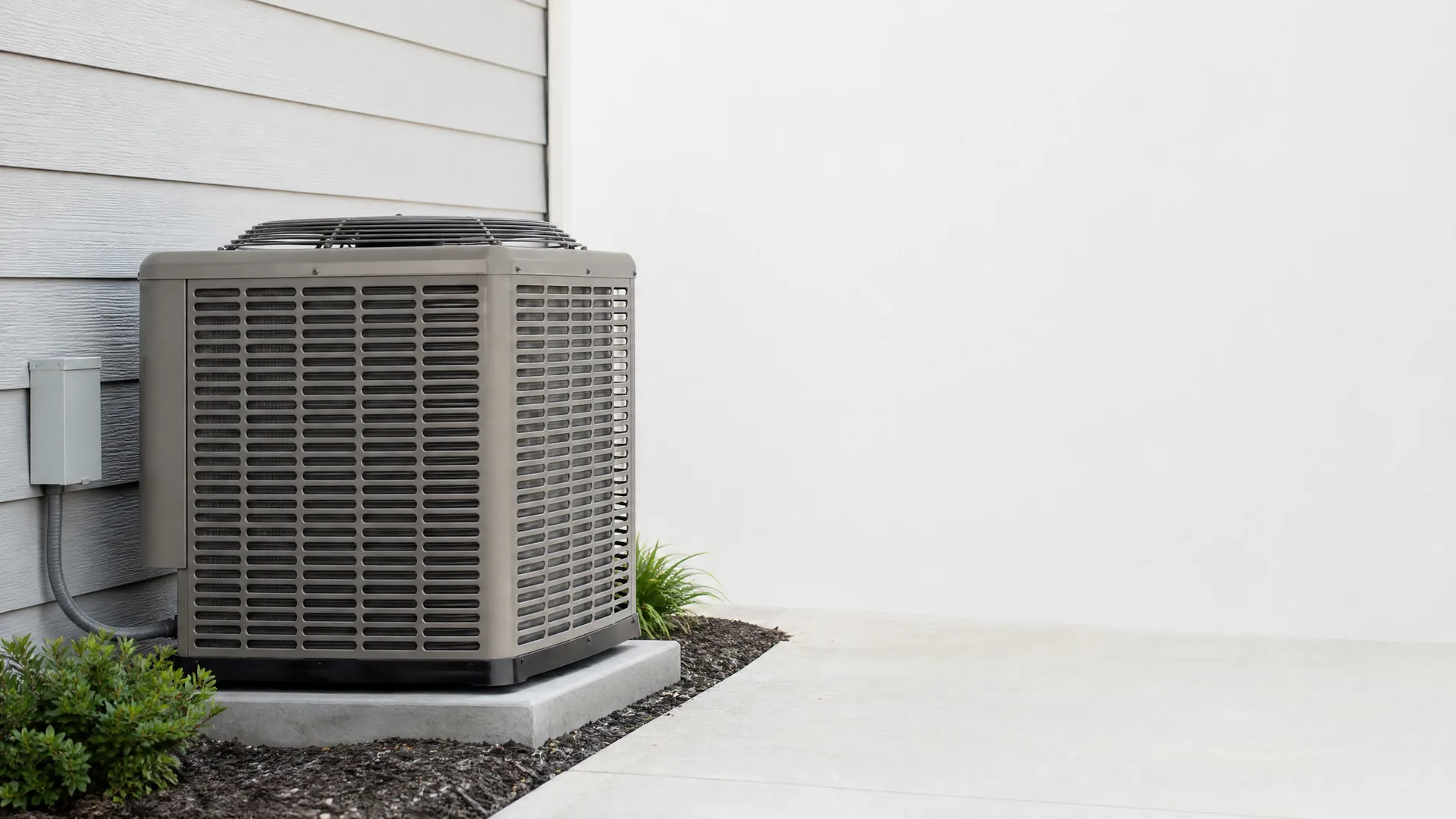
An outdoor air conditioner condenser unit on a concrete pad beside a house with light horizontal siding, with a small electrical disconnect box on the wall, mulch and shrubs at left, and a plain white wall and concrete slab at right.

What the buzzing is doing to the motor

The compressor and fan motor are built to start with one strong jolt from the capacitor. Without it, the motor tries to start anyway, pulling more current than its windings are rated for. That extra current turns into heat inside the motor. Run it this way for days and the windings can break down from the heat alone, long before anything else about the unit changes.

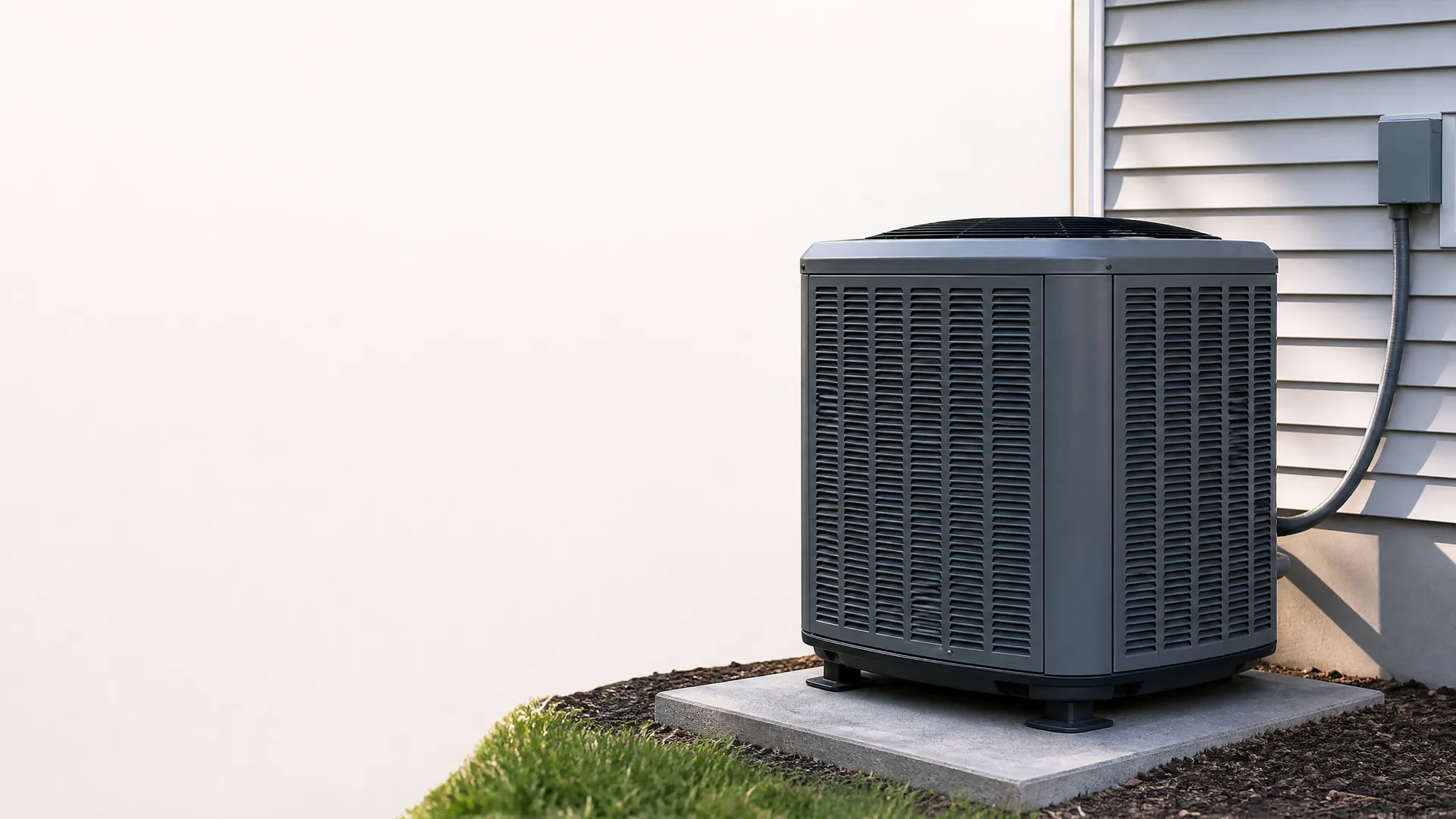
A dark gray outdoor air conditioner condenser unit on a concrete pad beside a house with horizontal siding and a plain light wall, with mulch and grass in the foreground and a conduit and electrical box on the wall.

Why outdoor units fail first in Tennessee

The capacitor sits in the outdoor unit, where it takes the heat of the Tennessee sun on top of the load of constant cycling through a humid summer. Heat shortens the life of the chemical paste inside a capacitor, and the outdoor unit runs hotter than anything inside the house. That is why the buzzing shows up at the compressor outside, not at the indoor coil or the blower.

Power costs 13.22 cents per kilowatt-hour statewide

At 13.22 cents per kilowatt-hour, that buzzing motor costs you more than noise. A capacitor that's weakening makes the motor draw extra current trying to start, and that extra current shows up on your bill before it shows up as a breakdown.

EIA-861 2025 statewide residential average

  1. Power reaches the capacitor first, before any motor moves.

  2. The capacitor sends the compressor and fan motor a hard jolt to start.

  3. A weak capacitor shorts that jolt, so the motor pulls extra current instead.

  4. That extra current turns to heat in the motor windings.

A woman in a knitted shawl sits in a living room with a fireplace, shelves, a sofa with cushions, and a lamp by a bright window, looking off to the side.
A woman with long brown wavy hair in a green shirt over a white top stands in a living room with built-in white shelves, a ceiling fan, a potted plant and a sliding glass door.
A woman with shoulder-length gray-streaked hair in a light gray knit sweater stands smiling and looking off to the side in a living room with a sofa, houseplant, framed picture, and sunlit sliding glass door.
A woman with shoulder-length curly gray hair wearing a gray knit sweater stands near a window with a sheer curtain, looking to the side, with a blurred interior room behind her.
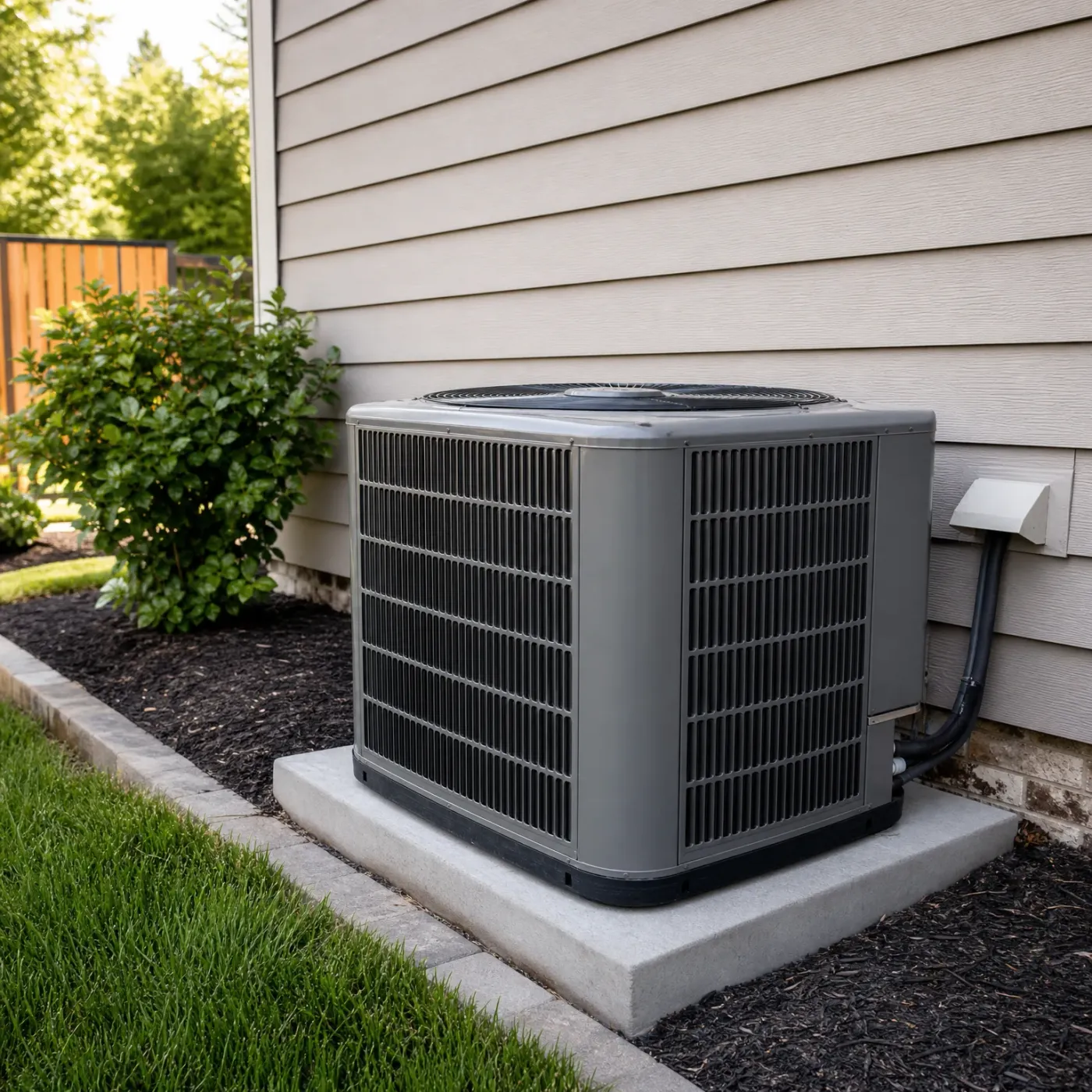
A gray outdoor air conditioning condenser unit on a concrete pad beside a house with horizontal vinyl siding, with mulch, a shrub, and lawn nearby.

No phone calls to make

Only one pro gets your request, so you hear from one company.

Answer a few questions instead of calling shop after shop.

Get a licensed local pro

Asking costs nothing, and the choice to hire stays yours.

Is it the outdoor unit or the indoor unit buzzing?

You went outside to check on the condenser and the buzzing was already loud before you got close. Now you're not sure if that's actually where the sound starts, or if it's traveling from somewhere inside, maybe the air handler in the closet or the attic. Knowing which one is buzzing tells you what kind of problem you're dealing with.

Almost always the outdoor unit

The capacitor that usually causes this buzzing sits in the outdoor unit, next to the compressor and the fan motor it starts. That's where the sound will be loudest. Go stand next to the outdoor unit and listen. If the fan isn't spinning while the buzzing continues, that points straight to the capacitor. A buzz from the indoor unit instead, the blower or air handler, points somewhere else entirely, often the blower motor itself rather than a capacitor. Either way, the outdoor unit is where most of these calls start in Tennessee, since that's where the compressor works hardest pulling humidity out of the air all summer.

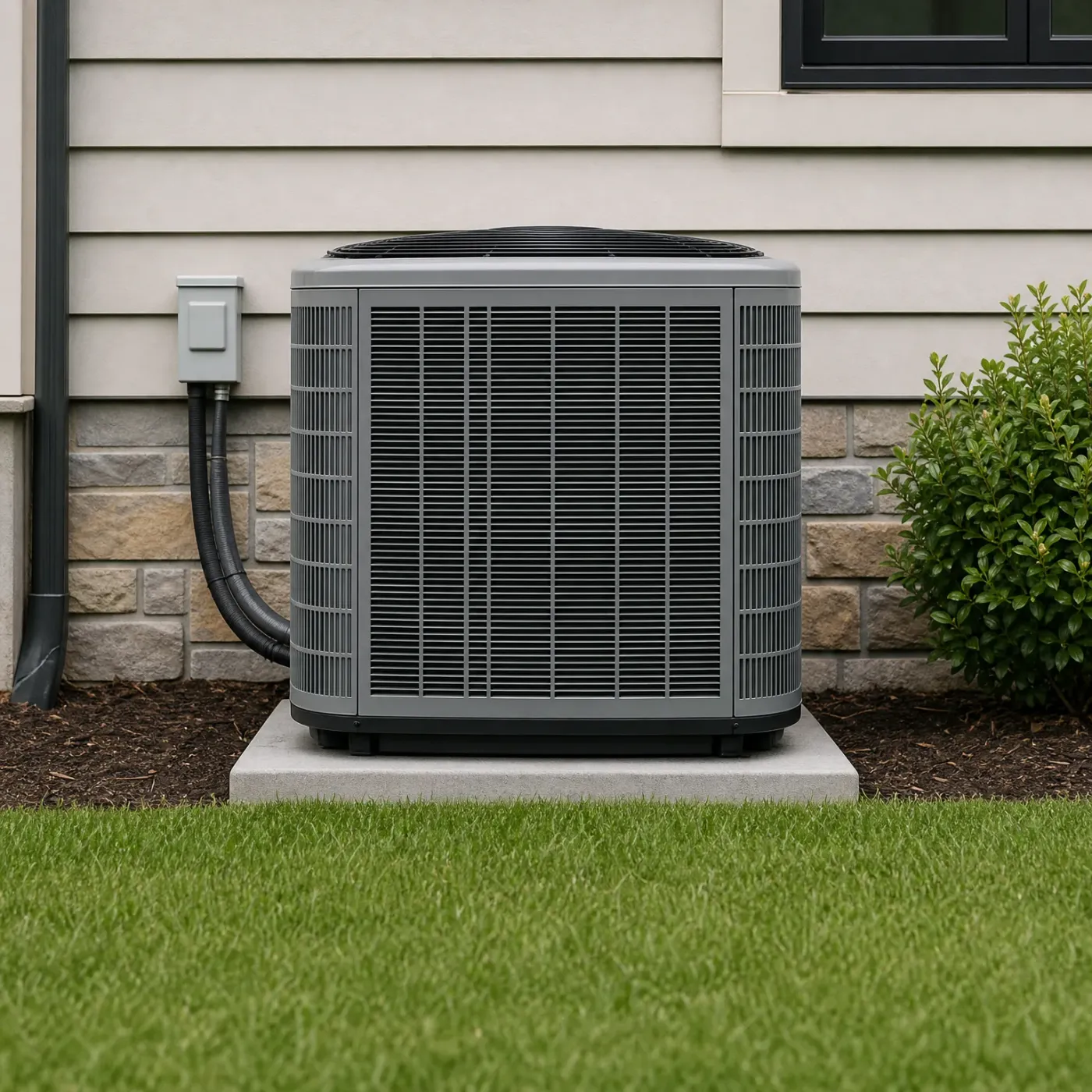
A gray outdoor air conditioning condenser unit on a concrete pad beside a house with horizontal lap siding and a stone veneer base, with a disconnect box and conduit on the wall, mulch bed and shrub to the right, and mowed grass in the foreground.

Running clean

A condenser like this, set on its pad with the disconnect box wired in and nothing blocking the sides, moves air through the coil the way it's supposed to. No buzz, no strain, just the fan and compressor cycling on and off as the house calls for it.
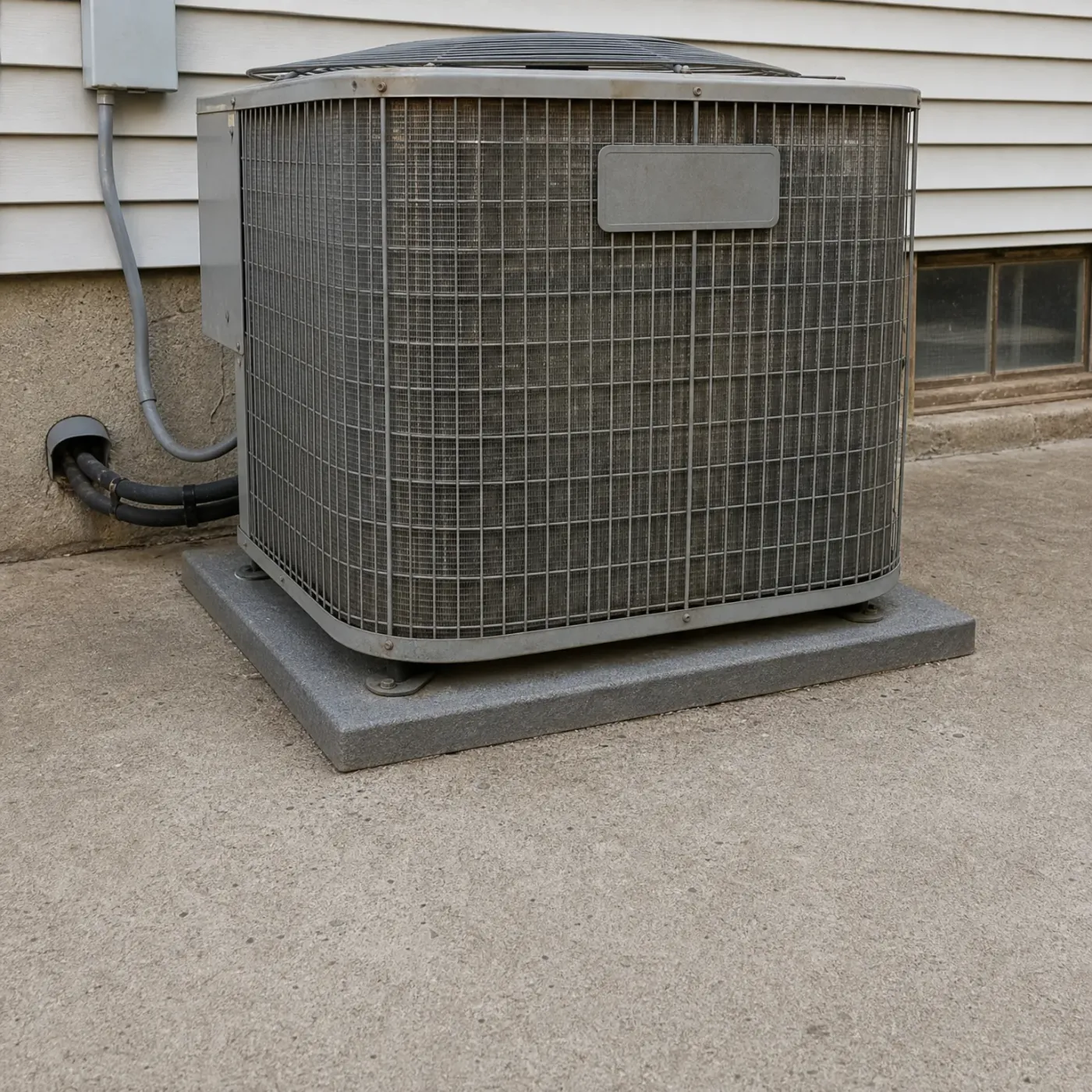

An outdoor air conditioner condenser unit on a gray composite pad beside a house with horizontal siding, a concrete foundation, a basement window, and a conduit and disconnect box on the wall.

Dirt on the cabinet

Dust and grime built up on the wire mesh like this block airflow through the coil. The motor inside has to work harder to move the same amount of air, and that extra strain is often where a buzz starts even before a capacitor gives out.

What are you hearing and seeing out there right now?

Walk outside and the buzz is probably steady, not a click that comes and goes. Look at the fan on top of the unit. If it's not spinning, or spinning slower than it should, that's the motor straining against a capacitor that's already given out. You might notice the house isn't cooling like it was an hour ago, or the air coming from the vents feels warmer than the thermostat setting. Some homeowners catch a faint burning smell near the outdoor unit before anything else goes wrong. That smell means the motor windings are heating up under the extra current. Left running like that, a motor that could have been saved with a capacitor swap starts breaking down itself, and that's a bigger repair.

A woman with her hair in a bun holds a sleeping young child against her chest, both wrapped in a textured beige knit blanket on a sofa in a dimly lit room with a lamp, framed picture, and bookshelf behind them.
A gray-haired woman in a cream knit sweater stands in a dimly lit kitchen at night, looking to her right, with a round loaf of bread in the foreground and a dark window and potted plant behind her.
A closed dark laptop and a ceramic mug of coffee on a wooden dining table, with wooden chairs, a dark kitchen cabinet with cutting boards and a potted plant, and a leafy plant by a window in the background.

A buzzing AC unit is telling you something specific

The buzzing points to a capacitor that's weak or already gone, and the longer it runs that way, the more it costs the motor underneath it. That's the answer. What you do with it is the only thing left to decide.

Finding someone to look at it is usually its own chore, separate from the actual problem. You'd be the one calling around Tennessee for a licensed contractor, explaining the buzzing to each one, waiting on quotes, trying to tell which company actually knows condensers from one that's guessing. A local contractor who works on these units every summer has heard this exact sound before and knows a capacitor when it's failing, not just when it's loud. One call covers it, to one contractor, and you're not stuck sorting through several bids or repeating yourself to get there.

A gray upholstered sofa with a matching cushion sits beside a potted plant and a wooden table holding a small green plant in a stone pot, near a curtained window.
Sunlit corner of a room with a wooden sideboard holding a ceramic vase of olive branches and a dark wooden bowl, beside a white-framed window, a hardwood floor and woven rug.
A wooden cabinet holding a pale ceramic vase with leafy branches stands beside a beige wall in a sunlit room with hardwood floors, a jute rug, and a window showing green foliage outside.
Sunlit room corner with a beige upholstered sofa holding a rust-brown cushion, beside floor-length linen curtains at a window, over a wood floor with a woven rug.
Corner of a room with beige walls, a framed photograph, a floor-length linen curtain beside a window, an upholstered armchair with a knit pillow, white baseboards and trim, wood flooring and a pale rug.
Sunlit living room corner with a beige upholstered armchair with a cushion, linen curtains beside a wooden-framed window, green vertical panelled wall with a framed print, and a wooden table edge over a woven rug.

One form, no calling around

Your request stays with one local pro.

Fill out one form

No fee to send it, and nothing to sign.