 Get matched
Why your upstairs stays hot in Tennessee summers
Describe your air conditioner job, and a local pro who handles it gets in touch.
Upstairs is hotter than the rest of the house, and by August it feels like a different climate up there. Your air conditioner runs and runs, the thermostat downstairs says 72, and the bedrooms still feel like 80.
Heat rises, and in a Tennessee summer there's a lot of it to deal with. But that's not the whole story. A system that's low on charge, a duct run that's leaking into the attic, or a return that's too small for the floor it's supposed to pull from can turn a normal summer problem into a room nobody wants to sleep in.
Finding which of those it is means someone has to look at your actual ductwork, your actual unit, and how your house is laid out. That's not a guess you make from a search page. It's a visit.
When you ask for that here, you're not handed a list of HVAC companies to call and compare. You're matched with one licensed contractor who works in your area, someone who's been inside attics like yours in July and knows what tends to be wrong when the upstairs won't cool no matter how low you set the thermostat. They reach out to you directly.
That's the part worth understanding before you go further. One contractor, local to Tennessee, familiar with how these systems get pushed all summer and what usually gives first. Not a call center. Not five companies bidding for your number.
The rest of this page walks through why upstairs rooms run hot here, what usually causes it, and what a fix can look like. Read through it. When you're ready, the button below starts that match.
Why is my upstairs so much hotter than downstairs in summer?
By mid-afternoon the upstairs bedrooms feel like a different house. You've checked the thermostat, you've checked the vents, and the air is moving, it just isn't cooling. With the kids trying to sleep up there and the AC running almost nonstop, you want to know if this is normal for a Tennessee summer or if something's actually wrong with the system.
Your system likely can't keep up with the heat load upstairs
Heat rises and collects on the second floor, so upstairs always carries a heavier load than the rooms below it. One thermostat downstairs controls the whole house, so the system shuts off once it reads 72 even though the upstairs air hasn't caught up. In a Tennessee summer, with the attic baking overhead and the sun hitting the roof most of the day, that gap between floors gets wider than it would somewhere milder. Some of this is just how a single-thermostat system works in a two-story home. But if the gap is large, or it's gotten worse over time, it can also mean the system is low on refrigerant, the ductwork upstairs isn't sized right, or the unit is undersized for the house. A contractor who works on these systems can tell you which it is.




You feel it most at bedtime, when the rooms need to be coolest and instead they're the warmest in the house. The upstairs unit, if you have a second system, is working harder for less result, and that shows up on the electric bill even with power priced the way it is here. Kids who share a room upstairs end up with a fan running all night on top of the AC. A system that runs nonstop through a Tennessee summer wears faster than one that gets to cycle off, so the short-circuiting of cool air that never quite reaches the top floor can mean a compressor or a blower motor working years past when it should rest. If the air up there feels thin or weak at the vent, that's not something that gets better on its own once August turns into September.
Power costs 13.22 cents per kilowatt-hour statewide
At 13.22 cents a kilowatt-hour, a struggling upstairs unit costs less here than it would in most states, but it still runs longer than it should to chase a temperature it can't hold. A repair that gets it cooling properly again is what brings those bedrooms back down to 72.
EIA-861 2025 statewide residential average
Why Upstairs Loses the Fight
- Warm air stacks near the ceiling and pulls cooler air up through the stairwell, so the second floor loses the fight before the AC even starts.
- A single thermostat downstairs reads the air where it's coolest, so the system shuts off long before the upstairs rooms catch up.
- Ductwork running through a hot attic picks up heat along the way, so the air reaching upstairs vents is warmer than what left the unit.
- Supply and return vents upstairs are often undersized for the heat load, so even a properly running system can't push enough cold air up there.
- A clogged filter or a dirty evaporator coil cuts airflow everywhere, but the rooms farthest from the unit, usually upstairs, feel it first.
- Low refrigerant charge lets the system keep running without the capacity to cool the far end of the house, which upstairs almost always is.
Cooling a two-story house with one system means the air has to travel further and work against physics the whole way. Warm air is lighter, so it rises and collects upstairs no matter how hard the unit runs downstairs. If your thermostat is on the first floor, it's making decisions based on air that was never the problem in the first place. It reads 72, shuts the system off, and the second floor never gets its turn. Then there's the path the air has to take. In most homes the ductwork feeding the upstairs rooms runs through the attic, and an attic in a Tennessee summer gets far hotter than the house itself. Cold air moving through that space picks up heat before it ever reaches the vent, so what comes out upstairs is already warmer than what left the unit. Add in vents that were sized for the house, not for how hot that attic gets, and there's only so much cold air that can physically get up there even when everything else is working right. A dirty filter or a coil that's lost its airflow makes all of this worse, because whatever capacity the system has left gets used up by the rooms closest to it first. Upstairs is last in line, and it shows.
A local pro for your air conditioner repair
Your request goes to one pro, not a list of companies.
Say what's going on with your air conditioner, and a pro who works on them reaches out.
Sending the form costs nothing.
What are you noticing in the bedrooms upstairs
You notice it most at night. The vents are blowing, but the air coming out feels weak, not cold, and the room never quite catches up before morning. Doors stay open trying to get any extra air to move through, and someone upstairs is sleeping with a fan on even though the air conditioner is running the whole time. The return air grille might feel warm to the touch instead of cool. If this has gone on for a while, check the attic hatch and the walls near it for any sign of moisture. Warm, damp air sitting in bedrooms all summer isn't just uncomfortable, it's a place mold can start, especially for anyone up there with allergies or asthma.
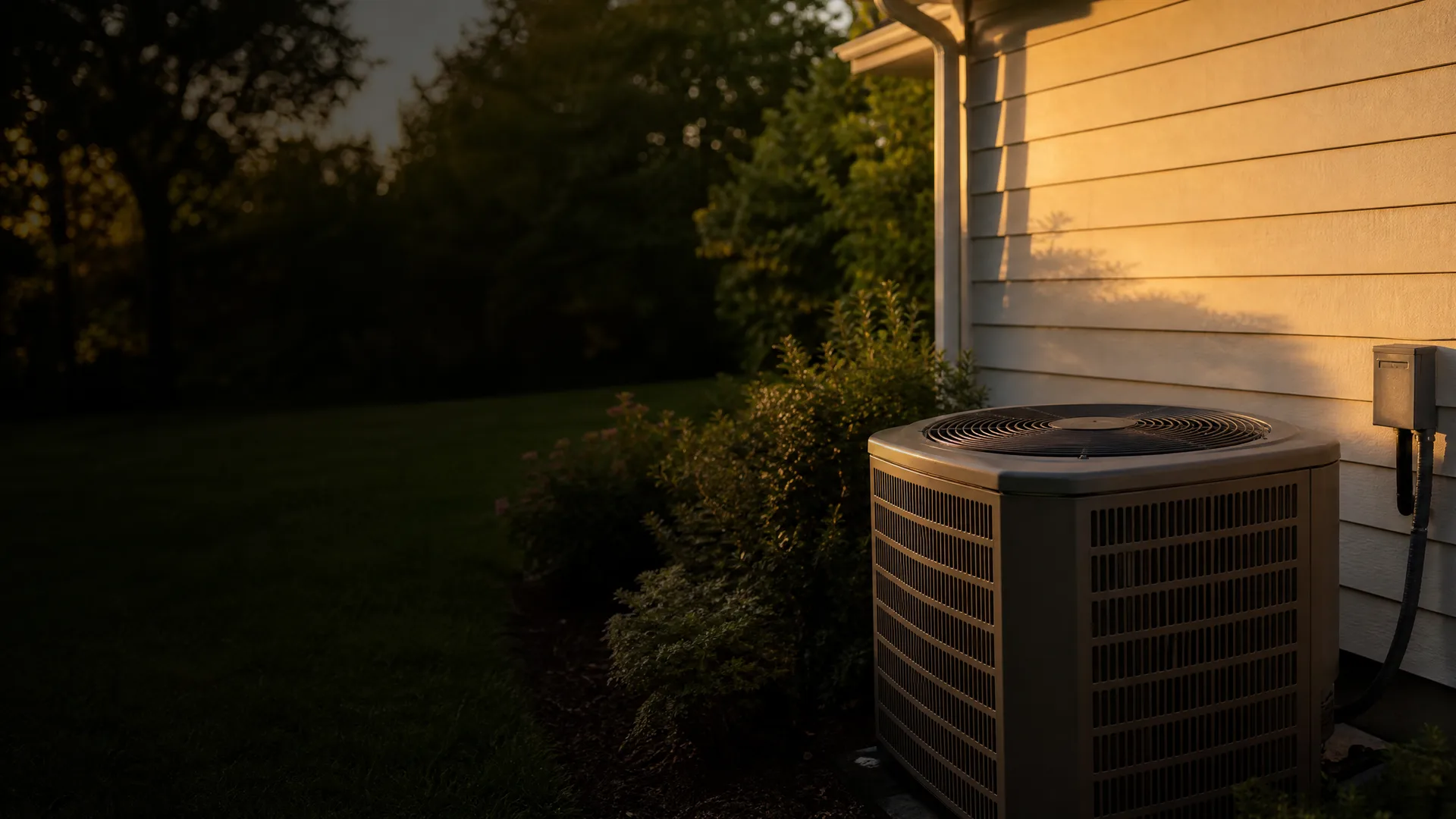
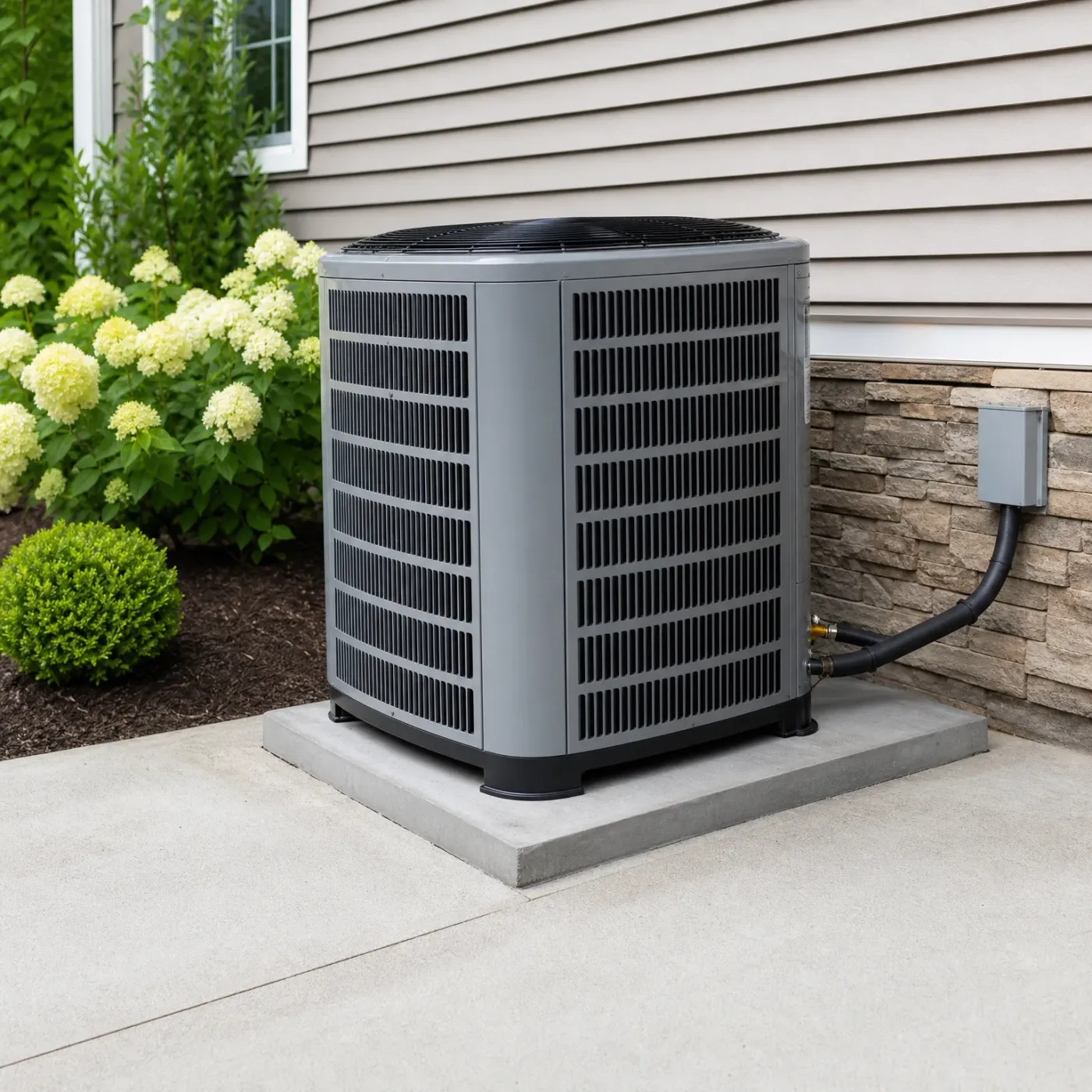
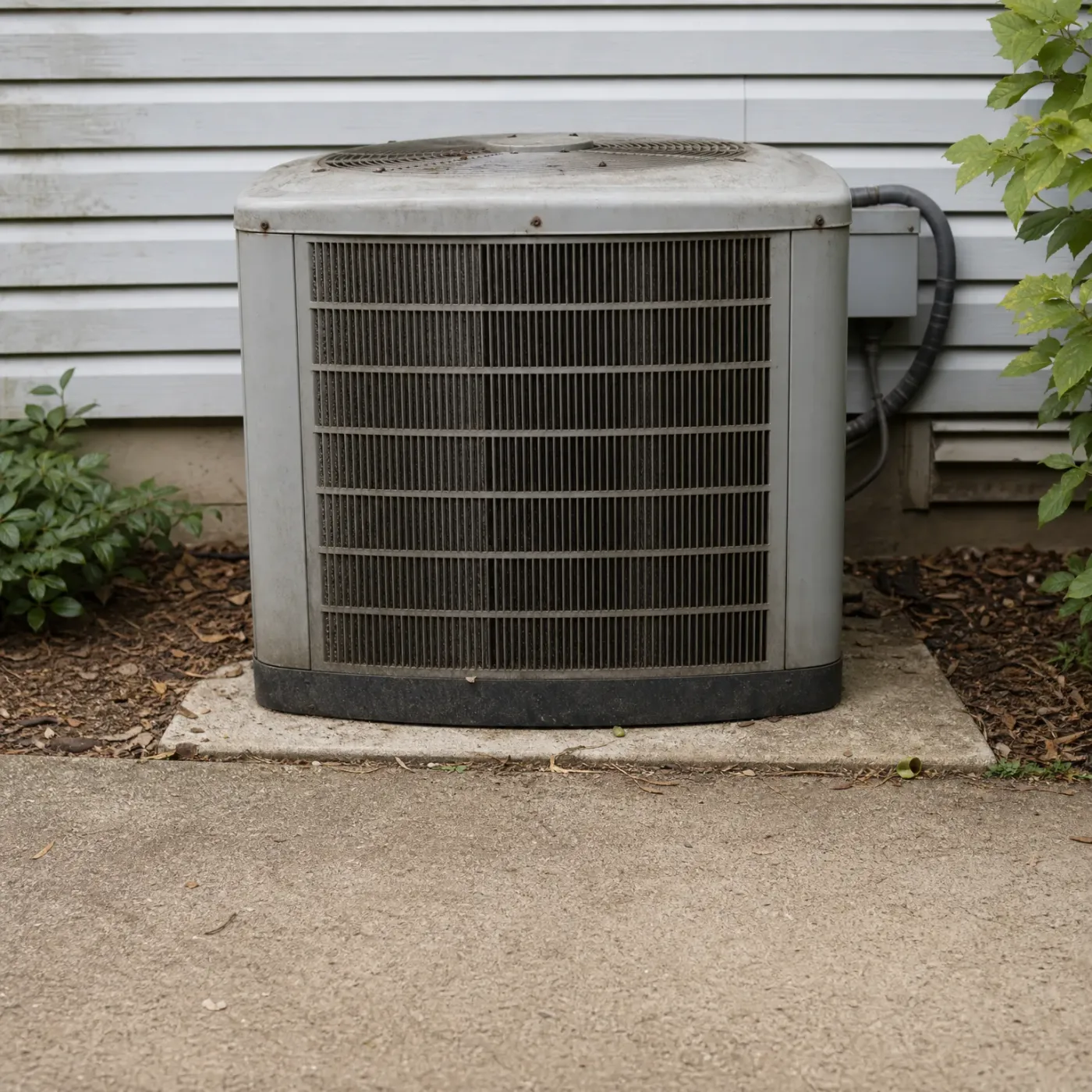
The sun is low over the backyard, that flat gold light you get in August around seven, when the heat still hasn't let go. The condenser sits against the fence, and the fan on top isn't moving. No hum, no rattle, nothing. Inside, somebody's upstairs with a box fan pointed at the bed, waiting on a house that got cool once and won't get there again tonight. The grass around the unit is dry and a little long. A moth circles where the porch light just came on. Nothing else in the yard is moving either, except the heat still coming up off the concrete.
That heat upstairs is only half of what you're fighting. The air carrying it is heavy too. Averaged across June, July and August, the dew point where Tennessee homes sit runs 66°F, which is the sticky range where sweat barely evaporates off your skin. Your air conditioner has to pull that moisture out of the air before the house feels cool, not just drop the temperature. That takes longer and runs the system harder than a dry heat ever would. Upstairs, where the air is already warmer, a unit that's lost some capacity falls behind fast. You'll notice it as air that feels damp and heavy coming out of the vent instead of crisp and cold.
NASA POWER T2MDEW county cells weighted by homes

Your upstairs can be the coolest room in the house again
A hot upstairs isn't something you have to live with until October. The fixes are ordinary ones: a condenser that needs its fins cleared, a thermostat setup that isn't reading the second floor right, a system that's been chasing a temperature it can't reach because something in it is worn down. Once that's fixed, the air coming out of those vents upstairs is cold again, and the room holds it.
A local contractor who works on these systems all summer has seen this exact complaint plenty of times, the downstairs thermostat reading 72 while the kids' rooms sit at 80. When you put in a request, you're matched with one contractor suited to what's going on in your house, not a handful of companies competing for the callback. They'll reach out to look at what your system is actually doing before bedtime turns into the hardest part of the day again.


Air Conditioner Repair
Get the right pro for your air conditioner

- Tell a local repair pro what your air conditioner is doing.

- Once you send the form, finding a pro is off your list.
- After you send the request, you're done searching.

- Answer a few questions instead of calling shop after shop.
- Describe your air conditioner job once, to one pro.

- Only one pro gets your request, so you hear from one company.
- Your request stays with one local pro.