Tell us about the job
Takes about a minute. No obligation.
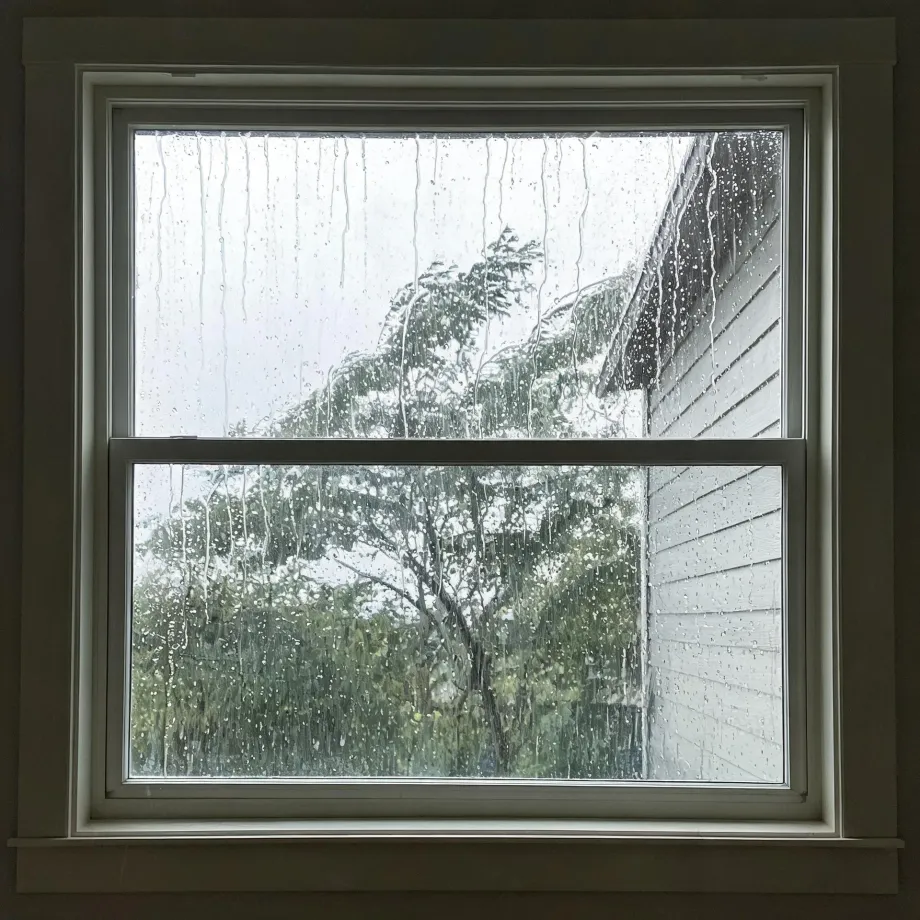
A contractor pulling the cover off a central AC unit in Tipton County is looking at what years of cumulative wear have done, and severe weather is part of that picture. 83 severe weather events were recorded in Tipton County, Tennessee between 2015 and 2024. At that rate, storms are a periodic stress on equipment, not a constant one. Refrigerant lines degrade, capacitors fail, and coils corrode on schedules driven mostly by age and how well the system was maintained. A weather event can finish something that was already close to failing, but it rarely explains the whole repair on its own.
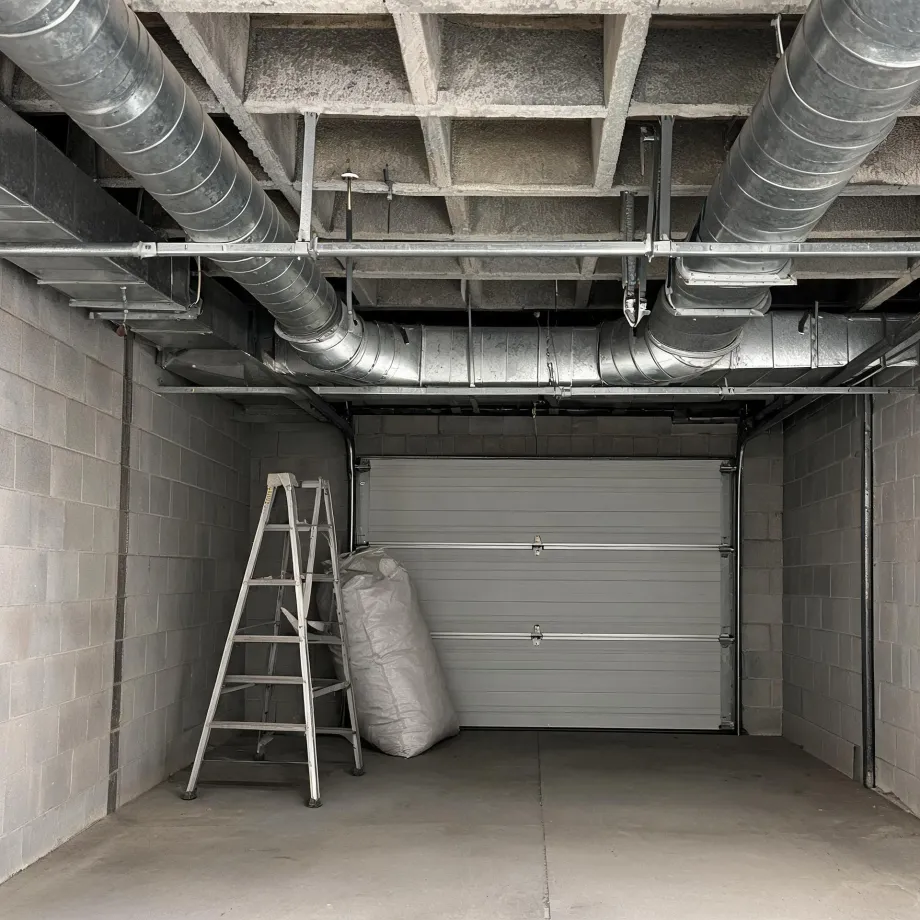
Ductwork in a house this old has already outlasted at least one previous system, maybe more, and the AC running in it now is not the original equipment. Half the homes in Tipton County, Tennessee were built in 1993 or earlier (2020-2024 ACS 5-year). What that means for repair work is specific: once a contractor opens the unit, the question is whether the part it needs is still manufactured. A system installed well after the house was built draws from a narrower supply catalog with each passing year, and if a critical component is discontinued, the repair changes into a different conversation entirely.
The Parts of a Central AC a Contractor Checks First
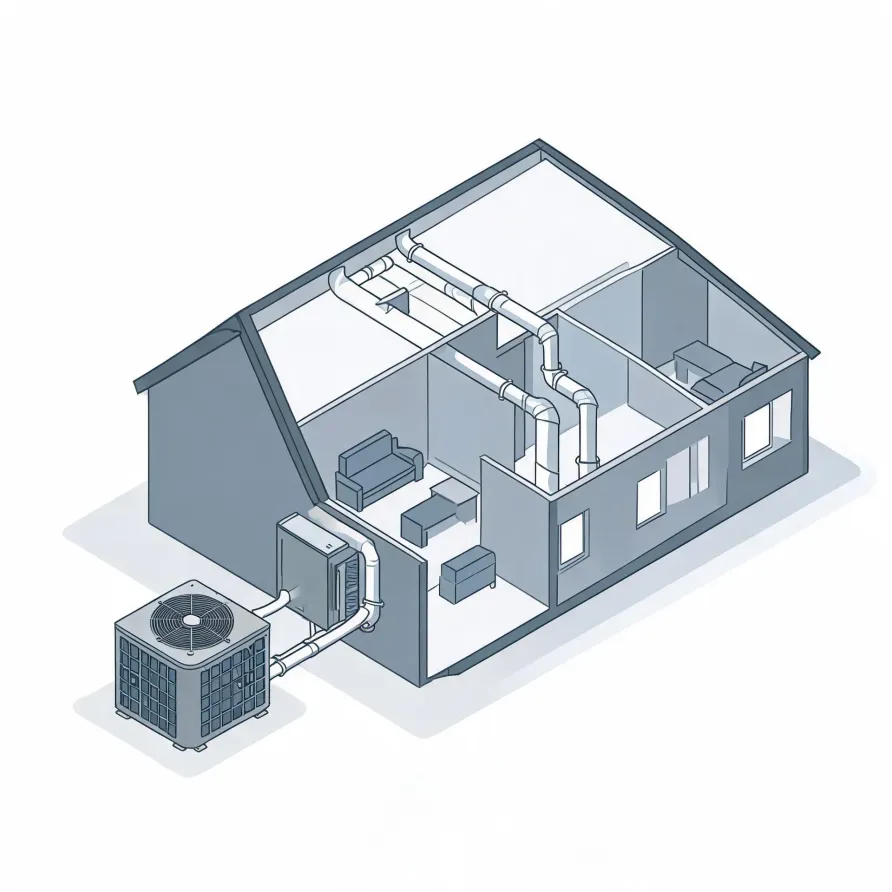
The outdoor condenser unit sits outside the house, usually on a concrete pad beside the foundation, and it is where heat gets shed to the outside air. The indoor air handler or furnace sits inside, most often in a closet, basement, or attic, and it moves air through the home. When either of these units is the problem, a contractor will know it early.
The refrigerant line set runs between those two units, carrying the refrigerant that makes the whole exchange work, and a leak anywhere along it starves both sides of the system. The evaporator coil lives inside the air handler, and the capacitors and contactor sit inside the condenser cabinet. These are the pieces a contractor opens the equipment to reach when the obvious checks outside come back clean.
The drawing shows the general layout of a central AC system, and a licensed contractor determines what applies to the specific equipment and configuration in your house.
Find a contractor in Tipton CountyTipton County, by the numbers
83 severe weather events were recorded in Tipton County, Tennessee between 2015 and 2024.
NOAA National Centers for Environmental Information, Storm Events Database, bulk CSV export, events 2015-01-01 through 2024-12-31.Half the homes in Tipton County, Tennessee were built in 1993 or earlier (2020-2024 ACS 5-year).
U.S. Census Bureau, 2020-2024 American Community Survey 5-Year EstimatesTipton County, Tennessee holds 24,417 housing units (2020-2024 ACS 5-year).
U.S. Census Bureau, 2020-2024 American Community Survey 5-Year EstimatesOwners occupy 76.3% of the occupied homes in Tipton County, Tennessee (2020-2024 ACS 5-year).
U.S. Census Bureau, 2020-2024 American Community Survey 5-Year EstimatesRules and Standards Behind Central AC Repair in Tipton County, Tennessee9 sourced rules and standards
What HVAC Repair Looks Like in Tipton County
Split-system central air conditioners rated below 45,000 Btu/h manufactured on or after January 1, 2023 must meet a federal minimum of 13.4 SEER2.
Split-system central air conditioners rated at or above 45,000 Btu/h manufactured on or after January 1, 2023 must meet a federal minimum of 13.4 SEER2.
Split-system central air conditioners manufactured between January 1, 2015 and December 31, 2022 had to meet 13 SEER, the metric that preceded SEER2.
Single-package central air conditioners manufactured on or after January 1, 2023 must meet a federal minimum of 13.4 SEER2.
Space-constrained central air conditioners manufactured on or after January 1, 2023 must meet a federal minimum of 11.7 SEER2.
Federal efficiency standards for split-system central air conditioners and heat pumps are set on each certified combination of outdoor unit and indoor coil rather than on the outdoor unit alone.
Residential and light commercial air conditioning and heat pump systems assembled in the field, including mini-splits and unitary systems, may not be installed on or after January 1, 2025 using a refrigerant with a global warming potential above 700.
A field-assembled system whose specified components were all manufactured or imported before January 1, 2025 carries no installation compliance date under the refrigerant restrictions and may still be installed.
Licensing and Legal Requirements in Tipton County, Tennessee
Tennessee licenses contractors by classification, and HVAC, refrigeration and gas piping is one of them — a sub-classification of mechanical contracting on the licence the Board for Licensing Contractors issues.
Severe Weather Events in Tipton County
Weather puts real load on cooling equipment, and the stress from local storm activity accumulates over time in ways that show up as mechanical failure. Repair needs in Tipton County are shaped by what this county's climate actually does to systems running through it.
83 severe weather events, 2015–2024. Source: NOAA National Centers for Environmental Information, Storm Events Database.